
About Boone and Crockett Club - Timeline
Top 10 Wins for Conservation
1887 – Boone and Crockett Club
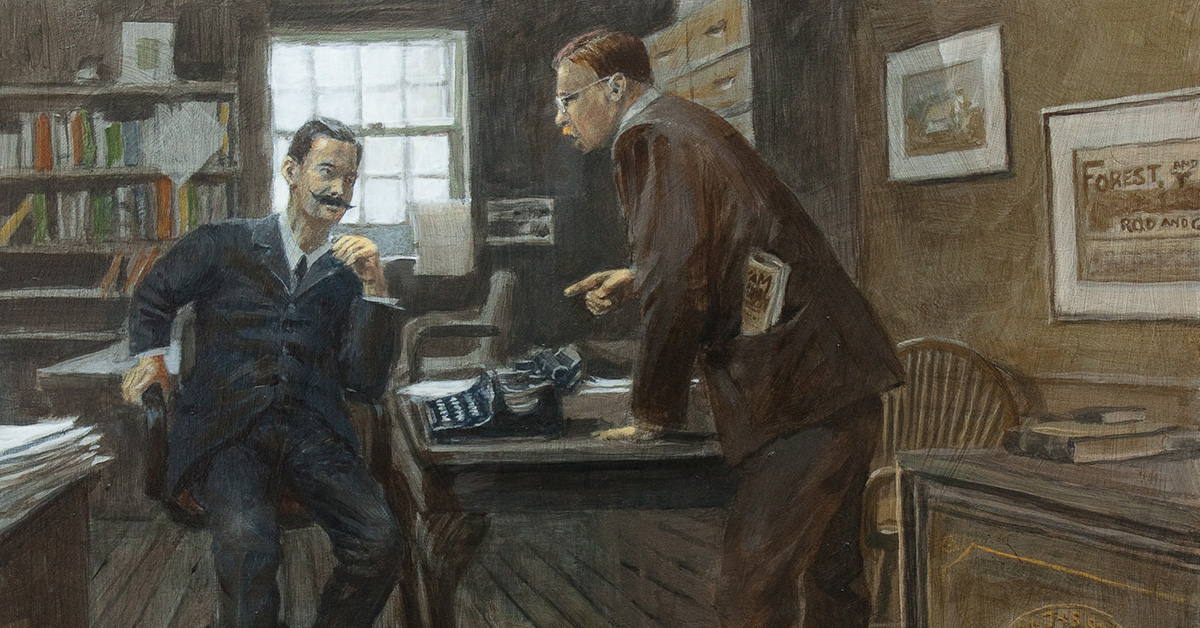
1894 – Yellowstone National Park
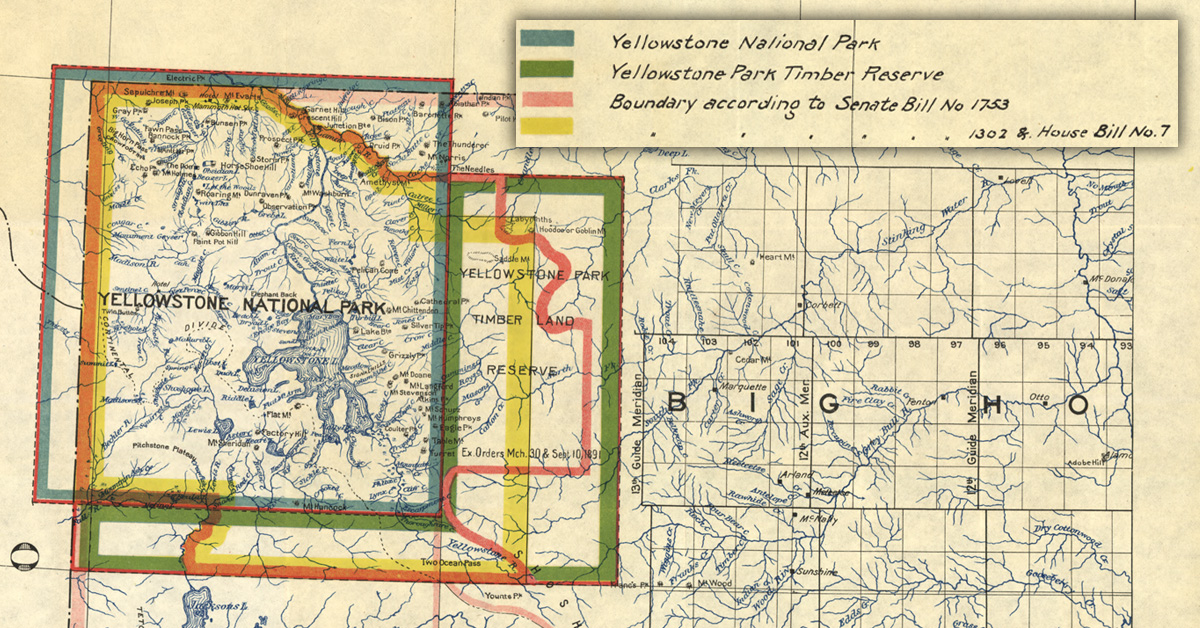
1897 – National Forests
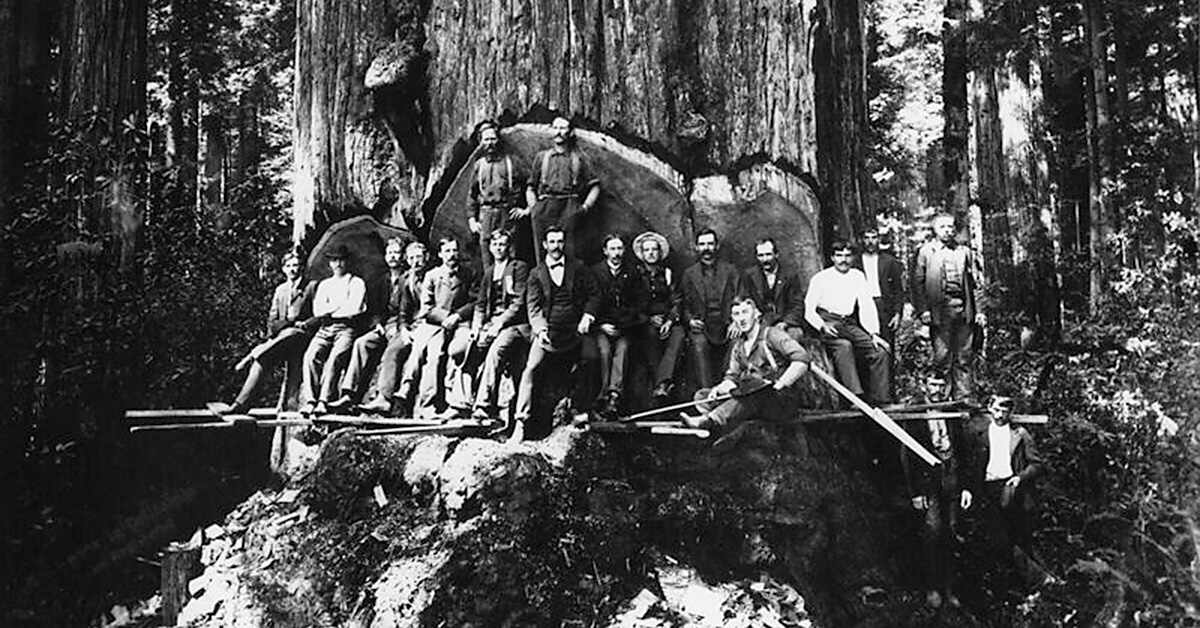
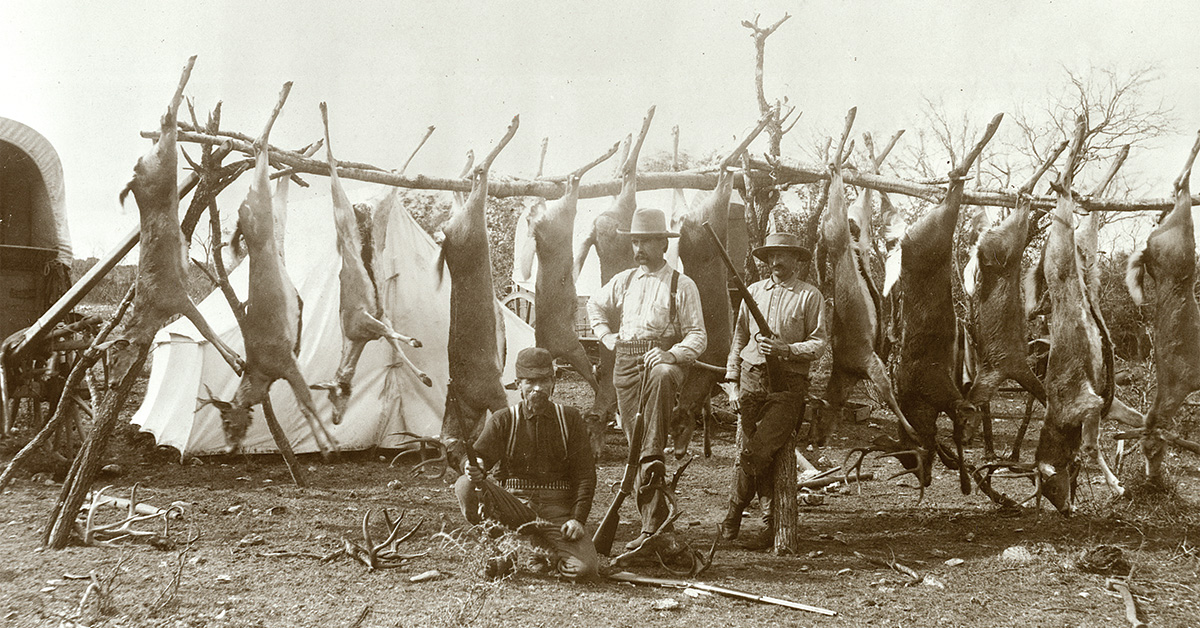
1900 – Market Hunting
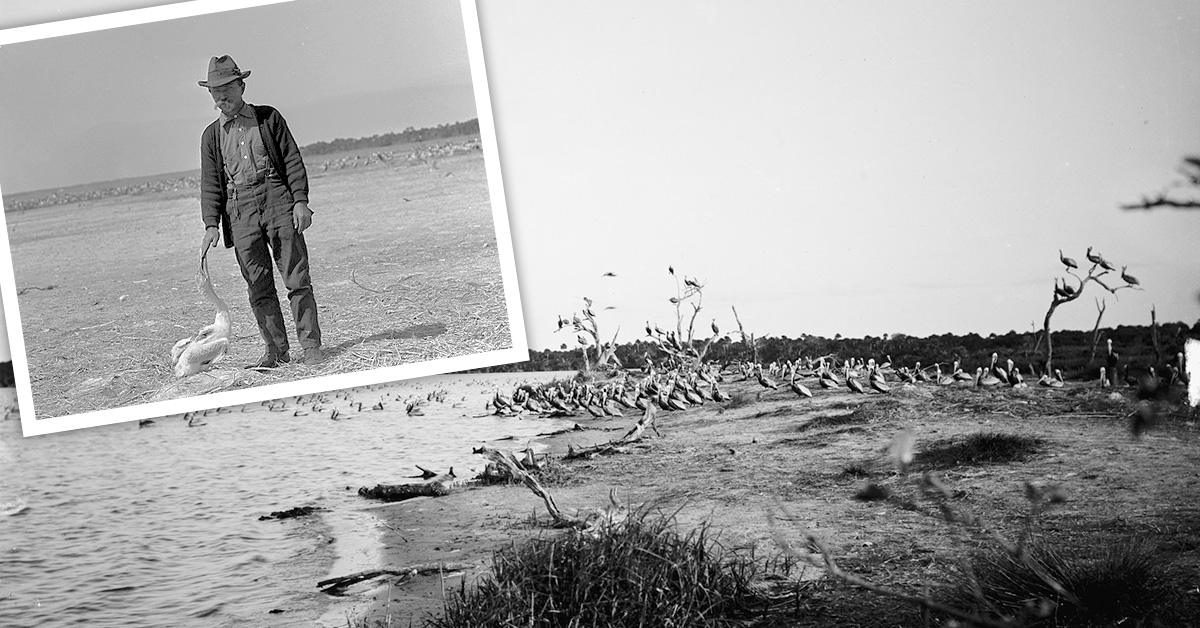
1903 – National Wildlife Refuges
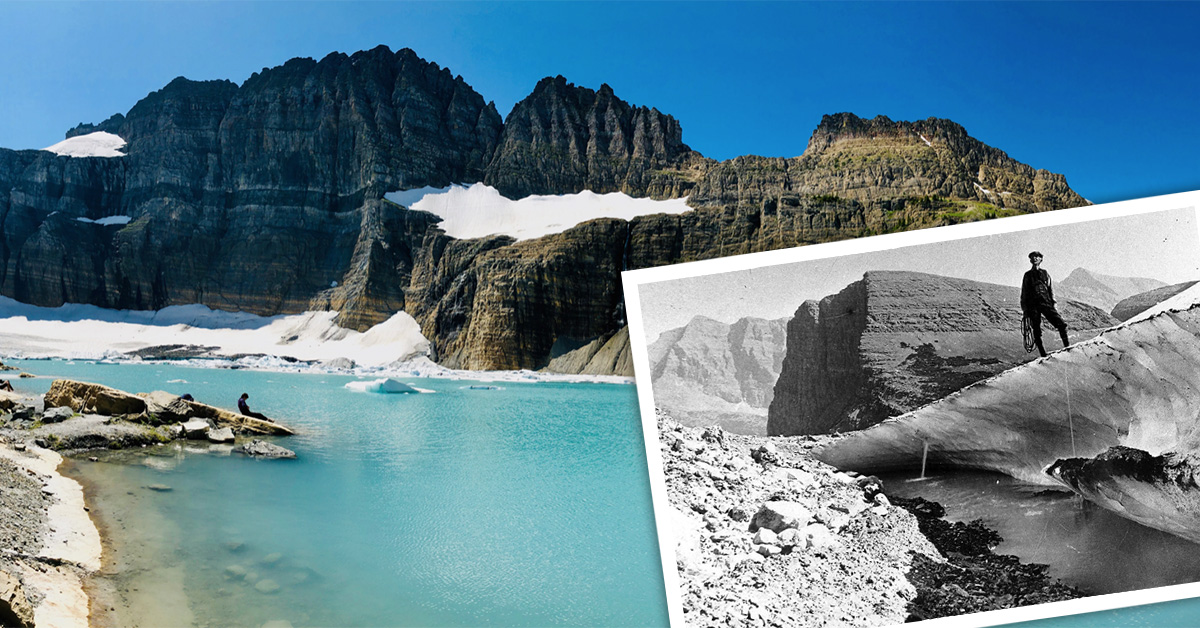
1910 – Glacier National Park
1937 – Conservation Funding

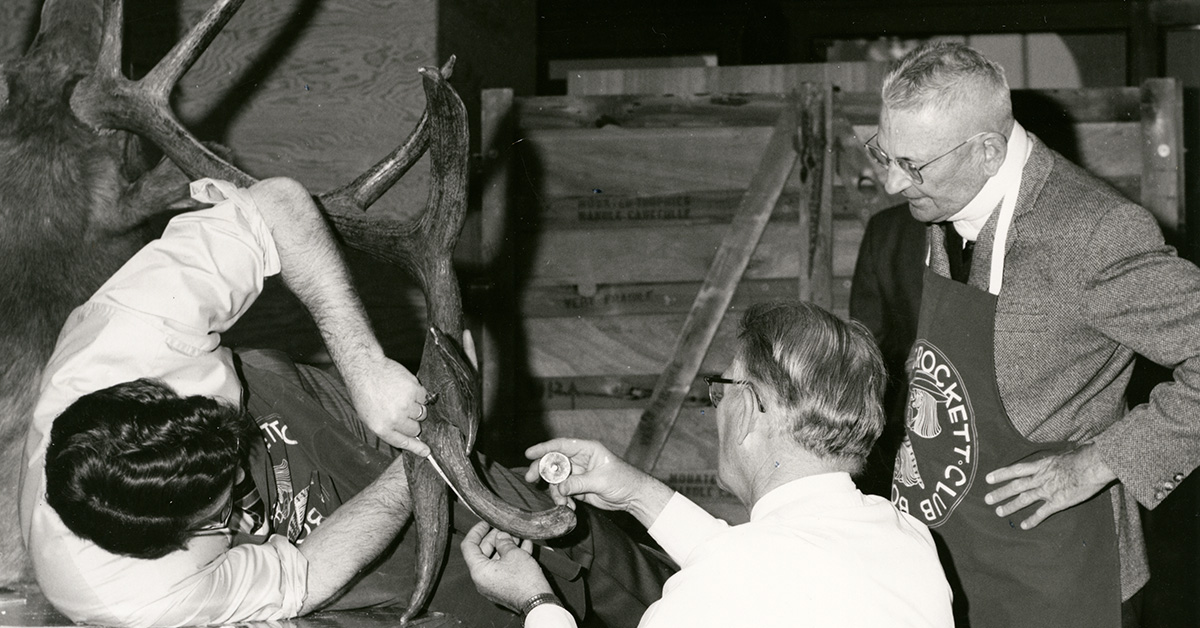
1950 – Big Game Scoring System
1964 – Wilderness Areas
2000 – American Wildlife Conservation Partners (AWCP)
Expanded Boone and Crockett Timeline
1887
Boone and Crockett Club Is Born
Founded by Theodore Roosevelt, along with George Bird Grinnell, artist Albert Bierstadt, General Philip Sheridan, General William Tecumseh Sherman, and other notable figures of the period.
1888
First Formal Meeting
A committee was appointed "... to promote useful and proper legislation toward the enlargement and better government of the Yellowstone National Park."
1889
National Forest System
Club members William Hallet Phillips, Secretary of the Interior Lucius Q.C. Lamar, Jon W. Noble, and Arnold Hague of the U.S. Geological Survey secured congressional enactment of the Timberland Reserve Bill, which added 1 million acres to Yellowstone and established the national forest system.
1893
Published American Big Game Hunting
1894
Yellowstone Park Protection Act
Legislation pushed through Congress by U.S. Congressman and Club member John F. Lacey of Iowa increased the size of Yellowstone by 3,344 square miles and set the precedent and policy for the protection of future national parks.
1895
New York Zoological Society
Now known as the Wildlife Conservation Society, active in 60 countries. Club members Madison Grant, Theodore Roosevelt, and C. Grant La Farge were instrumental in initiating this organization and establishing the Bronx Zoo.
1896
Glacier National Park
The Club worked to establish the Flathead Forest Preserve, which became Glacier National Park in 1910.
1897
Organic Administration Act
Introduced to Congress by Club member John F. Lacey, this act established the forest reserve system in the United States to supply timber to the country.
1897
Civil Service Appropriation Act
Club members established a national policy of sustained, multiple use of forests and professional management. Initiated by John F. Lacey, Carl Schurz, Arnold Hague, Gifford Pinchot, Charles D. Walcott, and George Bird Grinnell.
1898
Enforcement of Game Laws
The Club helped establish legislation to aid states in the enforcement of game laws.
1900
Lacey Act of 1900
Club member and Congressman John F. Lacey pushed through Congress this legal cornerstone of fish and wildlife conservation, making it a federal offense to transport illegally taken game across state lines. The legislation marked the beginning of the end of market hunting.
1901
Theodore Roosevelt Becomes President
Following the assassination of President William McKinley on September 14, Club founder Theodore Roosevelt became the 26th president of the United States.
1902
Reclamation Act
The Club was instrumental in establishing the Reclamation Act, which funded irrigation projects including construction of 30 dams and irrigation of three million acres of Western farm lands and habitat.
1902
Alaska Game Laws
Theodore Roosevelt signed the first piece of game law legislation protecting the wildlife of the Territory of Alaska, which became the model for game laws in the Lower 48 states.
1902
Big Game Measurement Standards
The Club created the first big game scoring and data collection system to objectively measure and evaluate species as a baseline for recovery efforts.
1903
National Wildlife Refuge System
Florida's Pelican Island became our first national wildlife refuge. Senator George C. Perkins used research provided by Boone and Crockett to help push the National Wildlife Refuge System Act through Congress.
1904
National Association of Audubon Societies
Club members T. Gilbert Pearson and George Bird Grinnell established the initial Audubon Society, later named the National Audubon Society.
1905
The American Bison Society
Club member William T. Hornaday served as president; President Theodore Roosevelt served as honorary president.
1905
Forest Reserves Transfer Act
Proposed by Gifford Pinchot, this legislation established the U.S. Forest Service by transferring the forest reserves from the Department of Interior to the Department of Agriculture.
1906
National Collection of Heads and Horns
Established by Madison Grant and William T. Hornaday at the Bronx Zoo to awaken the public to the plight of vanishing wildlife.
1908
National Bison Range
Private funds raised through the American Bison Society were used to purchase land that established the National Bison Range in western Montana to protect pure strains of wild prairie bison.
1908
First National Conservation Conference of Governors
President Theodore Roosevelt organized this national conservation conference at the White House, attended by 44 governors.
1909
Roosevelt's Presidential Legacy
Roosevelt's presidency ended after converting 230 million acres into five national parks, 150 national forests, 55 game and bird preserves, 18 monuments, and 21 reclamation projects.
1910
Glacier National Park Established
First surveyed and proposed by George Bird Grinnell. Glacier National Park was officially designated when President William Howard Taft signed the legislation into law.
1913
Weeks-McLean Law
The first U.S. law regulating the shooting of migratory birds and the first attempt to put migratory birds under federal jurisdiction.
1916
National Park Service
Established by President Woodrow Wilson. Club member Stephen T. Mather was appointed as its first director.
1917
Mount McKinley (Denali) National Park
Club member Charles Sheldon campaigned and surveyed the area to protect Dall's sheep. Club members wrote the legislation and secured passage of the Mount McKinley National Park Act.
1917
Save the Redwoods League
Dedicated to saving the world's largest tree, with key Club members Madison Grant, John C. Merriam, and Dr. Henry Fairfield Osborn.
1917
Black Mesa Mule Deer Study
Aldo Leopold started his career studying a massive die-off of mule deer in Arizona—the first scientific management study of a major wildlife program in America, funded entirely by the Club.
1918
Migratory Bird Treaty Act
The Club helped ratify the Migratory Bird Treaty Act with Great Britain (Canada) to establish federal control over hunting of migratory birds, fully protecting all migratory birds and their parts.
1919
Death of Theodore Roosevelt
Club founder and 26th President of the United States, Theodore Roosevelt, dies January 6.
1921
President's Conference on Outdoor Recreation
The Club worked with President Calvin Coolidge to establish a national recreation policy coordinating resource management at federal, state, and local levels.
1925
Published Hunting and Conservation
1927
American Wild Fowlers
Club members founded the American Wild Fowlers, which later became Ducks Unlimited.
1929
Migratory Bird Conservation Act
Helped establish the Migratory Bird Conservation Act, which established the national waterfowl refuge system.
1930
American Game Policy
Club member Aldo Leopold presented the first American game policy at the American Game Conference, improving resource agency organization, university wildlife education, and wilderness protection.
1931
Sheldon National Antelope Range
Named after Club member Charles Sheldon, established in northern Nevada and southern Oregon.
1932
Uniform Scoring System & First Records Book
The first uniform measuring system for North American big game trophies. The Club also published its first edition of Records of North American Big Game.
1933
Game Management
Club member Aldo Leopold authored Game Management, establishing the principles and discipline of wildlife management and the origins of the land ethic.
1934
North American Wildlife Conference & Duck Stamps
Club member J.N. "Ding" Darling was appointed Director of the U.S. Bureau of Biological Survey and initiated the Federal Duck Stamp program.
1935
National Wildlife Federation
Founded by Club members J.N. "Ding" Darling, C.R. Guttermuth, Ira N. Gabrielson, and Karl T. Frederick. Darling was its first president.
1937
Pittman-Robertson Act
Earmarking sportsmen's dollars for conservation and game management. Club members laid the conceptual groundwork and provided legislative channels.
1937
Ducks Unlimited & Madison Grant Forest
American Wild Fowlers became Ducks Unlimited. The Madison Grant Forest and Elk Refuge was also established in Humboldt, California.
1938
Uniform Scoring System—Refined
The Club further refined the uniform scoring system for all native North American big game trophies.
1946
Wildlife Management Institute
Initiated the new Wildlife Management Institute, formerly the American Wildlife Institute.
1947
Funding for Wildlife Research
The Club began annually funding wildlife research projects.
1947
Annual Big Game Trophy Competition
The Club held its first National Big Game Competition at the American Museum of Natural History, encouraging selective hunting and promoting "fair chase."
1949
A Sand County Almanac
Posthumously published by Aldo Leopold's estate, still considered one of the most influential conservation books ever written. Leopold was a Club member for 25 years.
1950
Big Game Scoring System
The Club adopted a more comprehensive and universally accepted method for measuring big game trophies and gathering data to evaluate population health and habitat quality.
1952
Records of North American Big Game, 3rd Edition
The first edition listing and ranking trophies according to the 1950 scoring system—still in use today. Currently the largest set of North American big game data in existence.
1957
National Key Deer Refuge
Club members establish Florida's National Key Deer Refuge.
1960
Statements on Fair Chase
All trophy records must include a signed statement attesting to fair chase. In 1974, the Club added a notarized component.
1961
An American Crusade for Wildlife
Published by Club member James B. Trefethen.
1963
Unfair Chase
The Club helped establish laws against using a plane to spot, land and then shoot big game—deemed "unfair chase."
1964
National Wilderness Preservation Act
The Club helped pass this landmark act. Aldo Leopold was an early spokesman for wilderness protection.
1965
Offices Move to Pittsburgh
The Club moved from the American Museum of Natural History in New York City to the Carnegie Museum in Pittsburgh.
1968
Wild and Scenic Rivers Act
The Club helped pass the Wild and Scenic Rivers Act.
1970
North American Big Game Awards
The Club began sponsoring competitions every three years to celebrate conservation, game management, and fair chase sportsmen.
1974
Wild Sheep in North America
The symposium led to Wild Sheep in Modern North America and the formation of the Foundation for North American Wild Sheep, now the Wild Sheep Foundation.
1975
Offices Move to Virginia
The Club moved from Pittsburgh to Alexandria, Virginia.
1977
Black Bear Symposium
Focused on black bear biology, habitat, propagation, and management, resulting in The Black Bear in Modern North America.
1978
National Collection of Heads and Horns Relocated
Moved from the Bronx Zoo to the NRA museum in Washington, D.C.
1980
American Museum of Natural History
The Club raised funds to refurbish the Hall of North American Mammals dioramas, completed in 1987.
1982
Heads and Horns Moves to Cody
Moved the National Collection to the Buffalo Bill Historical Center in Cody, Wyoming.
1984
Theodore Roosevelt Memorial Ranch
The Club purchased the ranch adjacent to Montana's Rocky Mountain Front as a centennial commemoration.
1985
Measuring and Scoring North American Big Game Trophies
Published the definitive guide for measuring all categories of native North American big game.
1986
Associates Program
B&C introduced the Associates Program so like-minded individuals could join the Club's conservation efforts.
1989
Conservation Agenda for the Bush Administration
At President George H.W. Bush's request, B&C drafted a conservation agenda.
1991
Wetlands Reserve Program
The Club helped establish this program to restore wetlands and migratory bird habitat.
1992
Permanent Headquarters in Missoula
The Club purchased the Old Milwaukee Depot in Missoula, Montana—its permanent national headquarters.
1993
First Endowed Professorship
Funded at the University of Montana for wildlife conservation and ecosystem management research.
1994
Fair Chase Magazine
The first issue of the Club's official publication is printed.
1995
Wildlife Habitat Incentives Program
The Club conceptualized and wrote legislation for cost-sharing habitat restoration with private landowners.
1999
Sky Lake Wildlife Management Area
Club members established Mississippi's Sky Lake WMA, the largest stand of ancient cypress in the world.
2000
American Wildlife Conservation Partners (AWCP)
Club president Daniel Pedrotti invited leaders of all conservation organizations to Missoula for a unifying summit.
2001
Wildlife for the 21st Century
AWCP published and presented Wildlife for the 21st Century to President George W. Bush.
2001
New Education Center
The Rasmuson Wildlife Conservation Education Center opened at the Theodore Roosevelt Memorial Ranch in Dupuyer, Montana.
2001
Conservation Across Boundaries
Program launched to train secondary education teachers about conservation curricula.
2002
Grassland & Conservation Reserve Programs
The Club worked with Congress on the Grassland Reserve Program and formed the Chronic Wasting Disease Alliance.
2003
Healthy Forest Restoration Act
B&C facilitated a meeting with AWCP leaders and President Bush at the White House.
2004
Hunt Fair Chase & Conservation Leadership Institute
Launched the Hunt Fair Chase program. The NCLI was formed under Lowell E. Baier's leadership.
2005
New Wildlife Refuges & Professorships
Helped establish the Holt Collier and Theodore Roosevelt National Wildlife Refuges. Funded endowed professorships at Texas A&M. Launched the B&C television series.
2006
The Sporting Conservation Council
Created at the Club's encouragement by the Departments of Agriculture and Interior.
2007
Elkhorn Ranch Preserved
Lowell E. Baier orchestrated the federal acquisition of Roosevelt's 23,550-acre Elkhorn Ranch—the "Cradle of Conservation"—protected in perpetuity.
2008
Farm Bill Conservation Programs
The Club wrote legislation for the Endangered Species Recovery Program and Emergency Forest Restoration Program.
2008–09
Climate Change Policy
Authored a scholarly white paper on the adverse impacts of climate change to guide public policy.
2008–10
Charitable Conservation Deductions
Secured legislation extending the deductibility of charitable conservation donations of land and easements.
2010
Wildlife & Hunting Heritage Conservation Council
Created to advise the Departments of Interior and Agriculture. Eight Club members served on the initial council.
2011
Gray Wolf Delisting
The Club was instrumental in delisting gray wolf populations in the Northern Rockies and Western Great Lakes from the Endangered Species Act.
2011
Sportsmen's Heritage Act
Club members secured an omnibus legislative package continuing key conservation programs.
2012
Making Public Lands Public
Secured funding for public land access for hunters and anglers.
2013
Award-Winning Publications
Great Rams III, African Game Trails, and North American Whitetail Deer 5th Edition all received Pub West Book Design Awards.
2014
Farm Bill Provisions Extended
Club members worked to extend conservation and forestry provisions of the Farm Bill.
2016
Poach and Pay Program
Five-part public education campaign to deter poaching. The National Collection moved to Wonders of Wildlife Museum.
2017
Roosevelt Visitor Center Groundbreaking
Club members participated in the groundbreaking at the Theodore Roosevelt National Wildlife Refuge.
2018
North American Wildlife Policy and Law
The Club's first textbook—the definitive book on wildlife law and policy development. Multiple publishing awards.
2019
Emergency Forest Restoration
Obtained $480 million for the EFRP to restore forests damaged by hurricanes, wildfires, and other disasters.
2020
Great American Outdoors Act
Signed by President Trump, allocating $6.5 billion over five years for federal property infrastructure.
2020
Big Game Migratory Corridors
$24.7 million announced for habitat conservation in big game migration corridors in the West.
2020
Wildlife for the 21st Century, Volume VI
The four-year agenda of the American Wildlife Conservation Partners.