

Big Game by the Numbers: What Big Game Records Live 2.0 Can Reveal
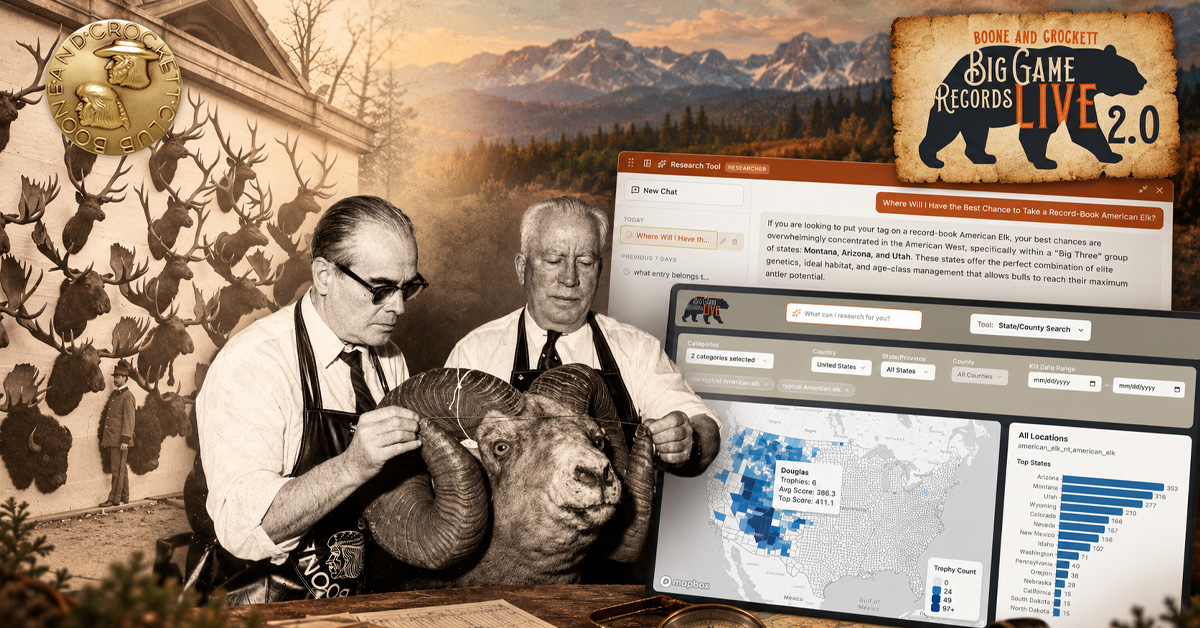
From America's top counties for record-book elk to the most productive day of the week to hunt, Boone and Crockett's Big Game Records Live 2.0 uncovers some surprising patterns in North America's hunting history.
If you're looking for a record-book elk, Arizona is a good place to start. The state has produced more Boone and Crockett entries for American elk than any other, including a remarkable concentration of big bulls in a handful of counties. And if you're wondering which day of the week has produced the most record-book animals, Saturday wins by a considerable margin.
Those are just two treasures buried in more than a century of Boone and Crockett Club records. With Big Game Records Live 2.0, hunters can explore that history in ways that go well beyond looking up the biggest animals ever taken.
The platform’s analytical tools allow users to compare trophy production by state and county, examine historical trends, and answer questions that once would have required hours of digging through records books. Here are a few examples of what the data can reveal.
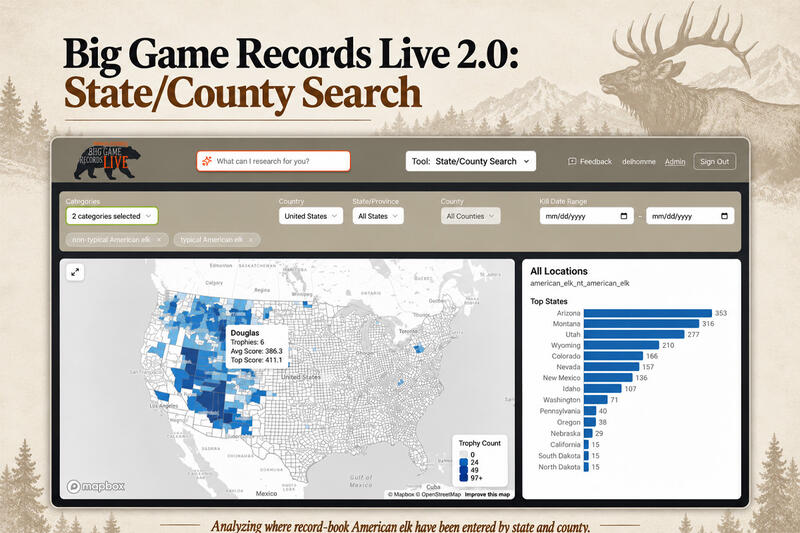
Which States Produce the Most Record-Book American Elk?
Montana produces more typical bulls than any other state, with 261 entries. But combine typical and non-typical, and Arizona takes the top spot, with 355 all-time entries to Montana's 317. The difference is non-typicals: Arizona has 122, more than double any other state. At the county level, Coconino County, Arizona leads North America with 97 entries. White Pine County, Nevada, ranks second with 90, and Apache County, Arizona, third with 75. Together with Navajo and Gila counties, the high country of central and eastern Arizona has produced more record-book elk than anywhere else on the continent. Drawing a tag there is the hard part. The data says it's worth the wait.
What’s the Most Common Day of the Week to Kill a Record-book Animal?
If you've always suspected that weekends are when the magic happens, the records agree. Of the more than 54,000 record-book entries with a specific date of kill, Saturday is far ahead of every other day, with more than 13,000 entries, about 23 percent of the total. Sunday is second with 16 percent and 9,633 entries. Together, the two weekend days account for roughly 40 percent of all entries. Monday and Friday each land around 13 percent, with Thursday coming in last. This isn't a recent trend, either.
Saturday has led in every era of the records, from before 1980 to today. Nothing suggests that big bucks and bulls are more active on weekends. The likelier explanation is simpler: weekends are when most of us can get into the field. Every hunter knows you can't fill a tag from the office, and more than a century of records backs that up. And if you want the woods to yourself, go on Thursday!
What's the Most Popular Caliber in the Book?
Are New World’s Records Getting Harder to Break?
Some Boone and Crockett world's records have stood for generations. Others have fallen within the past few years. Big Game Records Live 2.0 lets you examine those differences across species and categories, including how long individual records have stood and when new contenders have emerged.
Bighorn sheep, musk ox, and Rocky Mountain goats are among the categories that have seen world-record activity in recent years. Other records have proven remarkably durable. The world's records for typical American elk and typical mule deer, for example, date to the mid-20th century.
These contrasting histories raise some interesting questions. Are exceptional animals becoming more common in certain populations? Have improvements in wildlife management and habitat contributed to larger animals? Or are changes in hunter participation, access, and record-book submissions influencing the patterns? The records provide a starting point for exploring those questions, even if they cannot answer every one on their own.
Is It Worth Submitting an Animal That Qualifies for the Records?
Absolutely. Submitting a qualifying animal to the Boone and Crockett records is about far more than recognition for the hunter or a place in the record book.
The records provide a valuable long-term biological baseline that can help researchers and wildlife managers evaluate wildlife populations, habitat conditions, and the effectiveness of conservation programs across North America. By submitting an animal, hunters contribute another data point to a dataset that stretches back more than a century.
Ask the Records Your Own Questions
Every answer in this article came from one source: the Boone and Crockett Club's records, which now hold more than 50,000 official entries. With Big Game Records Live 2.0, you can search them yourself. The platform has 12 analytical tools built on that data. They include county-level trophy maps, a Method Visualizer showing the weapons and calibers successful hunters actually used, shot-distance analysis, and a Date of Kill tool for planning your time off. The Research Assistant lets you type a question in plain language, the way we did for this article, and get a sourced answer drawn from the full database and decades of Club publications.
A subscription costs $12 a month or $100 a year. Scout your next elk hunt county by county, or settle the next argument at camp, at Big Game Records Live 2.0. And if you take a qualifying animal this fall, enter it. Every entry adds to the record, so the next hunter who asks a question gets a better answer.