
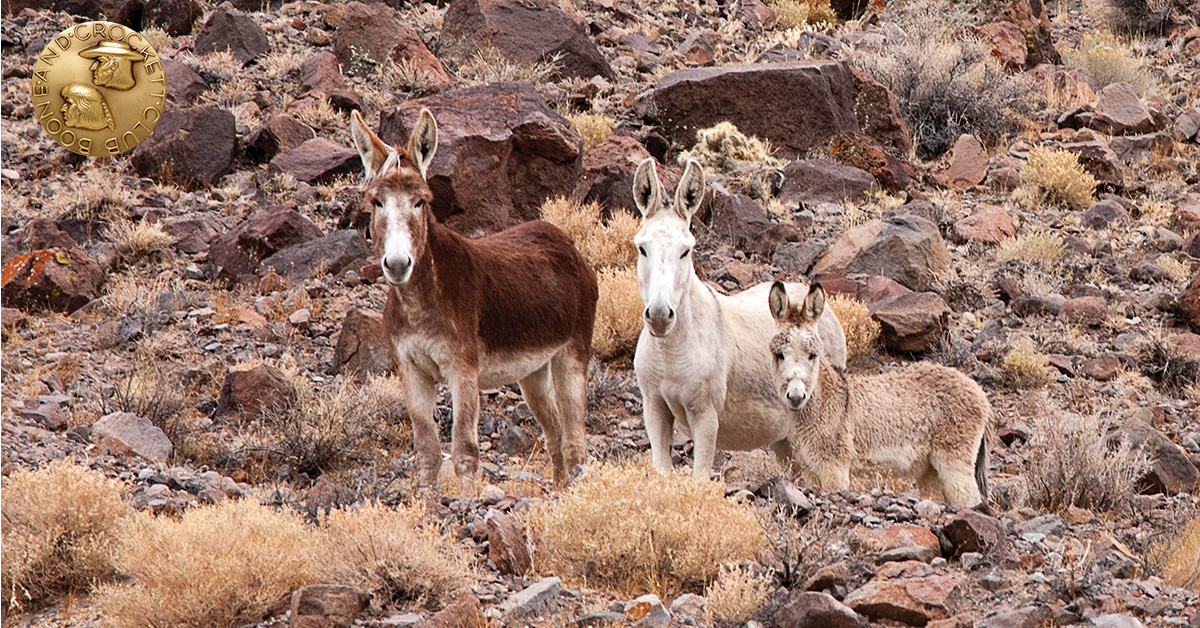
With wild horse and burro populations now exceeding 85,000 animals—more than triple the BLM’s own appropriate management levels—the Club advocates for the essential use of gathers and expanded sale opportunities to protect Western rangelands and native wildlife.
The Boone and Crockett Club offers its full support to the Bureau of Land Management (BLM) as the agency confronts a mounting crisis on our Western rangelands. Recent population data for 2026 reveals a stark reality: the number of horses and burros on the range has climbed to approximately 85,466 animals. This represents a 15% increase in just one year and places the population at more than three times the Bureau’s own Appropriate Management Level (AML) of roughly 25,600.
The current situation is untenable for the land, native wildlife, and the horses and burros themselves. Much of the West is currently experiencing a generational drought, leaving fragile high-desert ecosystems unable to support such a surge in large grazers, and it’s only poised to get worse as 2026 continues. As water holes vanish, the risk of thousands of animals dying from dehydration and starvation becomes a certainty rather than a possibility. By supporting the BLM’s use of gathers, the Club advocates for the only functional tool currently available to prevent ecological collapse.
Gathers are often misunderstood, but they are, in essence, simply management operations that round up excess wild horses and burros from public rangelands for off-range care. When on-range populations exceed the land's carrying capacity, they don’t just compete with native wildlife like elk, mule deer, and pronghorn; they fundamentally alter the landscape. Overgrazing destroys the riparian areas and sagebrush habitat that hundreds of native species depend on for survival. Removing excess animals is a step toward restoring our public lands and ensuring the BLM's multiple-use mandate.
The Boone and Crockett Club is also encouraged by the BLM’s initiative to expand "sale with restriction" opportunities. By broadening the pathway for these animals to move from taxpayer-funded holding facilities into the hands of qualified private owners, while maintaining strict protections to maintain humane care, the agency is seeking long-term, pragmatic solutions to a generational problem. The Club has always maintained that good conservation requires making difficult choices to preserve the integrity of the whole. Supporting the BLM in these efforts is a necessary step toward a future in which horses, burros, and native ecosystems can thrive.