
Know Your Effective Range
By Chad Carman
It’s fun to brag about how far a rifle can shoot. But things get really quiet when someone asks how far we can shoot—and still hit where we aim. They are two different numbers, and the gap between them can be the difference between filling a freezer and wounding an animal.
Rifles have a maximum effective range based on energy, bullet design, and quarry that is easily calculated on any ballistic app. Hunters have an effective range, too. And it’s the only one that matters when an animal is standing broadside and the clock is ticking.
Here’s the catch: effective range isn’t a single number. It’s the product of multiple things working together or against each other: equipment, position, skill, and environment. Change any one of them and the number moves. So the real question is never “How far will this rifle shoot?” It’s “How far will I shoot, with this setup, from this position, in these conditions, today?”
Ground Truth Your Ability
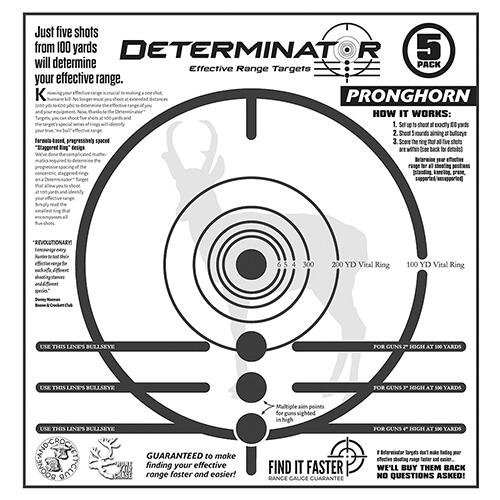
The only honest way to answer how far to effectively hit a target in field conditions is to go find out. To put a number on it, I used a set of Effective Range targets, because they eliminate the need to calculate math at longer distances based on the kill zone of an animal. Set the target at 100 yards, fire five cold rounds from your common hunting position—no bench, no sandbags, no do-overs. Then read the smallest vital ring that holds all five shots. That ring is labeled with a yardage, scaled to the animal’s vital zone, and that yardage is the honest effective accuracy range for that animal, that rifle, that position, at that time. Bigger vitals, like an elk’s, forgive a group that a mule deer won’t. Whatever the rifle used, the point is the same: measure it, don’t guess it.
To break it down, I decided to humble myself on purpose, with two setups from opposite ends of the shooting spectrum.
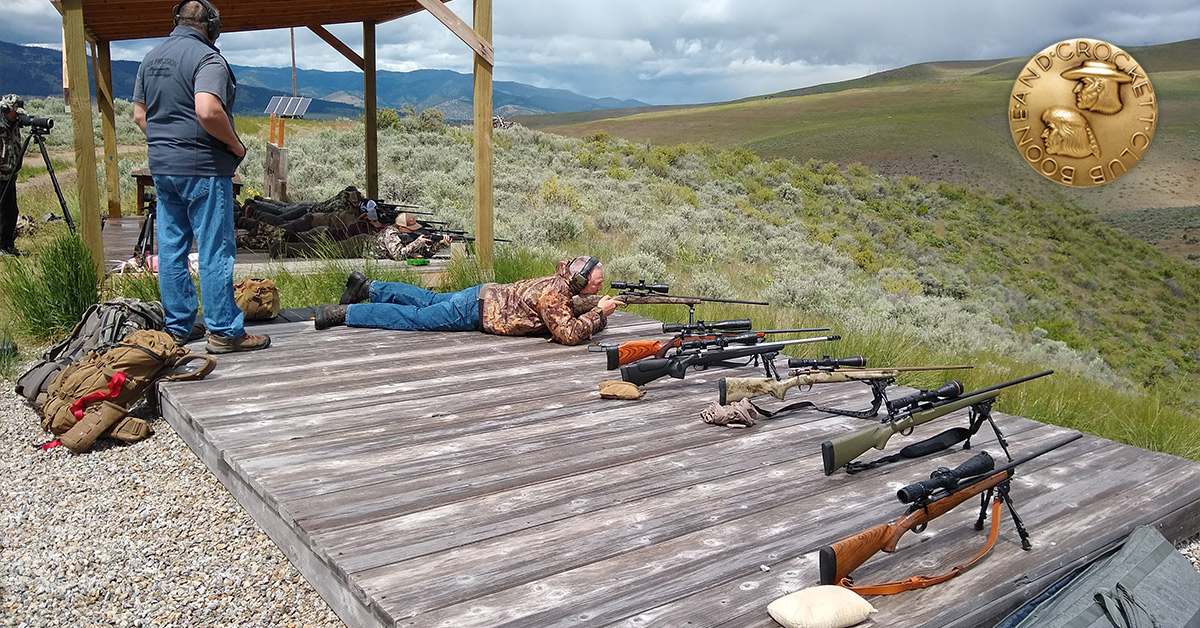
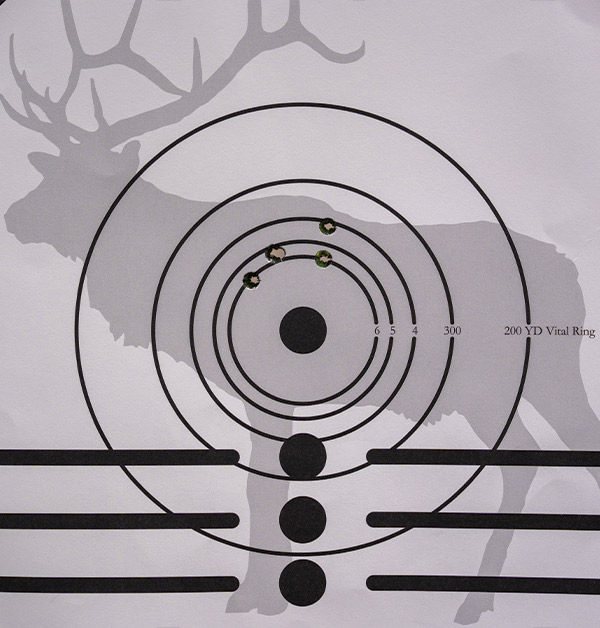
First, I shot my Browning X-Bolt 2 Speed SPR in 6.8 Western in a prone position. The setup was about as good as it gets. I had an accurate rifle, a high ballistic coefficient (BC), flat-shooting round, and the steadiest field position most of us will ever use.
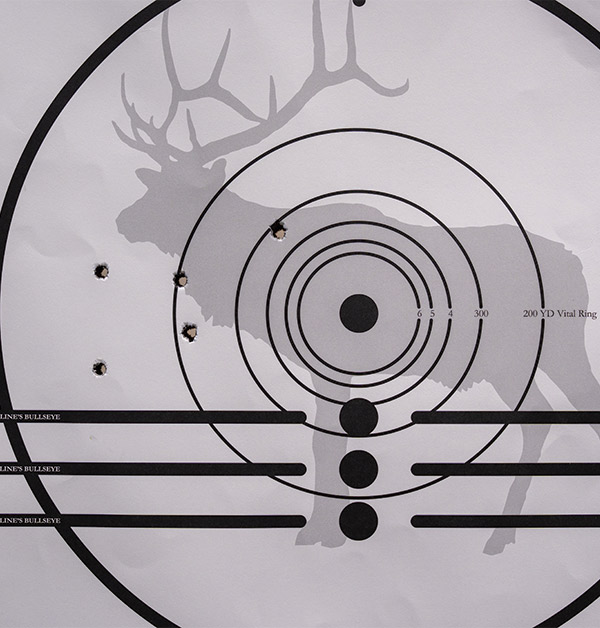
Then I picked up my 1951 Winchester Model 94 in .30-30 and shot it standing, offhand. It’s an old lever gun with a rainbow of a trajectory. And I shot it using the shakiest position there is. Same shooter, same trigger finger, same afternoon. Five cold rounds each.
Image
| Image
|
The X-Bolt printed a solid group well within the 600-yard accuracy range of the target. You’ll notice I’m zeroed high at 100 yards for this particular rifle, but you get the point. The Model 94 came in consistently left, but I’ll blame that on my lack of experience with iron sights and unwillingness to play with my rear dovetail on a 1951 rifle, printing a respectable 100-yard vital grouping that could potentially be shifted over to a 200-yard ring if I wanted to adjust my rear sight. Same guy. Wildly different numbers.
Four Factors Affecting the Shot
1. Equipment
The rifle, the cartridge, the glass on top. My tack-driving 6.8 Western with quality Leupold glass sitting on a high-end bipod let me hold tighter and shoot flatter than a 75-year-old lever gun wearing iron sights ever could. Gear won’t make you a marksman, but it sets the ceiling on how far your marksmanship can reach. Same goes for high-BC calibers vs. lofty .30-30s.
2. Position
This is the one most hunters fail to account for. Prone is the most stable position there is, but it can be impossible to shoot from in many mountain or tall-grass prairie situations. Despite my best efforts to emulate John Wayne, I found that shooting offhand with a lever-action turned me into a bobblehead. Utilizing the same rifle in two different positions yields two completely different outcomes of accuracy, which is why a group shot off sandbags on the bench a week before the season tells almost nothing about how effective it will be in a hunting position.
3. Skill
3. Skill refers to individual abilities like trigger control, breathing, follow-through, and reading the wobble of crosshairs. My skill didn’t change between targets, but skill is what shrinks the group inside whatever equipment and position are chosen. It’s the one factor that a shooter can fully own, and the only one that gets better with practice. A top Precision Rifle Shooter will likely have a substantially longer effective range with their equipment, while your dead-eye grandpa might be able to lay down a whitetail at 150 yards with iron sights every time.
4. Environment
I shot on a calm day, which was generous of me. Add a 25-mph crosswind and it changes in a hurry. The 6.8 Western drifts a few inches downrange; the slow, heavy .30-30 gets shoved around like a screen door in a gale. Wind doesn’t just move the bullet; it eats into the range earned on a still morning stalk.
All these factors come into play with every shot taken. So what did I learn from this exercise? Nothing can beat practicing from every position that could be expected in the field—prone, kneeling, sitting, off a pack, over shooting sticks, and yes, standing offhand for when there’s nothing to lean on. Shooting from a bench only confirms the equipment portion and does nothing to confirm field positions or conditions. A great start would be to run the drill for every position you could envision encountering in the field and write the number down. That mule deer doesn’t care about a half-inch group from sandbags.
Then pick a few days a year to go to the range when the weather is genuinely miserable with wind, cold, rain, and low light. That’s when those four factors stop being theory and start showing up on paper. It’s easier to learn more about effective range in one nasty afternoon than in a month of blue-sky range days—and that education comes with a paper target instead of a wounded animal. None of this is a knock on the old lever gun. I love that rifle, and inside its honest range it’ll kill just as cleanly as anything in the gun safe. That’s the whole lesson. The rifle isn’t the problem. The cartridge isn’t the problem. Pretending maximum distance impact at the range applies to a worst-case situation—that’s the problem, and the animal is the one who pays for it.
Shoot before the season, not after the miss. Learn the effective range for each rifle, each position, and the conditions you’ll actually hunt in. Then hunt inside it. Five honest shots at 100 yards will tell the truth every time.