

The Living Classroom
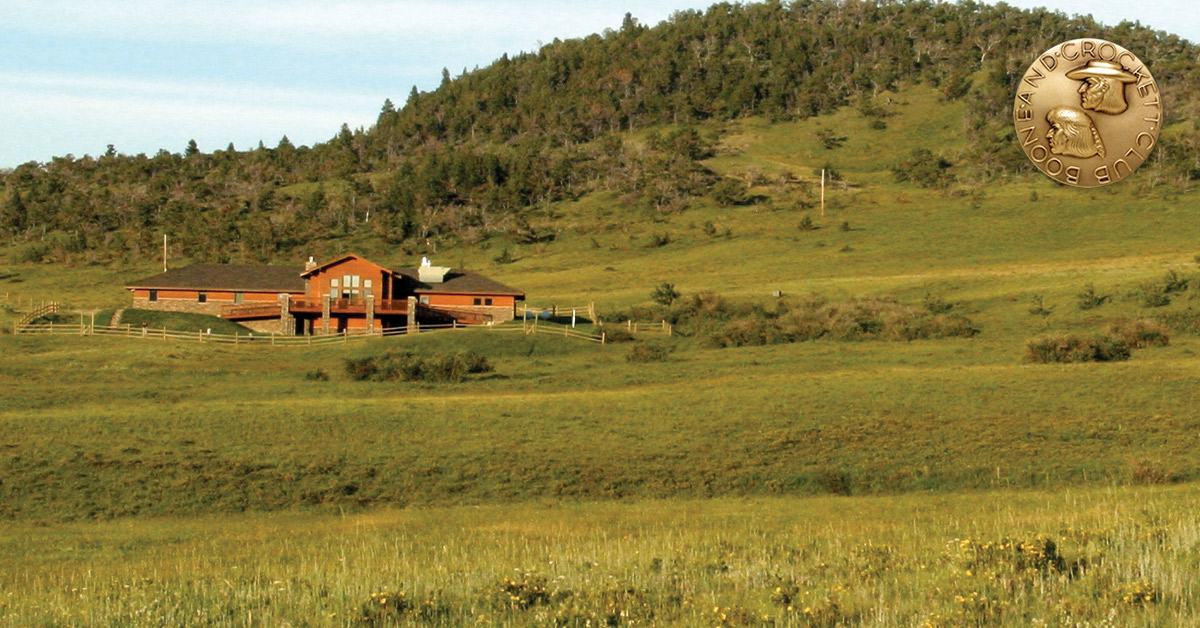
For 25 years, the Rasmuson Wildlife Conservation Center and Anderson Conservation Education Program have traded traditional classroom desks for Montana’s Rocky Mountain Front, proving that the best way to understand the wild is to step right into it.
This year, the Elmer E. Rasmuson Wildlife Conservation Center (RWCC) marks 25 years since it opened its doors on the Theodore Roosevelt Memorial Ranch (TRMR), a 6,060-acre working cattle ranch tucked into the east slope of the Rocky Mountain Front, roughly 10 miles west of Dupuyer, Montana. It was here, a quarter-century ago, that a young master’s student, one of the Boone and Crockett Club’s first at the University of Montana, was teaching kids to love and appreciate wild country out of the back of her vehicle.
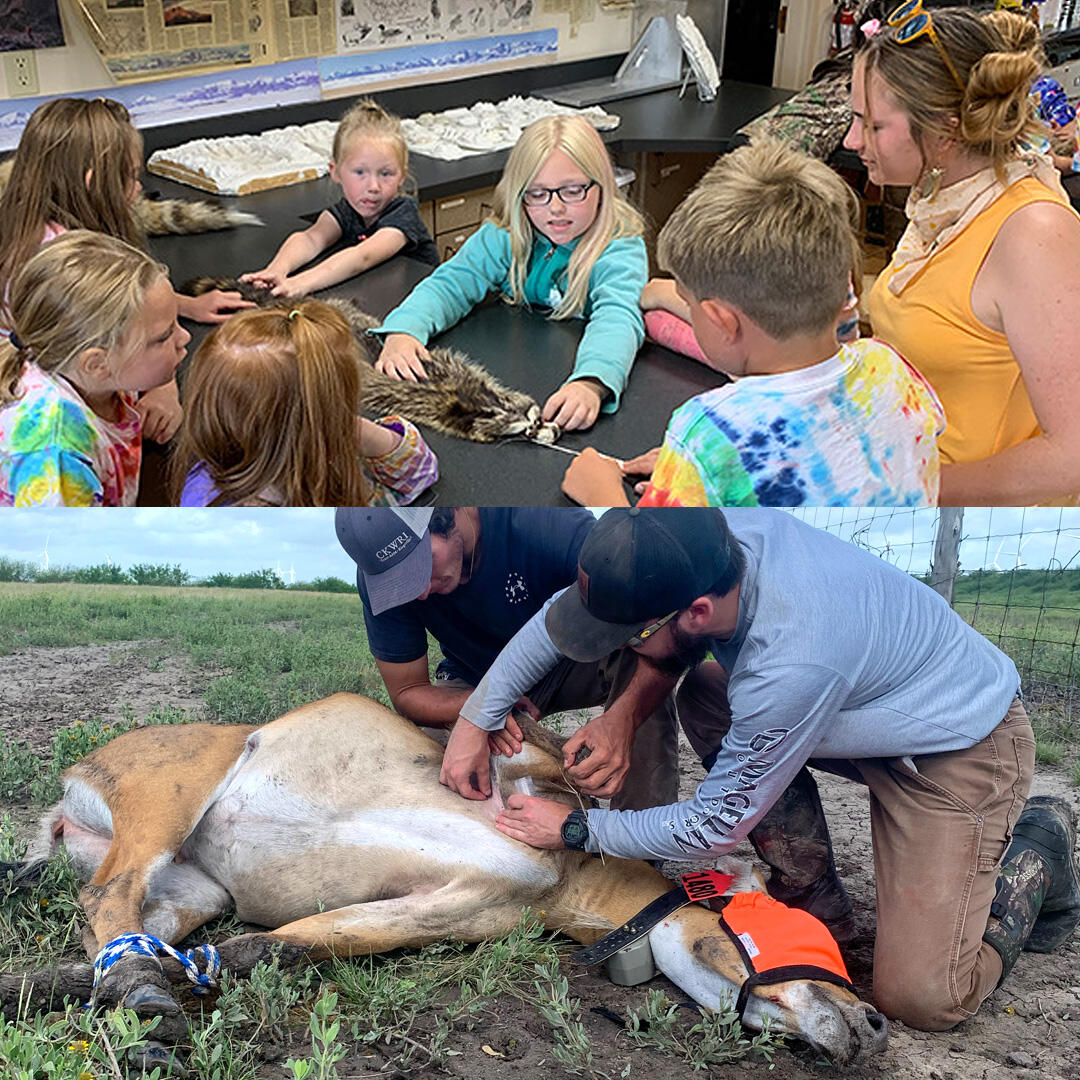
Dr. Alice B. “Lisa” Flowers, professional member of the Club since 2001, had plastic Rubbermaid trunks full of plant presses, wildlife skulls and hides, rocks and fossils, and plaster track casts—all designed to teach local schoolkids and their teachers about their own backyard. She would visit local schools and use the garage and living room of the old Member’s house on the ranch as a makeshift classroom, Flowers taught them how animals, humans included, fit into this ecological puzzle. The vision was that citizens would treasure the shared natural and cultural heritage and advocate for diverse wildlife, Fair Chase hunting, and well-informed natural resource management to sustain their quality of life. The overarching goal for the creation of the program was to build a common ground understanding for sustaining healthy ecosystems through education
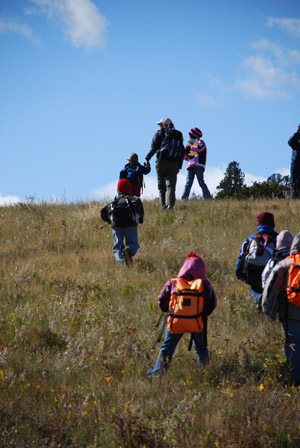
Today, thousands of school kids have benefited from the conservation-oriented curriculum at the RWCC. In fact, 22,126 students, 4,431 teachers, visitors from 46 states and 11 countries, and a cumulative headcount of more than 47,000 people have walked through that facility since the doors opened in 2001. But the numbers only tell part of the story.
The first chapter starts in 1987, when the Club purchased the Triple Divide Ranch (soon renamed) as part of its centennial celebration. Words to describe this landscape hardly do it justice. The ranch sits where the prairie and the Rocky Mountains collide. Its limestone reefs and rolling hills are home to grizzly bears, gray wolves, elk, moose, mule deer, pronghorn, eagles, long-billed curlews, and other animals big and small.
The Club's original vision for the property was threefold: conservation research, ranch management, and education. What it lacked in the early years was a clear sense of how to deliver on all three simultaneously and make the information relevant and understandable to the public.
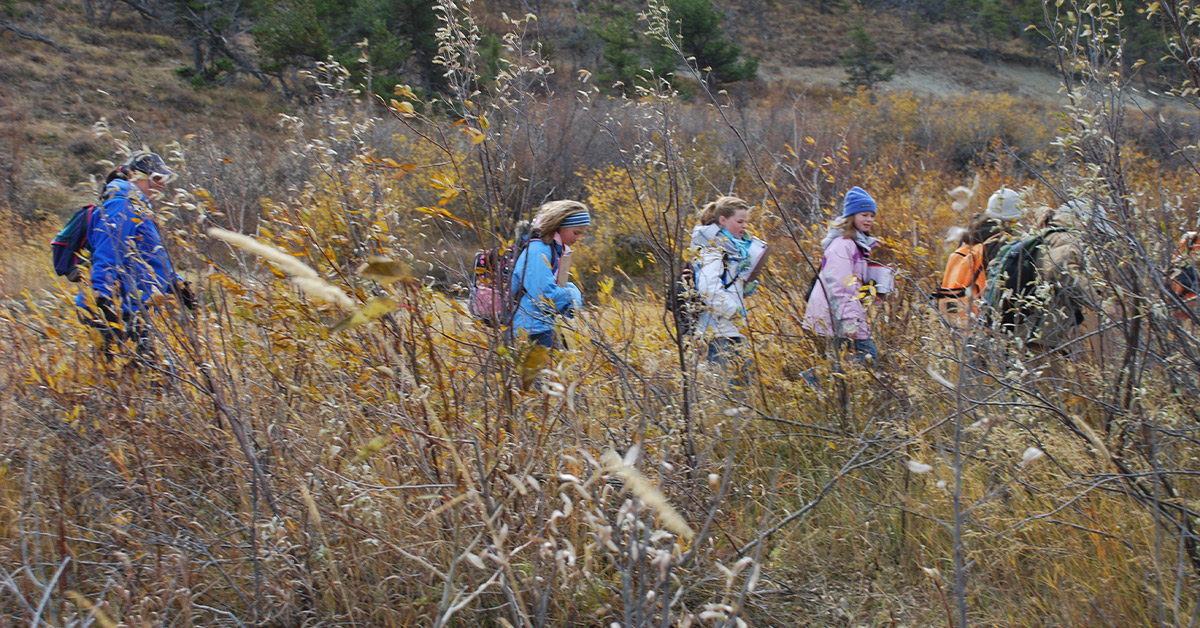
Flowers helped answer that question. Working under Dr. Hal Salwasser—then the Boone and Crockett professor at UM—Flowers launched a conservation education pilot curriculum in 1994, using the ranch as her outdoor classroom. The program’s concept was simple enough: go into the classroom to introduce the topics for field study, get students outside, have them touch, see, hear, taste the wild, and let the land and nature teach—with some guidance, of course.
Local school buses from tiny towns like Dupuyer, Bynum, and Browning brought kids to the RWCC, and what they discovered there stayed with them. Flowers tells the story of a first-grader from Dupuyer School who came to the ranch monthly for science class with his teacher and fellow K-8 students. Together, they learned specifically about the importance of water quality monitoring on Dupuyer Creek. Excitedly, he asked his parents to attend a field class. “Here was this three-foot-tall kid leading his family through the fieldwork, explaining what he was measuring and why,” Flowers said. “He had total ownership. That's what happens when you put kids in a real place to do hands-on work."
By the late 1990s, the program had outgrown the garage space and Rubbermaids. George Bettas, who served as the Club's executive director, had been charged by then-Club President Earl Morgenroth with finishing what had been started. A permanent facility had been discussed, studied, and debated. There was, of course, the money question. Enter the Rasmuson family.
Bettas was working at the ranch when he received a call from Ed and Cathy Rasmuson, son and daughter-in-law of Elmer E. Rasmuson, a longtime Boone and Crockett member who had died in December 2000 after a career as one of Alaska's most ambitious citizens. Elmer was a graduate of Harvard’s business school who built the National Bank of Alaska, the largest financial institution in the state. He was also mayor of Anchorage, a champion of civil rights, a presidential appointee, and an extraordinary philanthropist. Ed and Cathy Rasmuson flew to Conrad in their Gulfstream aircraft, where Bettas and Flowers picked them up and brought them back to the ranch.
Lee and Penny Anderson had already donated two million dollars to fund the education program, but Bettas was still raising funds to complete the education center. Before the Rasmusons’ visit was over, Cathy pulled out her checkbook.
"Count the zeros and make sure there are enough," she told Bettas. Then she handed over a check for a million dollars.
Construction of the 5,500-square-foot Elmer E. Rasmuson Wildlife Conservation Center was completed in 2001. The facility sits on the ranch in a style that blends into the surrounding landscape, with sturdy “high wind” construction and wide views of the massive limestone reefs to the west. It’s also built for function with six dormitory-style bunkrooms that sleep up to 32 guests, a commercial kitchen, and a laboratory classroom for 30 students. The “Backbone of the World”—as the Front is known to the Blackfeet Nation—and the Bob Marshall Wilderness Complex serve as a backdrop.
The RWCC is tangible proof that if you build a world-class conservation education facility on a working cattle ranch in one of the most remote corners of Montana, people will come.
And they have, every season since. The Lee and Penny Anderson Conservation Education Program runs from April through October, serving K-12 students whose school buses still make the long drive out to Dupuyer. University of Montana researchers use the ranch as a living laboratory to track wildlife-livestock interactions, monitor predators, and gather baseline ecological data. Scouts, educators, land managers, and conservation professionals move through the facility in a steady stream. When they leave, they know more about how wild systems work and the importance of keeping those systems healthy.
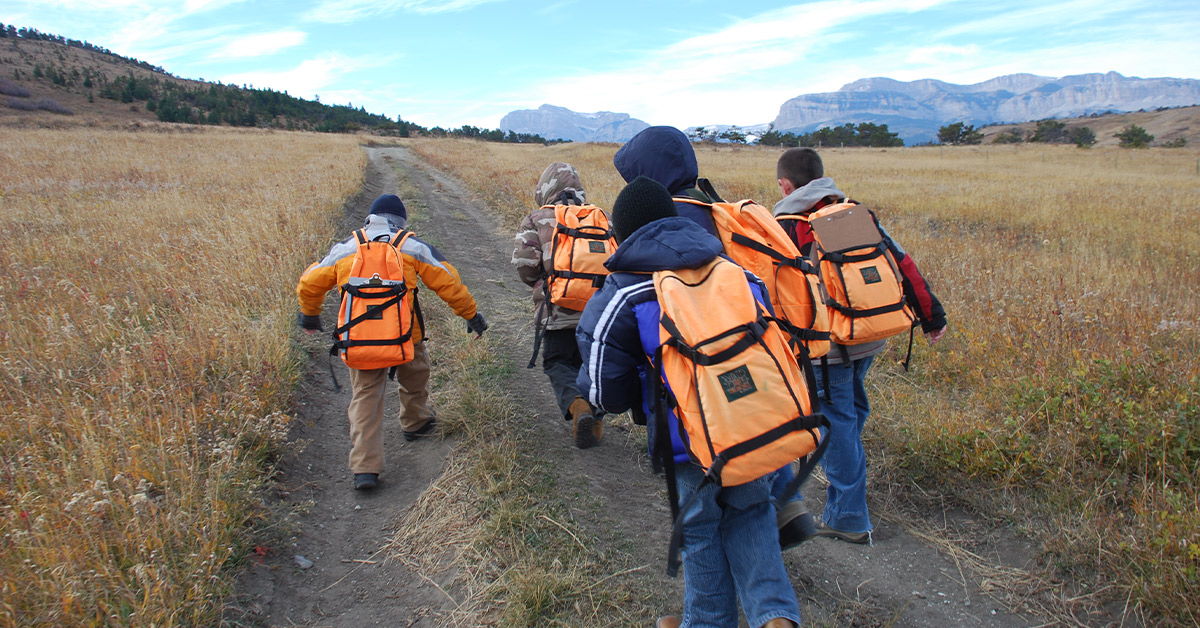
Sandy Poston, a professional member of the Club and former longtime staff member, remembers the underlying motivation for the conservation education program. “These students are the future,” she said. "The Club wanted leaders in D.C. to understand how conservation works.”
That future is being decided, in no small part, at places like the RWCC. Working ranches face economic pressures that threaten the habitat they sustain. Wildlife populations shift. The next generation of wildlife managers, ranchers, and voters is currently in middle school, and what they learn about the natural world will shape the decisions they make for the next half-century.
The job of the RWCC is to make sure some of those kids come here first. To stand on a ridge above Dupuyer Creek. To press a water quality probe into a cold stream. To watch mule deer move across the hillside. To understand that conservation is real and necessary. Dr. Flowers understood that before there was a building to teach from. She understood it well enough to load up a Rubbermaid trunk full of hands-on materials, drive to local schools from a remote ranch in the middle of nowhere, Montana, and start anyway.
Twenty-five years later, the building stands. And the students keep coming to gain lasting awareness, understanding, and appreciation from field-based experiences.
Want to see how the Club is shaping the next generation of conservation leaders? The Boone and Crockett Club is building the pipeline of scientists, policymakers, and communicators who will carry conservation into the next century. Your donation will also support youth and digital outreach that connects new audiences to hunting and the natural world. Donate today to invest directly in the people and programs preparing tomorrow's conservation leaders.