
Lowell Baier - the Man in the Arena
1940-2025 B&C Past President - 2008-2010
By PJ DelHomme
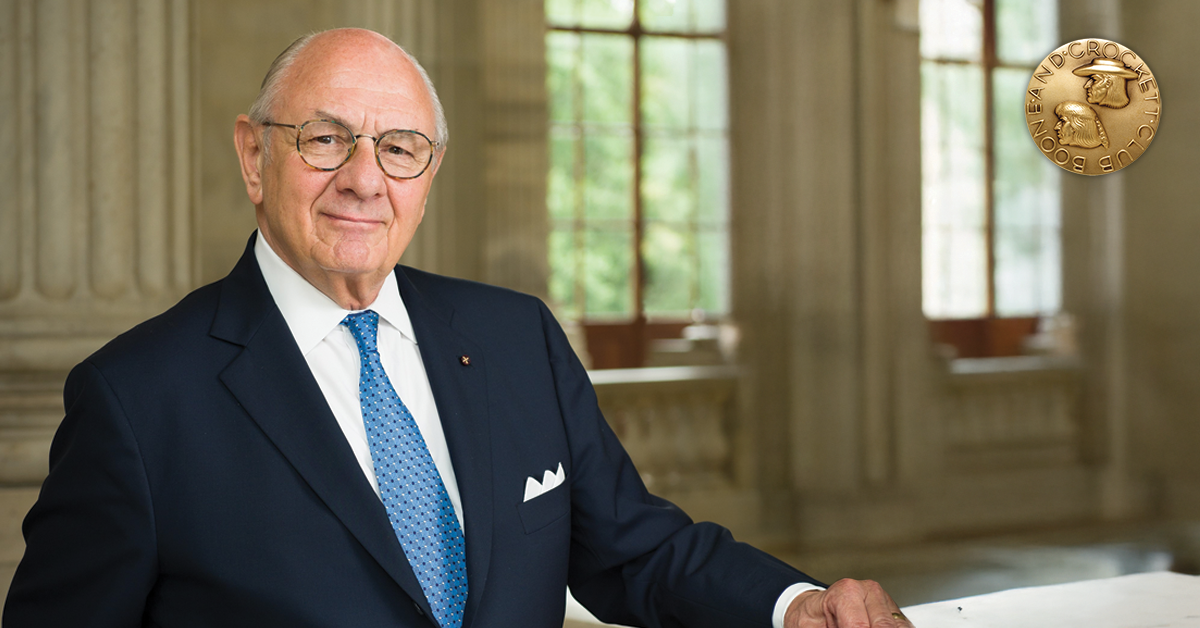
On November 21, 2025, the American conservation movement lost a visionary leader. Lowell Baier, who passed away at the age of 85, was a man whose life mirrored the “strenuous life” of his hero, Theodore Roosevelt. A practicing attorney, successful entrepreneur, award-winning author, and tireless advocate, Lowell’s legacy is embodied in the landscapes he fought to preserve, most notably through his profound and multi-decade leadership within the Boone and Crockett Club.
Roots of a Conservationist
Lowell Baier was born in 1940 in Chicago, but his conservation ethic was forged in the rural landscapes of a northern Indiana farm and his grandfather’s homestead ranch in Montana. These early experiences instilled in him a lifelong passion for wildlife and wild places. By the age of 14, he was an Eagle Scout, and at 16, he was appointed a page boy in the U.S. House of Representatives. This role introduced him to the inner workings of Washington, D.C., a city he would come to know well.
After graduating from the Indiana University School of Law in 1964, Lowell established himself as a prominent attorney and developer of award-winning commercial properties through Baier Properties, Inc. Yet even as he built office buildings and shopping centers, he remained interested and involved in conservation. In the early 1970s, he was one of the founders of the Foundation for North American Wild Sheep, now the Wild Sheep Foundation, which has since funded the restoration of wild sheep habitat and populations across North America and beyond, including his own exploratory work in Russia and Mongolia.
The Boone and Crockett Club: From Member to President
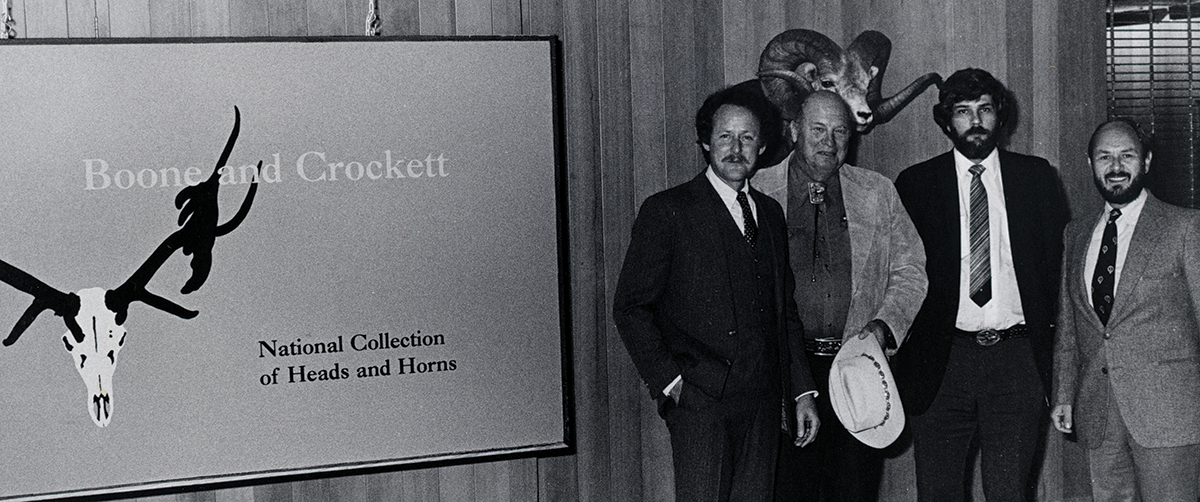
Lowell found his people in the Boone and Crockett Club. He became active in the Club in 1975 and was elected a Regular Member in 1980. Over the following decades, he moved through the leadership ranks, serving as executive vice president before being elected the Club’s 29th president, a role he held from 2008 to 2010.
Read about Lowell's Efforts to save the National Collection of Heads and Horns from the landfill.
Lowell was instrumental in establishing the National Conservation Leadership Institute, designed to train mid-career government wildlife managers. He led the creation of natural resource Ph.D. programs at several major universities to ensure that the profession’s future was grounded in rigorous scholarship.
In recognition of his service, the Club named him its first President Emeritus and elected him an Honorary Life Member in 2016.
The Elkhorn
One of the crowning achievements of his conservation career—and a defining moment for the Boone and Crockett Club—was the successful three-year national campaign to save Theodore Roosevelt’s historic Elkhorn Ranch. Located in western North Dakota, the Elkhorn Ranch was where Roosevelt began to conceive of what would become the American conservation movement.
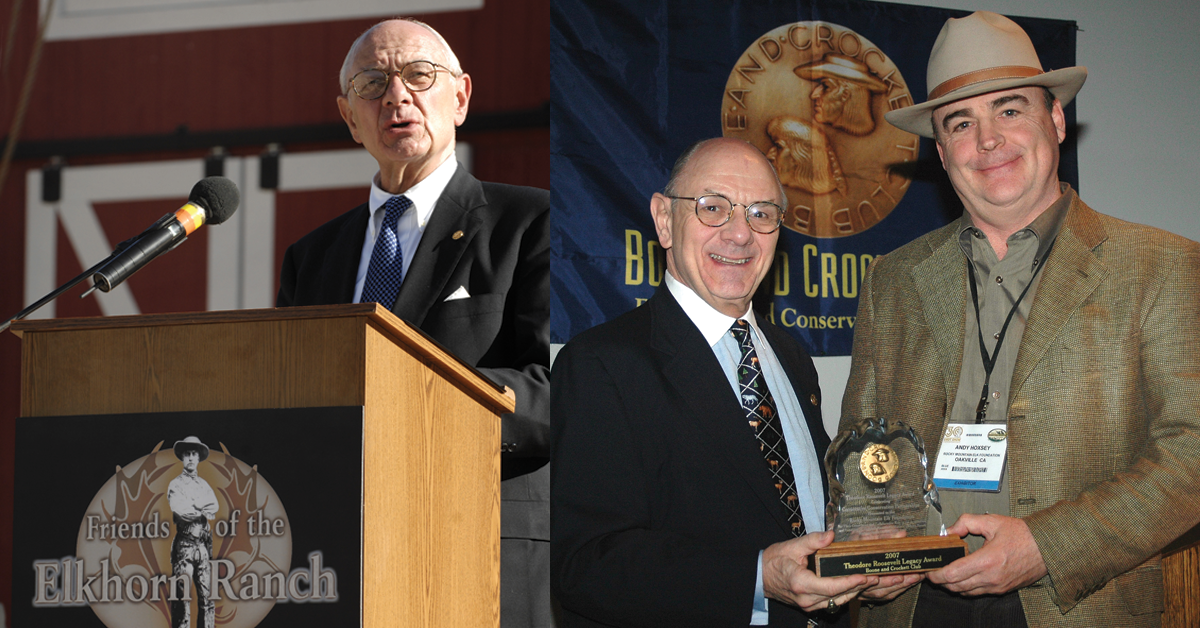
In the early 2000s, Lowell became aware that one of the last areas adjacent to and overlooking Roosevelt’s Elkhorn Ranch was at risk of development and mining. He formed the Friends of the Elkhorn Ranch and led a $6.5 million campaign to purchase the land for transfer to the US Forest Service as part of its Dakota Prairie Grasslands. Lowell lobbied Congress for Land and Water Conservation Fund appropriations, secured grants from the National Fish and Wildlife Foundation, and raised the remaining private funds.
During this campaign, Lowell began referring to the Elkhorn Ranch area as the “Cradle of Conservation,” a name by which it is now widely known. His leadership forever protected the viewshed of Roosevelt’s ranch headquarters, preserving the silence and serenity that Roosevelt himself once sought. Today, a survey marker on a bluff overlooking the Little Missouri River commemorates Lowell’s successful leadership of this monumental effort.
A Scholar and Advisor to Presidents
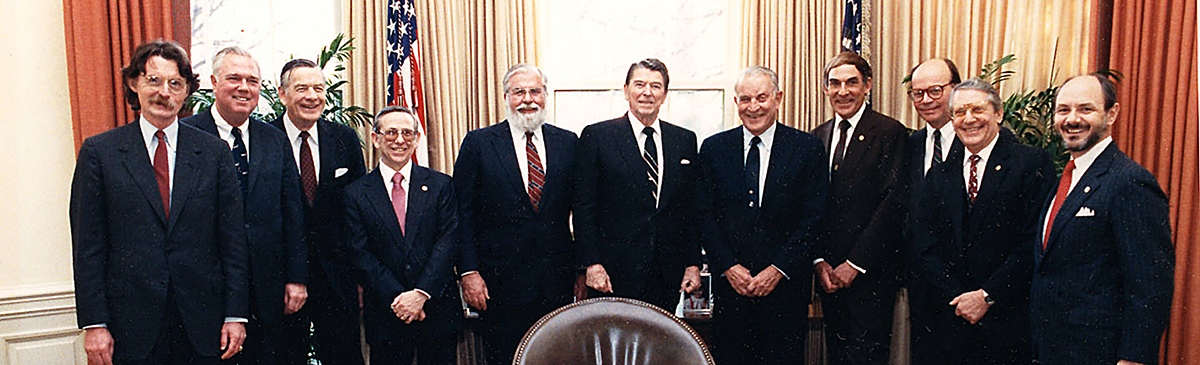
Lowell’s impact extended beyond the field. As a legal and environmental historian, he took the lead in drafting President George H.W. Bush’s wildlife conservation agenda in 1989 and served as a counselor to every subsequent presidential administration.
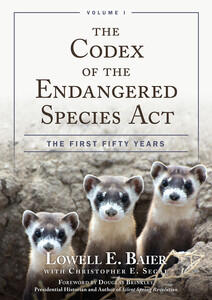
If Lowell ever sat still, it was only because he was writing. He authored six major books on conservation law and policy. His most ambitious work was a trilogy on the Endangered Species Act (ESA), released during the Act’s 50th anniversary in 2023. Earning The Wildlife Society’s award for best biography and history of wildlife management, The Codex of the Endangered Species Act is an exhaustive, 1,100-page definitive history of the law’s first 50 years and a roadmap for its future. Lowell argued passionately for flexibility within the ESA, advocating for conservation without conflict and a shift toward more collaborative conservation efforts with private landowners to help avoid listing species altogether.
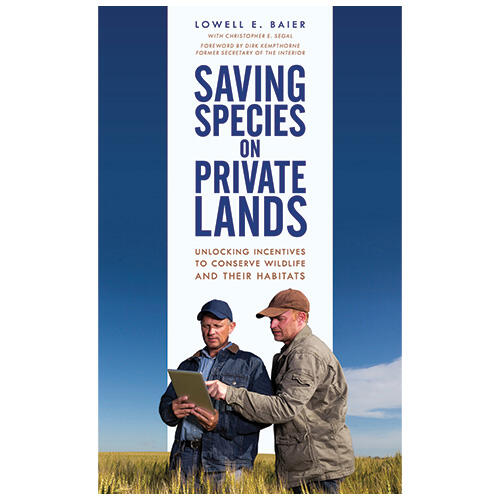
He also authored other notable works: Inside the Equal Access to Justice Act (2016), which examines the detrimental effects of litigation on wildlife management; Federalism, Preemption, and the Nationalization of American Wildlife Management (2022), a study of how federalism has shaped wildlife management in America; and Saving Species on Private Lands (2020), which promotes collaborative conservation. His alma mater, the Indiana University Maurer School of Law, presented him with its highest honors and, following a $20 million gift, renamed its main facility Baier Hall in 2015.
A Man of Character and Legend
Beyond the accolades and the legal victories, those who knew Lowell remember a man of incredible character and legendary loyalty. He was a collector of 19th-century animalier bronzes, which he kept in his ‘Crusaders’ Court at home. He was also known for his gift for storytelling. He loved telling the story of meeting a young Willie Nelson in a bar, sleeping on Johnny Cash’s couch, and then using his connections in the legal community to help Willie with industry hurdles. From then on, whenever it was “tour time,” Willie would reach out, and Lowell would find himself on the tour bus, rolling through the South long before any of them had made it big. “Lowell spent a year touring with Willie,” recalled Lowell’s friend and fellow Club member John Organ. “Willie would bring Lowell out for one song, where Lowell would add his deep voice.”
Then there was the time Lowell’s exploratory work with wild sheep pushed him into the most remote mountains of the Himalayas. With a little help from the Red Army, he documented fragile sheep populations in landscapes that demanded as much diplomacy as they did stamina. His efforts in the region eventually led to the creation and implementation of wildlife conservation programs for sheep in both Russia and Mongolia.
On a later expedition in the Aleutian Islands, a violent storm system pinned down his small crew as they were surveying the endangered Aleutian cackling goose. Cut off from resupply and reliable communication, they rationed what they had, rode out the weather, and were officially declared missing. They made it back, but the story stayed with him for the rest of his life.
A Lasting Legacy
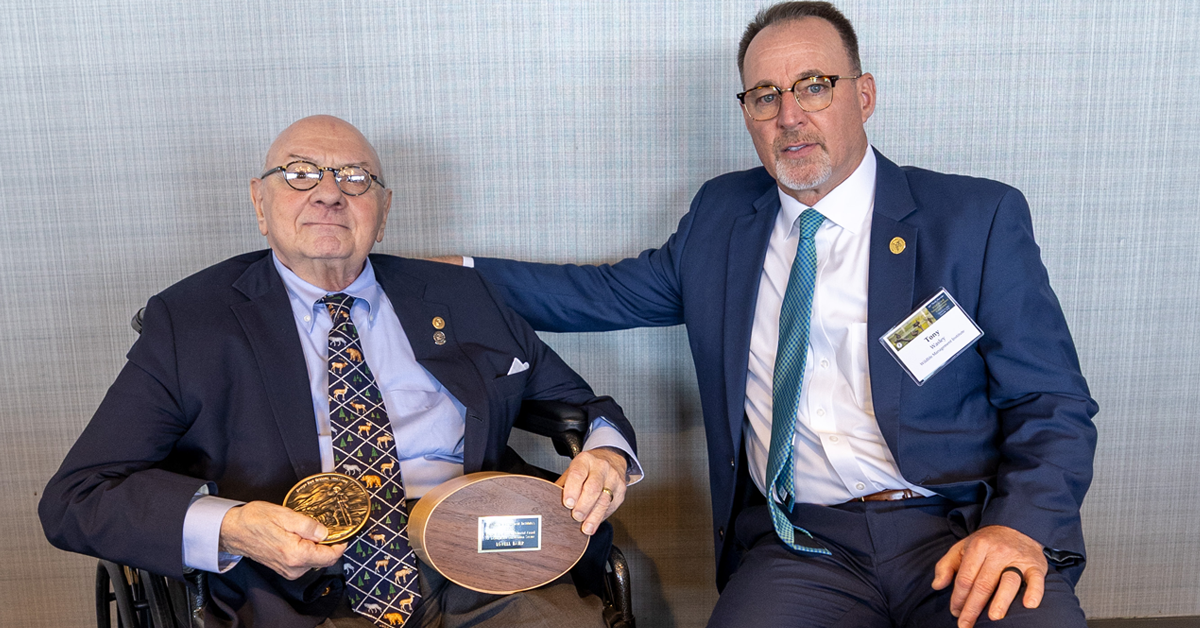
Lowell’s awards were as numerous as his achievements. He was named Conservationist of the Year by numerous outfits: the National Fish and Wildlife Foundation (2008), Outdoor Life (2010), and the Association of Fish and Wildlife Agencies (2013). In 2016, the National Wildlife Federation presented Lowell with the Jay N. “Ding” Darling Conservation Award, its highest honor. In 2025, he received the George Bird Grinnell Award for Distinguished Service, the Wildlife Management Institute’s highest honor. In his final years, Lowell did not rest. He was working on a biography of George Bird Grinnell at the time of his death. For members of the Boone and Crockett Club, Lowell was more than a former president; he was a steady hand and a clear voice for the Club’s mission. He understood that loss of biodiversity and climate change would shape conservation for decades, and he worked to leave behind institutions and ideas equal to that task. He didn’t stand on the sidelines. He worked in courtrooms and boardrooms, on the ground, and with his words. His legacy lives in the laws he shaped, the people he mentored, and in the lands he helped protect.
B&C Members Remember Lowell Baier
“There was no one quite like Lowell. He was usually very knowledgeable on any topic of conversation, always focused, and often intensely so. Lowell was never idle. If you spent time with him then likely you were involved in a project with him. He was dedicated and hard-working. He was also a passionate collector of many things, a lover of dogs, warm and generous with a big laugh, and a steadfast friend. He is greatly missed and will be long remembered.” — Simon Roosevelt, B&C Executive Vice President of Conservation, Regular Member
“Lowell was one of the few members who really grasped the original vision/purpose of the Club’s founding. He helped revitalize that original purpose in so many ways. His understanding of the power and necessity of the hunter/conservation model benefited everyone who loved and cared for our public wildlife and public lands. He was my friend.”
— Bob Model, B&C Past President, Honorary Life Member
“Once, when Willie came to D.C. on his tour, he called Lowell and asked Lowell if he could find him a golf course to play and relax before the show. Lowell called me; I called a friend who was a member of the Congressional Country Club, and we hosted the band for a day of golf on the renowned course. It was great to see the tour bus pull into the stodgy club and all the band members disembark in their cut-off shorts and tee-shirts, ready to play. We had a great time, including the post-round partying on the tour bus.”
— Joel Suntum, Attorney and Colleague
“It was my great honor to know and work with Lowell Baier for over 13 years. Lowell was a firm believer in hard work and dogged persistence who shunned the limelight, and he never failed to demand excellence of himself and all around him. But he was also a keen observer of human nature, a tireless teacher, and a sharp wit. He never missed a chance to educate and uplift those around him. My life and career have both been immeasurably enriched for having Lowell as a mentor and, I am proud to say, friend.”
— Chris Segal, Wildlife and Natural Resources Attorney, Law Offices of Lowell E. Baier, 2011-2024
“Lowell Baier became a great friend soon after he joined the Boone and Crockett Club as a Regular Member in 1980. He was a good supporter during my time as president, and we continued a great relationship for years after. While with B&C, I was involved in several productive efforts, one of the most significant being my work to move Lowell through the nomination process, putting him in line to become president in 2008. While others will document the significant aspects of Lowell’s many accomplishments, I will end by expressing my gratitude for our everlasting relationship. His heart and soul will be missed. God bless.”
— Stephen S. Adams, B&C Past President, Honorary Life Member
“Imagine a young Lowell Baier riding with Willie Nelson on his tour bus or trekking (successfully) the plains and mountains of Mongolia for wild sheep. He, too, may have “imagined” the Willie part, but Mongolia was real—we have photos. Hidden compartments composed his life: real estate, art, the Catholic Church, and U.S. Capitol backrooms at least. We cheered him and ribbed him (he loved both), but he was TR’s image of a daring man who wins or fails, stumbles or prevails, and starts again. He dreamed in T.E. Lawrence’s way, in the daytime, living the dreams with open eyes to make them possible. That made him a paragon of this Club and an exemplar.”
— Greg Schildwachter, B&C Professional Member