
My Heart’s in the Highlands
My Heart’s in the Highlands, my heart is not here;
My heart’s in the Highlands a-chasing the deer.
— Robert Burns
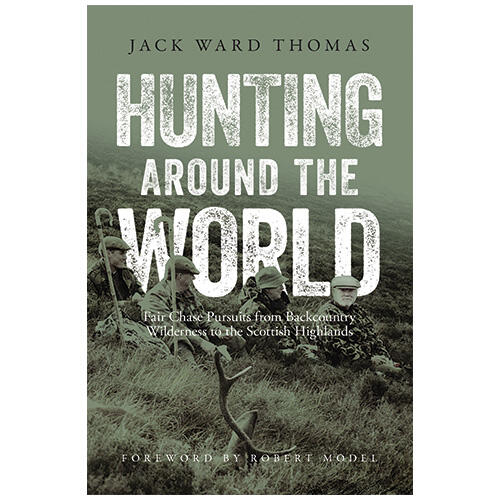
12 page preview of Hunting Around the World
By Jack Ward Thomas
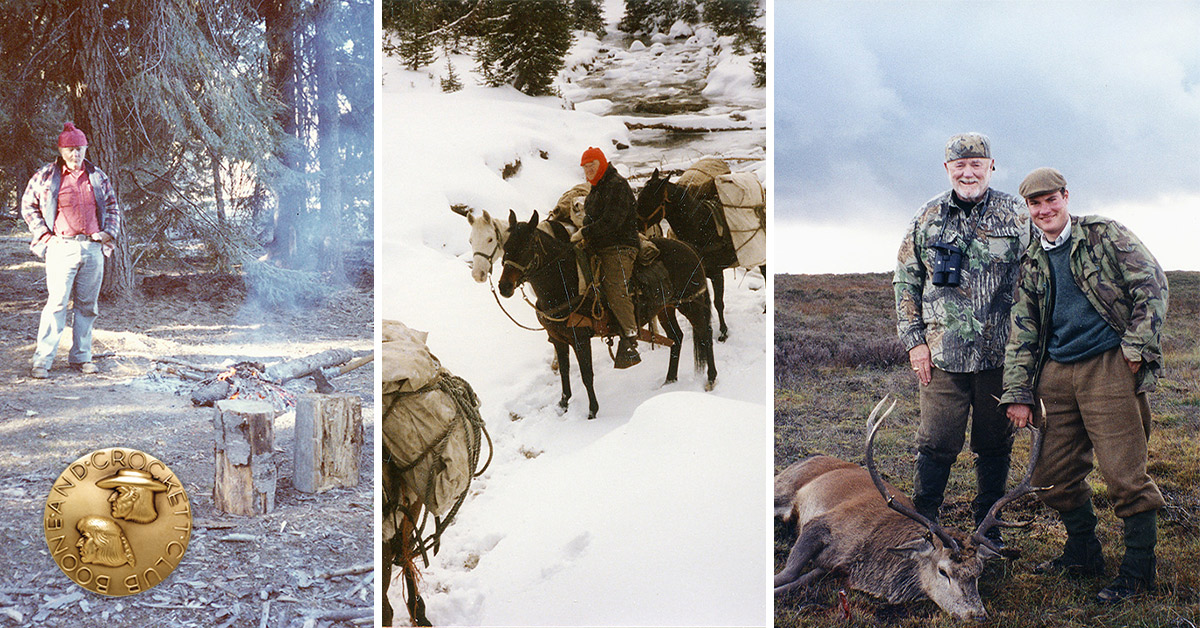
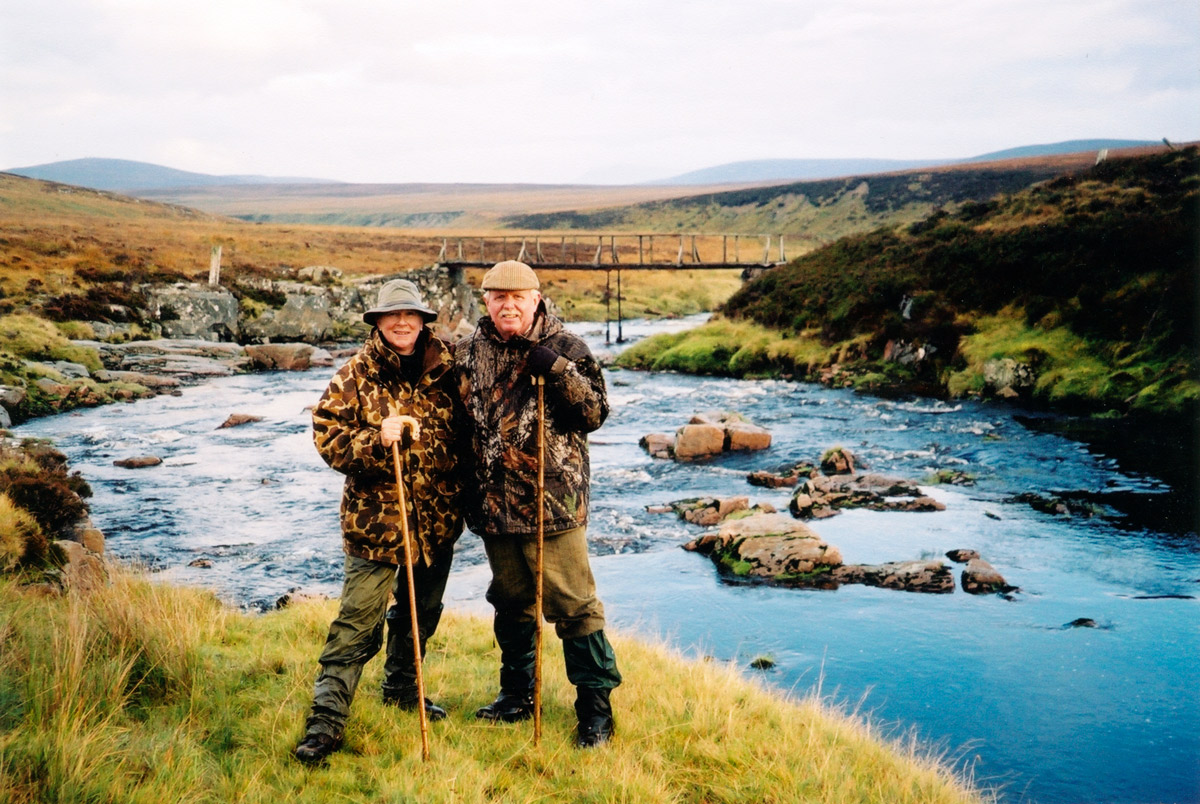
I was privileged to be able to hunt red deer stags in Scotland for seven years. I also hunted driven grouse and pheasants in England, Scotland, and once in Spain. Those hunts were not only a privilege—and highly enjoyable—but also afforded me, as a wildlife biologist and big game manager, a chance to see how game management and hunting evolved and has been sustained for centuries in Europe. Most of that hunting took place in what passed for “wilderness” in the Scottish Highlands, and I welcomed the chance to compare the differences between hunting in Scotland (typical of the European Model) and the United States (the North American Model). It is through such comparisons that students of hunting can understand, compare, and appreciate different approaches to sport hunting that evolved for different reasons in differing cultures and circumstances while yielding essentially the same result relative to the survival of hunted species. Furthermore, I had spent a considerable portion of my forty-year professional career to date studying various aspects of the ecology of elk in North America. My long-term partner Dale Toweill and I had compiled two widely recognized tomes that were published by the Wildlife Management Institute (Elk of North America—Ecology and Management in 1982 and North American Elk: Ecology and Management in 2002). I was fascinated with being able to observe red deer in Scotland; elk and red deer being the same species (Cervus elaphus) but a different subspecies.
October 18, 1998
After a hearty Scottish breakfast, we began our “business day” with a visit to the estate’s shooting range to allow me to check the sighting of my rifle on the 100-yard range. Lying prone and shooting off a bipod, I squeezed off three rounds. The three shots were tightly grouped but fully twelve inches high on the target. No wonder that I had shot high yesterday. I had no idea of how the scope had, in Charlie’s words, “gotten jiggered” again. After appropriate adjustment, I fired two additional sets of three shots. There were grouped within one-half inch on the target and two inches high, which would put the bullet spot-on at 200 yards. While I remained a trifle upset at my performance in missing the royal stag—four damned times no less—now I knew for damned sure now that the sighting mechanism was off. I had no idea how that had happened—or whether the adjustments just made would hold this time around.
It was my turn to stalk first. After we had gone less than a half mile from the cottage in the machine, Charlie put me on a cull stag after a “walk-up stalk” and a crawl of less than 50 yards. The shot was at just a tad over 100 yards. I took a heart shot just behind the front elbow, and the death of the stag was as nearly instantaneous as it gets. Everything worked correctly and the bullet was dead-on. I was relieved and could feel my confidence returning.
Just before midday, Charlie spotted a cull stag a bit less than a mile away down a long swale and quickly declared the beast “shootable.” He and our host climbed down from the machine and were away on foot. I was able to watch, through my binoculars, the ensuing stalk from beginning to end. The stag was one of a group of some twenty-five hinds and calves with at least a half-dozen rutting stags in attendance. The stags could not be approached directly without their being aware of the stalkers. So Charlie resorted to the same technique that he had used earlier in the week and angled away from the stags, using the terrain to hide from their view while letting the hunter’s scent on the wind entice the deer to move over the ridge and out of sight.
The stalk was on in earnest. Our host and Charlie made their approach up the bottom of a burn out of the sight of the deer. They were able to walk upright for a quarter mile or so and then left the burn and commenced crawling as they reached the upper slope. As they were not completely hidden, it seemed certain—to me at least—that the stag would likely see them approaching in their stooped-over walk. The stag—fortunately for the hunters—spent most of his time looking the other way, and Charlie made the most of its mistake. When the hunters got to some cover in the form of high-growing heather, they dropped down and crawled to within what looked to me to be 200 or maybe 220 yards. Charlie set up the rifle, and our host crawled into position to shoot.
I could clearly see both the stag and the hunters. It was difficult for me to believe that the stag, which was lying down, had not sensed the approaching deadly danger. Lying prone, our host could only see the stag’s antlers above the heather. So the stag would have to stand to make a shot possible. However, our host was a purist—at least most of the time—and lived by the code that said a gentleman hunter should wait until “the staggie” stands of his own volition. And so the long wait began and lasted well over an hour. Charlie and our host, I thought, had to be concerned that if the wait continued much longer there would not be enough daylight left for another stalk. We were running behind schedule to take the number of stags that had been contracted for. Finally, I watched as Charlie picked up his case for the telescope, removed the telescope, and “roared” into the empty case.
The stag stood immediately, looked around for a challenger that he could hear but not see, and dropped dead not three seconds later. Then, in an almost exact replica of my earlier experience, another stag got up from his bed and came running to challenge the stag he thought he had heard roaring—i.e. Charlie. Our host got into a sitting position and dropped the stag that was trotting straight toward him at fifty yards. It was quite a show—and I had a front-row seat.
After Charlie and Graeme dressed out and loaded the two beasts into the machine, we ate our lunches seated on the edge of an old pony path paved with small stones. Many decades in the past, these paths had been constructed across the low-lying wetlands when ponies were used to pack out dead stags. That, I thought, must have been something of a challenge—and a show to watch. Wet peat meadows sure as hell ain’t horse country—hence the stone-paved pony paths.
The last stalk of the day was mine and turned out to be my best yet. Two hills off in the distance, we could see the group of deer that Charlie had moved off as a prelude to the last stalk. Charlie surmised that we just might get close enough for a reasonable shot by following the burn that ran almost to within what he computed to be acceptable shooting range. For the three-quarters of a mile or so that we were able to walk upright, traveling upstream along the burn, the going was relatively fast and easy.
Charlie pointed out the remnants of large tree stumps that had been buried in the peat—relics of the Caledonian forest that had covered much of Scotland centuries in the past. The red deer had evolved to thrive in a mixed-species complex of forests and openings. They were able, over many generations, to adjust as the forests steadily disappeared, due, for the most part, to make charcoal to smelt metal and, at the same time, clear the forest to produce grazing space for sheep.
As we walked up the burn, a group of deer crossed over the ridge that lay just ahead. When we crawled up the top of the bank to take a “wee spy,” we could still see deer moving ahead of us. When we came to a place where we could belly-crawl up to the lip of the burn, we could see what Charlie figured was at least 150 red deer. He thought there were likely many more that we could not see. He gestured to me to sit down while he crept around a bend in the burn. He quickly dropped on his belly. He wormed his way back to me and whispered that there was a shootable stag lying close to the lip of the burn. Careful to make no noise, Charlie eased the rifle out of its slip and slowly and quietly worked the bolt to get a round “up the spout,” closed the bolt, and put on the safety. Charlie motioned me to leave my stick and slither up to his side.
He handed me the rifle. We carefully, and as quietly as possible, wormed up the twenty-five-foot bank. When we neared the top, the big stag bolted. We had come within twenty or so feet of where he was lying. I stood up to see if I had a shot. The footing was slippery and I slid back into the burn—nice try, but no cigar. When we crawled out of the burn, we could make out at least 200 red deer, at least 50 of which were stags, moving over a rise off to the west.
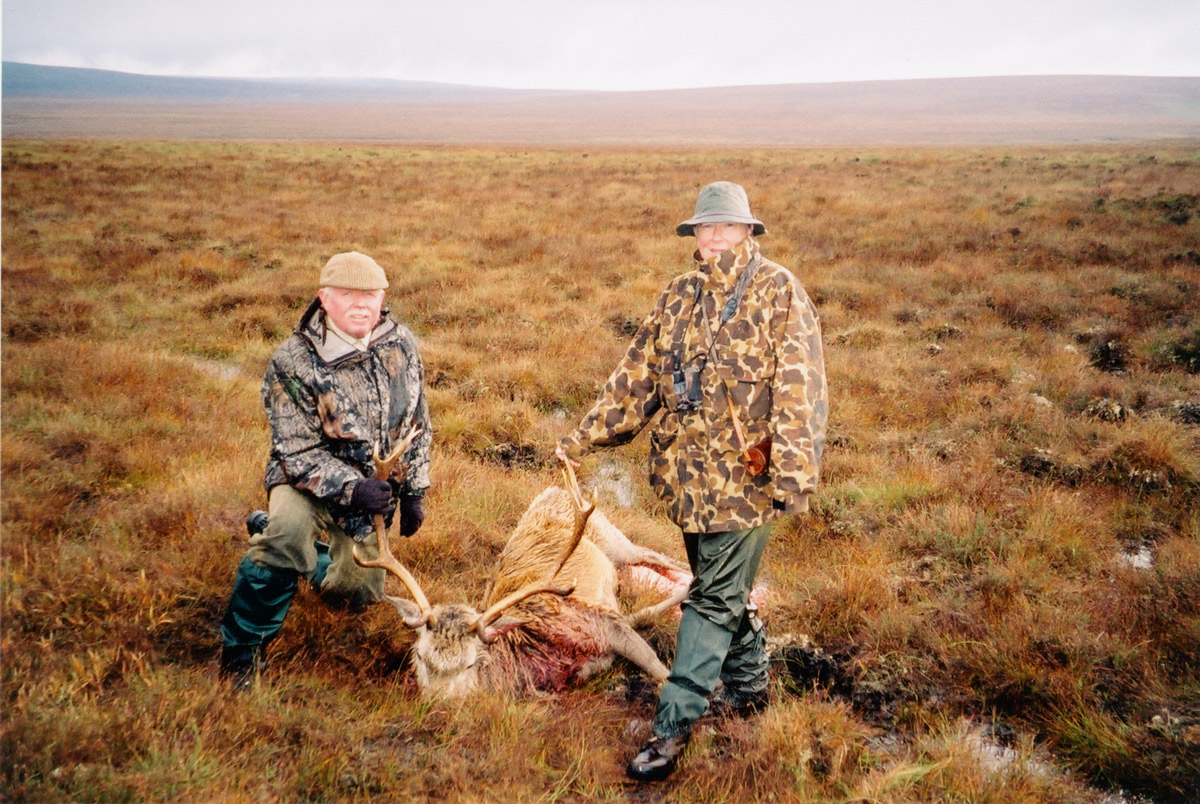
What a sight, what a moment! It was every bit as exciting and fulfilling to me as dropping the big stag we were after would have been. I thought of Graeme’s earlier observation—“The stalk, well executed, is everything; the shot is nothing.” This had been one magnificent stalk—tricky, exhausting, unlikely to succeed, and incredibly lucky. I was exhilarated. I didn’t think I would ever forget the experience. Charlie was grinning ear to ear.
As we turned to head back down the hill, I was pleased that this particular stag was still up there, somewhere, on the hill. It was getting dark, and it was a long way down the burn to where the machine was waiting. There would be wonderful stories to tell around the fire this night.
As I lay abed and waited for the magic combination of aspirin and single-malt Scotch whiskey to dampen my aches and pains so that I might sleep, my mind replayed the memory of the royal stag turning himself wrong side out when he turned and saw me eye-to-eye less than twenty yards away. I remembered his eyes going from sleepy to wide open and his preorbital glands flaring open. I wondered if he noted the almost-certain, equally wide-eyed looks on our faces. Probably not—but it was an interesting thought.
Tomorrow will be our last day of stalking. I took Charlie aside and enlisted him in a conspiracy to make sure that our host took the first stalk. I had my reasons. First, killing three stags had satiated my hunting passions. Second, our host was still eager and, quite realistically, was more apt to be successful than I. And he had, most generously, picked up the tab for ten stags. This would be the last day of our hunt, and there were two stags to go. In truth, I had another good reason to defer to my host. My bum football knee was so badly swollen that I could bend it only halfway back. And it hurt—a bunch. I was chewing aspirin—about one tablet per hour. Crawling on hands and knees was becoming ever more painful.
October 19, 1998
Charlie, with our host in tow, was off in pursuit of the last three stags for this year’s hunt. The laird’s oldest son and a classmate from the University at Edinburgh sat around the Gardener’s Cottage with me shooting the bull as the morning passed. They were both majoring in another one of my passions, history, which was our topic of conversation. For some reason, they were fascinated with Texas history, primarily the revolution for Texas independence from Mexico culminating with the battle of San Jacinto in 1836. I was in my element, having been saturated—maybe even brainwashed—in my youth with oft-repeated stories of the Texas Revolution. Some of the stories were true, some likely mythical, and the rest lying somewhere in between. The battles of Goliad, the Alamo, and San Jacinto seemed to be of special interest.
As soon as it was convenient, I turned the conversation to the history of Scotland, which my friends seemed to know backward and forward—even sideways. I was especially interested in the ancient broch—a circular stone fort—that we had encountered while hunting. They told me that there were ten such brochs in northern Scotland that were built by the Picts—many hundreds of years earlier—to defend themselves and their livestock from recurrent raids by the Norsemen. The Picts also developed an early warning system of lighting bonfires on the mountaintops when the Norsemen were detected or raiding had commenced. Once warned, the Picts responded by scattering their livestock and gathering people and as many sheep as possible into the brochs.
We set off to visit the broch I had seen earlier in our hunt. The circular stone structure was some forty feet tall with only one small, low entrance that would accommodate one sheep or one crawling person at a time…