
A New Historic State Record Black Bear
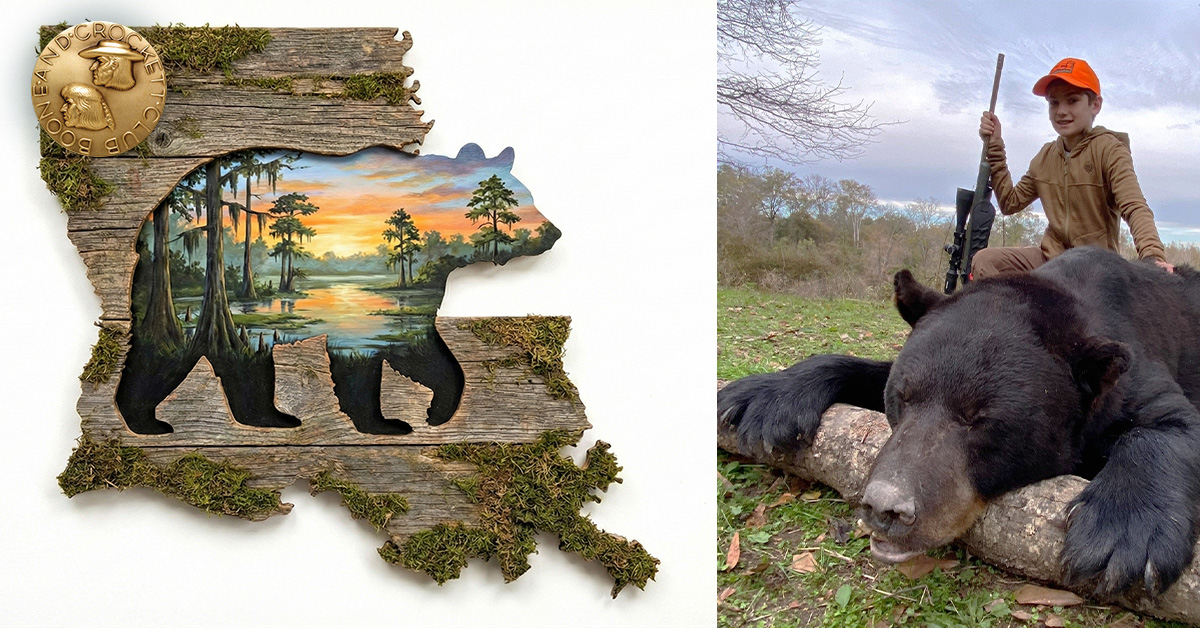
A 13-year-old Louisiana hunter made history in 2024 when he pulled the trigger on a hunt more than 30 years in the making.
By PJ DelHomme
This record-book entry has so many angles that it’s hard to know where to begin. There’s the fact that there are only two black bear entries in the Boone and Crockett records for Louisiana—this new record and the bear killed by famous hunter Ben Lilly in 1904. How about the fact that the Louisiana black bear was listed as threatened under the Endangered Species Act (ESA) in 1992? Populations have now recovered to the point that they can be hunted sustainably. Let’s not forget that this is the same general area where President Theodore Roosevelt (co-founder of the Boone and Crockett Club) went on his famous bear hunt and refused to shoot a bear, creating the concept of Fair Chase and the Teddy Bear. Let’s start with the most recent hunt and go from there.
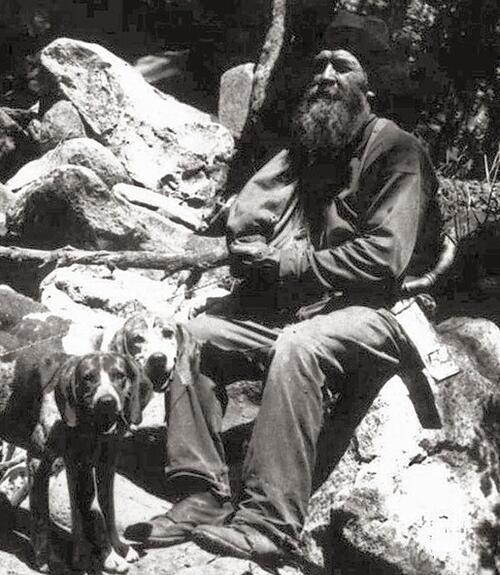
On a sunny afternoon in December 2024, surrounded by the bottomland hardwoods of Madison Parish, 13-year-old Fisher Brown of West Monroe used a 7mm PRC to kill a massive, 18-year-old boar weighing approximately 500 pounds. Brown was one of 10 hunters who held a tag to hunt these bears for the first time in four decades. After the drying period, Brown submitted the skull, and it taped at 21-14/16, beating the only other entry by nearly an inch. That other entry is held by none other than Ben Vernon Lilly, a hunter whose sole purpose in life was to hunt bears, wolves, and cougars in the early 1900s.
An ESA Success Story
A huntable population of quarter-ton bears in the Louisiana woods didn’t happen by accident. It took decades of deals, policies, and cooperation among private landowners, public agencies, and nonprofit groups (like the Boone and Crockett Club) to recover these unique populations.
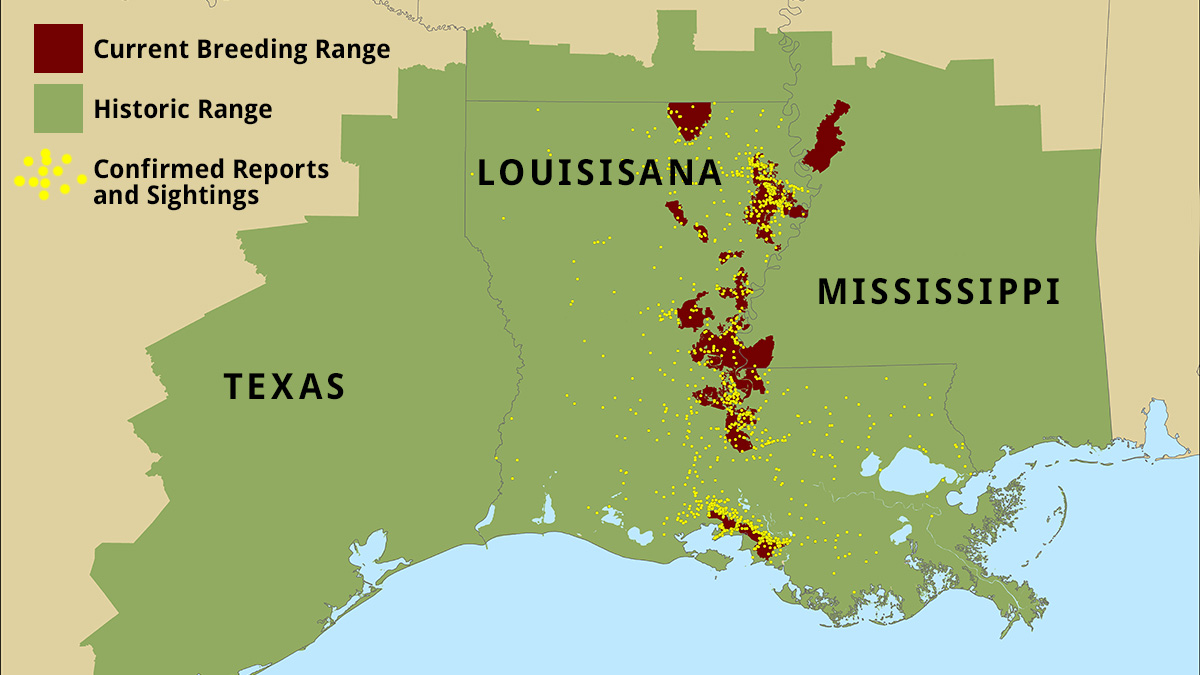
By the 1980s, the Louisiana black bear (Ursus americanus luteolus) had been reduced to fewer than 400 individuals, confined to fragmented pockets of bottomland hardwood. In 1992, the subspecies was listed as threatened under the Endangered Species Act (ESA).
What followed was a masterclass in cooperative conservation, with a recovery effort focused on working landscapes. Boone and Crockett Club members played a pivotal role in this strategy, championing conservation incentives in the federal Farm Bill. Specifically, the Club advocated for the Wetlands Reserve Program (now Wetlands Reserve Easement), which pays landowners to voluntarily restore marginal cropland to native forest. Key to the success of this program was cooperation among groups like Ducks Unlimited, The Nature Conservancy, and Wildlife Mississippi. Recognizing that the vast majority of the bear's range is privately owned, this approach turned farmers and landowners into partners. Over one million acres of critical habitat were restored in the Lower Mississippi River Valley. James Cummins, executive director of Wildlife Mississippi and past Boone and Crockett Club president, and Jimmy Bullock, a Boone and Crockett Club Professional Member with Resource Management Services, were integral to bringing stakeholders together.
"The recovery of the Louisiana black bear is a perfect example of how agriculture and wildlife can thrive together," says Cummins. “By incentivizing habitat restoration on private lands, we didn't just save a bear; we restored an ecosystem.”
In addition to private lands, the Club helped establish permanent sanctuaries. Cummins and other Club leaders worked with lawmakers to create the Bayou Teche, Theodore Roosevelt, and Holt Collier National Wildlife Refuges—the latter named after the guide who led Roosevelt on the famous 1902 hunt that inspired the "Teddy Bear” and gave rise to the concept of Fair Chase.
A Sustainable Future
Thanks to these efforts, the Louisiana black bear population has rebounded to nearly 1,000 animals, leading to its removal from the endangered species list in 2016. The 2024 hunt was the final step in cementing the bear’s status as a managed game species. The revenue generated from the lottery fees and licenses is being reinvested directly into the Louisiana Black Bear Program. These funds will support biologists in live trapping, radio-collaring, and monitoring reproductive rates, ensuring the population remains healthy for generations to come.
Even with all the angles to this story, perhaps the greatest hook is that the mere existence of this record-book bear is proof that the Endangered Species Act can work as intended. This bear is the product of cooperative conservation, born from restored habitat, smart federal policy, and the dedication of private landowners. Brown’s entry marks the successful transition of the Louisiana black bear from a threatened animal to a sustainably managed big game species, continuing the conservation mission and legacy of the Boone and Crockett Club.