

The Retro Prongy Buck
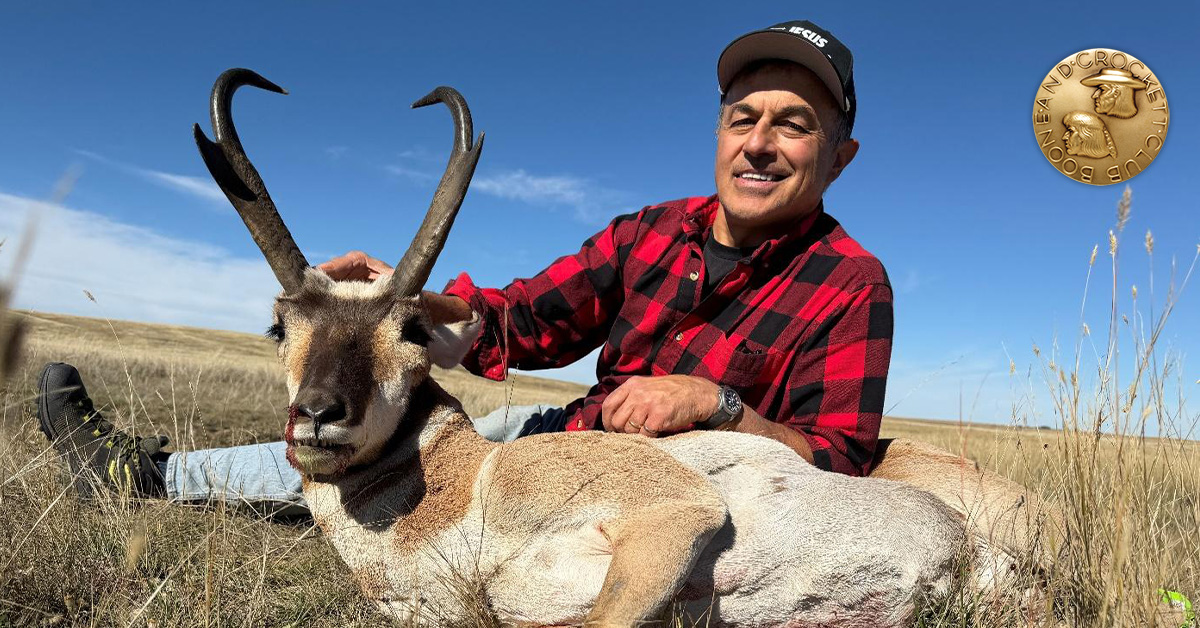
Trading rangefinders and apps for a fixed 4x scope, blue jeans, and old-school prairie fieldcraft.
By Alexander Sharif
Southern Alberta marks the northern edge of the American pronghorn's range, an iconic animal often referred to simply as an antelope. With provincial numbers estimated at roughly 15,000 animals, drawing a pronghorn buck tag is no small feat. Depending on winter survival and annual allocations, it can take anywhere from 15 to 18 years to obtain a coveted buck license. In good years, when winter mortality is low and recruitment is strong, only about five percent of the population is allocated through the draw system. Over the years, I have been fortunate enough to draw several tags, both buck and doe, with rifle and archery equipment alike.
This year, shortly after officially entering the realm of senior citizenship, I decided it was time to cash in 15 years' worth of priority points and apply for a buck tag. As September rolled around, I helped a close friend take his own buck using my homemade decoy, a contraption that has now accounted for 13 successful pronghorn hunts. Around the same time, another opportunity unexpectedly landed in my lap. I was able to secure a last-minute cancellation hunt for a Gobi ibex in Mongolia. While that news was exciting, it created a dilemma.
My five-day pronghorn season was suddenly reduced to a single day. I still had work commitments to wrap up before boarding a flight bound for Ulaanbaatar, and there would be no room for a second attempt if things went sideways. As concerning as that seemed, I chose to look at it differently. One day was all I had, so one day would have to be enough.
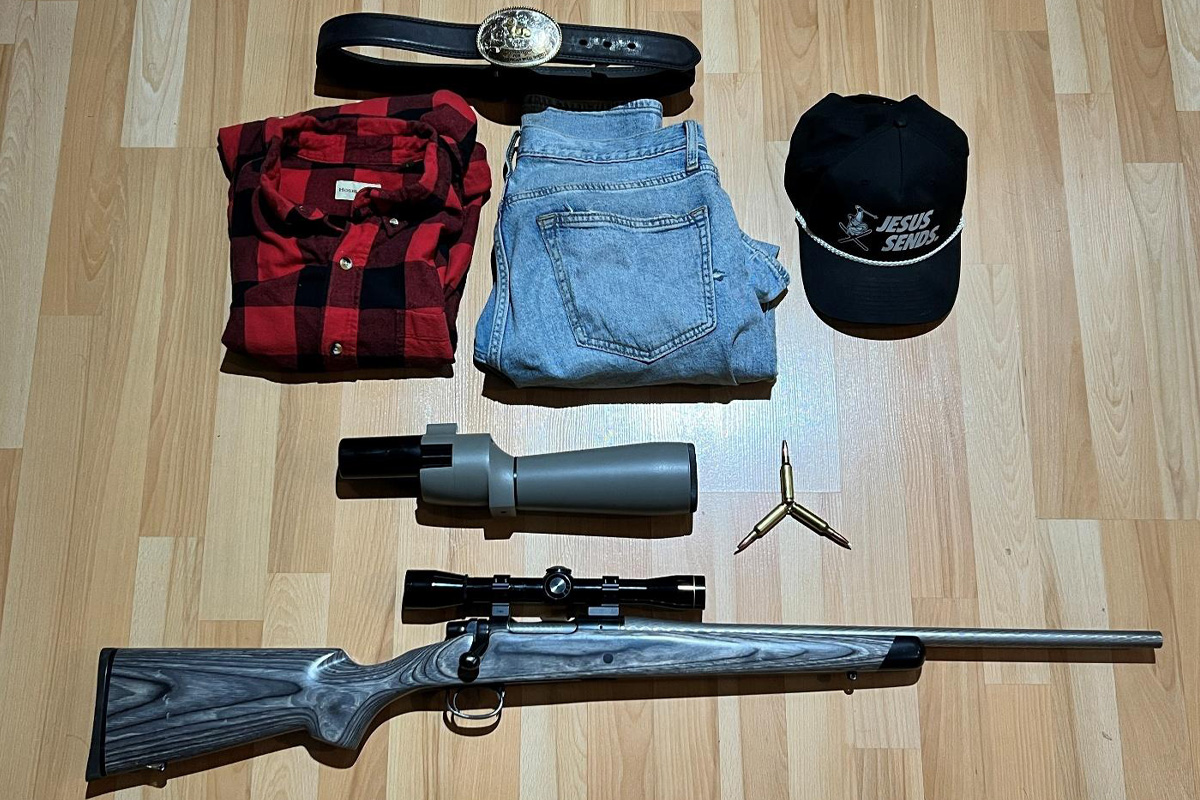
There was another idea that had been brewing in my mind for some time. I wanted to hunt this buck the way my childhood heroes would have hunted him. In short, I am talking about no camouflage, no laser rangefinder, no ballistic apps and no gadgets hanging from every strap and pocket. Just a flat-shooting rifle topped with a fixed four-power scope, a spotting scope from another era, and the confidence that comes from experience rather than electronics.
On the morning of September 28, my hunting partner Mark arrived at my house at 4:45 a.m. Sharp. The truck had been loaded the night before, so we wasted little time. Armed with a couple of Tim Hortons double-doubles and a Corb Lund soundtrack playing softly through the speakers, I pointed the Tacoma east toward the prairies.
It was one of those magical autumn mornings that hunters remember forever. The full moon still hung over the grasslands and the badlands. There was not a breath of wind. The air carried the unmistakable scent of sage, and meadowlarks welcomed the dawn with their songs. As daylight slowly spread across the prairie, pronghorn began to appear everywhere. Singles. Small groups. Large herds. They materialized from the vast landscape as if the prairie itself had given them life.
The Swainson’s hawks were perched atop weathered fence posts, feeding heavily in preparation for their southern migration. Neither Mark nor I said much. There was simply too much beauty to absorb. Sometimes silence is the best way to appreciate a place.
Why Go Retro?
For this hunt, I wanted to roll back the clock and experience pronghorn hunting as legends such as Jack O'Connor and Elmer Keith might have known it. My uniform consisted of blue jeans, a red plaid shirt, and a baseball cap with the logo “Jesus Sends” embroidered on it. My old Remington Model Seven rifle wore a fixed four-power scope and distances would be estimated rather than measured with an electronic rangefinder. Success or failure would depend on judgment built on experience, rather than technology. And If that doesn't qualify as retro, I don't know what does.
As for the buck itself, I knew exactly what I was looking for. I had no interest in shooting the first legal animal that crossed my path. With only a single day available, that may sound risky, but I was committed to finding either a mature buck, one with genuine character or just using my tag as a Christmas ornament. In short, I wanted a buck with age, mass, and personality.
Throughout the morning, we scoured every parcel of land where I had secured permission. Between 9:00 a.m. and 1:00 p.m., we observed well over 75 pronghorn. Some traveled in large herds while others formed smaller bachelor groups. Several respectable bucks caught my attention, but none truly stood out. Adding to the challenge, we were not alone. Several other hunters were combing the countryside, and we knew that any exceptional buck might not remain available for long.
After finishing our sandwiches around 1:30, I turned south onto an isolated range road. Halfway down the road, I spotted three does bedded beside a buck. Even at a considerable distance, the buck appeared strikingly dark and that immediately grabbed my attention. I estimated the distance at about 250 yards and reached for my trusted Bushnell Spacemaster spotting scope mounted on a home-made cedar stock. One quick look was all I needed. It was a mature buck with heavy horns, deep cutters, and excellent mass with sharp ivory tips. My ideal buck.
The challenge, of course, was how to approach him in country that looked flatter than a pool table. There simply wasn't enough undulation to make a traditional stalk possible. That left only one option: the “Triangle of Death.”
Over the years, I have refined this tactic with considerable success. The game animal forms the apex of the triangle. The shooter occupies one corner. The driver and the truck occupy the other. The animal's attention becomes focused on the slowly moving truck while the shooter quietly slips into position for a shot. After explaining it to Mark and within minutes, my plan was in motion.
Mark eased the Tacoma forward while I grabbed my rifle, ammunition, and pack. As the truck slowed near a slight rise, I stepped out, bailed into the ditch, and rolled out of sight. Three cartridges disappeared into the floor plate of my Remington Model Seven, and I belly-crawled through the grass, crawled across the gravel road and settled into concealment on the opposite side provided by a row of tall grass. The moment I looked up, I knew the plan had worked. The does and the buck were all standing and staring at the slowly departing truck. Their attention was entirely elsewhere. I chambered a round and estimated the range at roughly 230 yards. With a silent prayer and a deep breath, I settled the crosshairs behind the buck’s left shoulder and squeezed the trigger. The old Remington barked and a split second later, the familiar sound of a bullet striking hide drifted back to me.
Oddly, the buck remained standing. He turned and began walking toward the does. For several anxious seconds, one of the females blocked my view. Then he stepped clear. The Model Seven spoke again and this time the result was immediately—the buck collapsed where he stood. Relief and joy washed over me simultaneously. The does lingered nearby for several minutes, seemingly puzzled as to why their companion wasn't getting back up. Eventually, they drifted away and disappeared into the bald prairie.
When Mark returned, he shook my hand and we walked together toward the fallen buck. The closer we got, the more impressive he became. His head was enormous, perhaps the largest-headed pronghorn I had ever seen. His horns possessed everything I admire in a buck: above-average length, tremendous mass, deep cutters, excellent symmetry, and perfectly pointed ivory tips that had survived intact through years of prairie life. I immediately attached my tag and paused to admire the animal.
We carefully repositioned him for photographs, taking care to keep his cape off the ground. Anyone familiar with pronghorns knows how notoriously fragile their hair can be. As I sat beside him with my hand resting on those remarkable horns, I took a moment to pay my respects. Few animals are more uniquely North American than the pronghorn. It is a survivor from another age, a living relic that evolved alongside long-extinct predators. It remains the fastest land mammal on this continent and one of the greatest endurance runners on Earth. Once again, the stars had aligned and the Good Lord had answered my prayers and granted me exactly the kind of buck I hoped to find.
I have never been a fan of staged hunting photographs, particularly those trendy social media shots where hunters stare dramatically into the game instead of looking at the camera. To me, authentic memories matter more than manufactured images. We took one simple photograph together and devoted the rest to documenting the buck's unique characteristics.
Afterward, we field dressed him, placed him carefully in the bed of the Tacoma, and spread the chest cavity open to aid cooling before securing the tonneau cover half open.
As we drove West toward home, the seemingly endless prairie rolled past our windows. The grasslands stretched to the horizon, a landscape as beautiful as it is productive, feeding millions while remaining home to wildlife that still lives much as it always has. I found myself counting my blessings once again. How fortunate I have been to experience adventures like this over the course of my life.
By the time I draw another pronghorn buck tag, there is a good chance I may be carrying a walker instead of a backpack. Interestingly enough, a walker can double as a shooting stick, though I suspect belly-crawling through roadside ditches might be a little more challenging.
Until then, hunt ethically, respect the game, the land and the people who grant access to it and never take for granted the freedoms and opportunities we enjoy across this continent.
And every once in a while, consider leaving the gadgets at home and going retro. You may discover that some of hunting's greatest pleasures were never found in technology at all. They were waiting in the prairie breeze, the scent of sage, and the simple satisfaction of matching wits with a remarkable animal the old-fashioned way.
Hunting Unplugged
We know that woodcraft and self-reliance remain the cornerstone of traditional hunting. That’s why we’re featuring stories in this section called Hunting Unplugged. These stories come from hunters who intentionally leave cell phones, Smart watches, GPS units, and electronic aids out of the field, relying instead on experience, landmarks, and maybe even a little Kentucky windage. Others detail the experience of stepping back into the woods without modern technology for the first time, which reduces the clutter and creates stories without distaction. If you have an unplugged story to share—or know someone who does—please send your submission to [email protected].