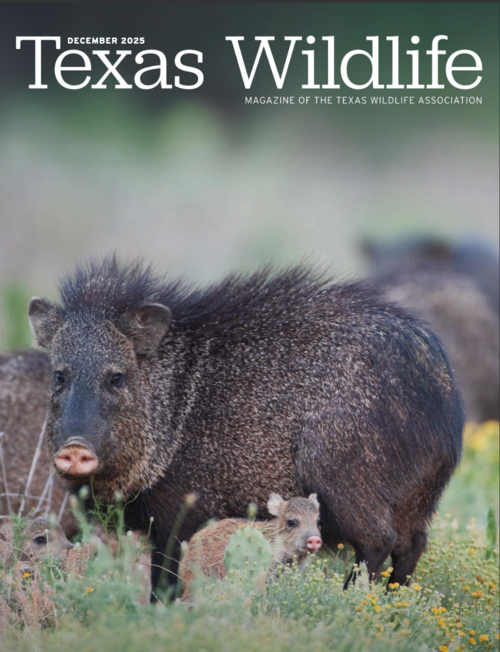

The Rodney Dangerfield of Texas big game gets a little well-deserved respect
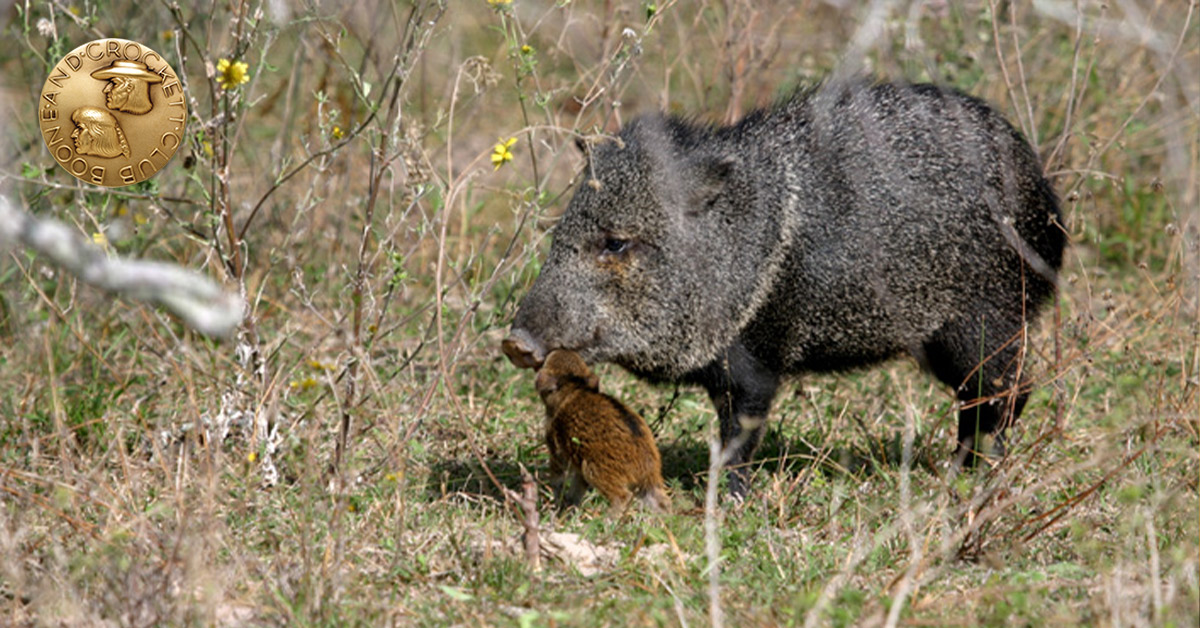
Javelina recognition and research efforts are underway
Article by Sean Hoffmann, TWA Communications Director
Article originally published in the December 2025 issue of Texas Wildlife, the magazine of the Texas Wildlife Association
Brush rats. Corn vacuums. Stink pigs. The collared peccary (Pecari tajacu), more commonly known as javelina, is also known by several other monikers in Texas. Most aren't fit to include in a family publication.
Yet since the Boone and Crockett Club's Dec. 11, 2024 announcement that javelina will be a new addition to their big game record books, this native species is now more valuable as a resource from a management perspective to Texas private landowners, managers and hunters alike.
“The decision to add javelina as a trophy species was years in the making and reflects not only the growing appreciation for the species among hunters and wildlife managers, but can bring conservation benefits to javelina and the places it lives,” said Mike Opitz, chair of the Club’s Big Game Records Committee.
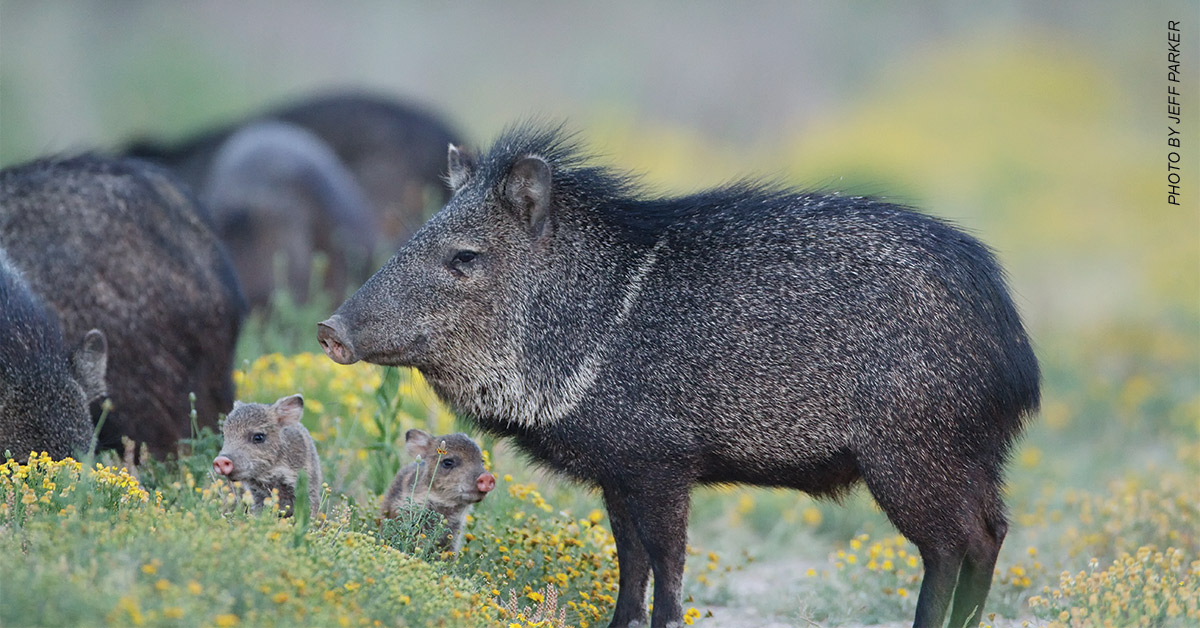
TWA, along with Texas Parks and Wildlife, Arizona Game & Fish Department, New Mexico Department of Game and Fish and Mexico’s State of Coahuila Wildlife Department collaborated to propose the initiative in the summer of 2024, stating:
Collared peccary are an important big game animal in the southwestern United States and Mexico. They are managed alongside other big game species, including requirements that hunters follow all regulations in pursuit of the animal across all jurisdictions. This is the first step in taking an animal under the “fair chase” ethic; a concept that originated with the Boone and Crockett Club. This ethic demands an elevated level of respect for the unique and diverse species of big game on the landscape. We propose the creation of a new javelina category in the Records of North American Big Game, building upon the growing interest in javelina hunting and recognizing this unique North American big game species.
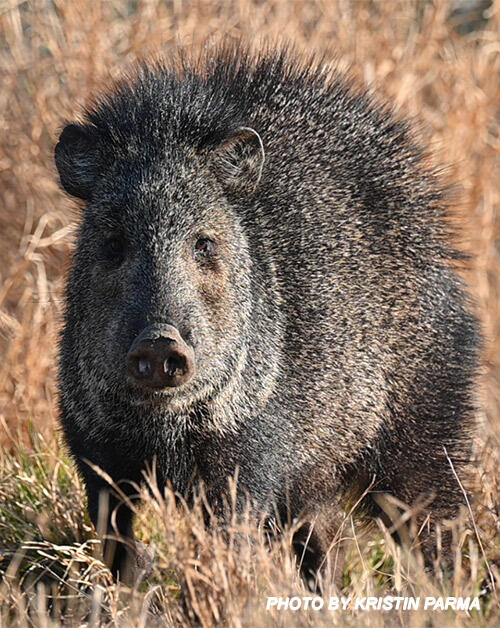
Fast forward to August 14, 2025. The Boone and Crockett and Pope and Young clubs, having completed scoring guidelines, officially announced that they are accepting javelina entries for their record books.
“The Boone and Crockett Club established our records program well over a century ago as a way to measure conservation successes that helped to recover and sustain North American big game species. The record book is a way to honor exceptional animals that are maintained on the landscape due to professional wildlife conservation and management,” Opitz, said. “It has been 27 years since a new species category has been added to our record book, and we are excited that including collared peccary in our records program will increase hunter excitement as well as increase support for their conservation.”
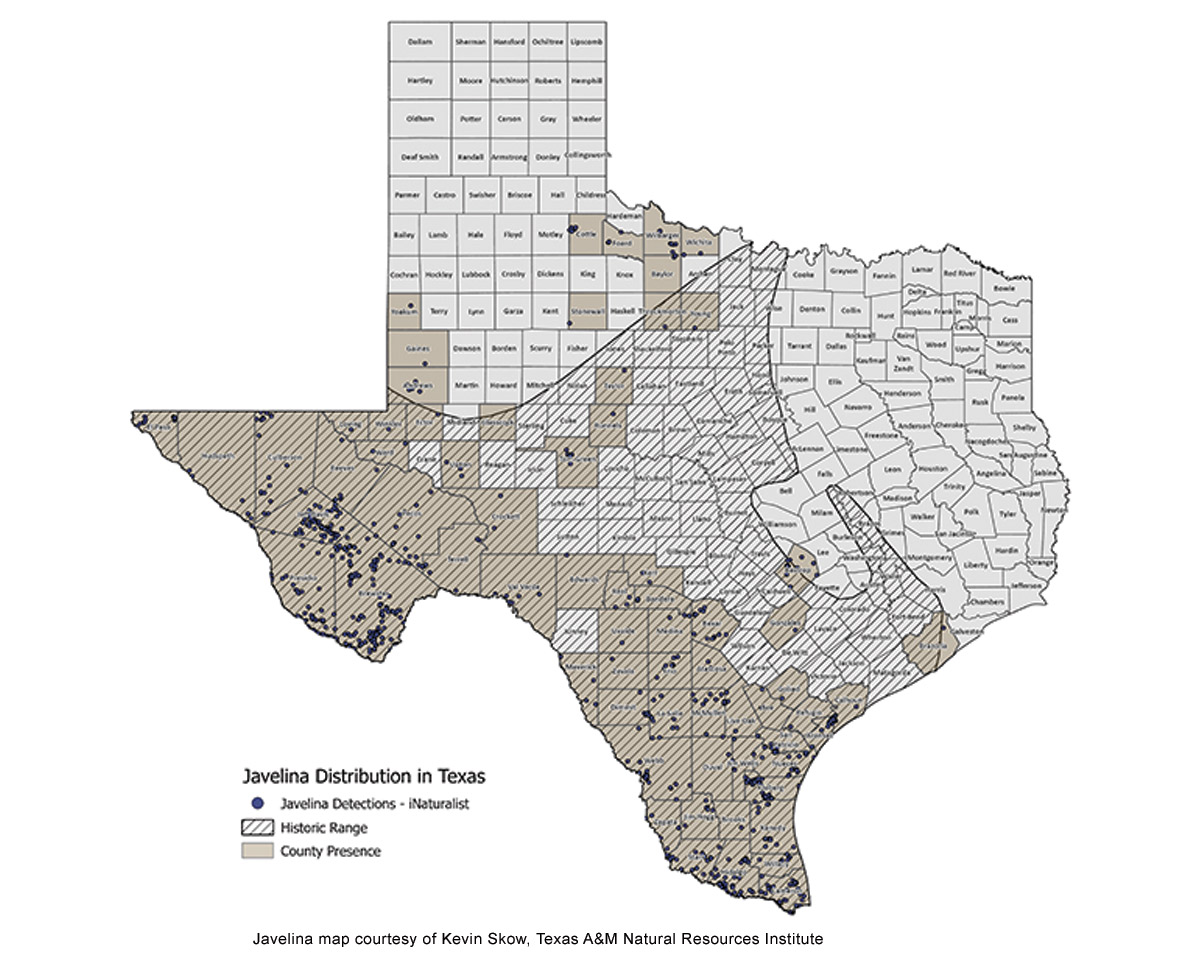
Here in Texas, where javelina thrive primarily in arid West Texas, the western fringes of the Edwards Plateau, much of South Texas and a pocket in north central Texas, their value as a game animal has been acknowledged by the TWA Texas Big Game Awards (TBGA) for years. The species is one of five scorable native Texas big game animals—including white-tailed and mule deer, pronghorn and bighorn sheep—included in the annual awards program, now in its 35th year.
TBGA, Boone and Crockett and Pope and Young score javelina based upon the greatest combined length and width of skull measurements. While these measurements are simple compared to deer or pronghorn, all hide, flesh and membrane must be removed from the skull prior to a 60-day drying period before measurements can be taken.
A minimum score of 13 4/16 inches can qualify a javelina for a TBGA.
The minimum score for Boone and Crockett is 14 5/16 inches while a Pope and Young qualifier is 13 14/16 inches. Both organizations accept javelina skull measurements from animals harvested prior to the establishment of the category in August.
Lists of official scorers can be found at texasbiggameawards.com.
Javelina Homeland
As if Boone and Crockett recognition wasn’t enough good news for the javelina, The Texas Parks & Wildlife Department is spearheading a study specifically designed to increase the knowledge base about this Texas icon.
The study began in the fall of 2023. The five-year project is overseen by Whitney Gann, Ph.D., wildlife management area facilities coordinator with TPWD.
“Ultimately we want to bring attention to javelina and hopefully more support and interest in the species,” Gann said.
Gann previously served as area manager of the 15,200 acre Chaparral Wildlife Management Area near Cotulla. She knows firsthand the value of the information such a study can provide. At Chaparral, one of her duties was to make annual harvest recommendations for public hunts on the WMA. “While research-based models were comparatively easy to design for white-tailed deer, I struggled to confidently do so with javelina because those resources did not—and currently don’t—exist. Plus, javelina can be difficult to survey because they travel in large family units and they all basically look the same,” she said.
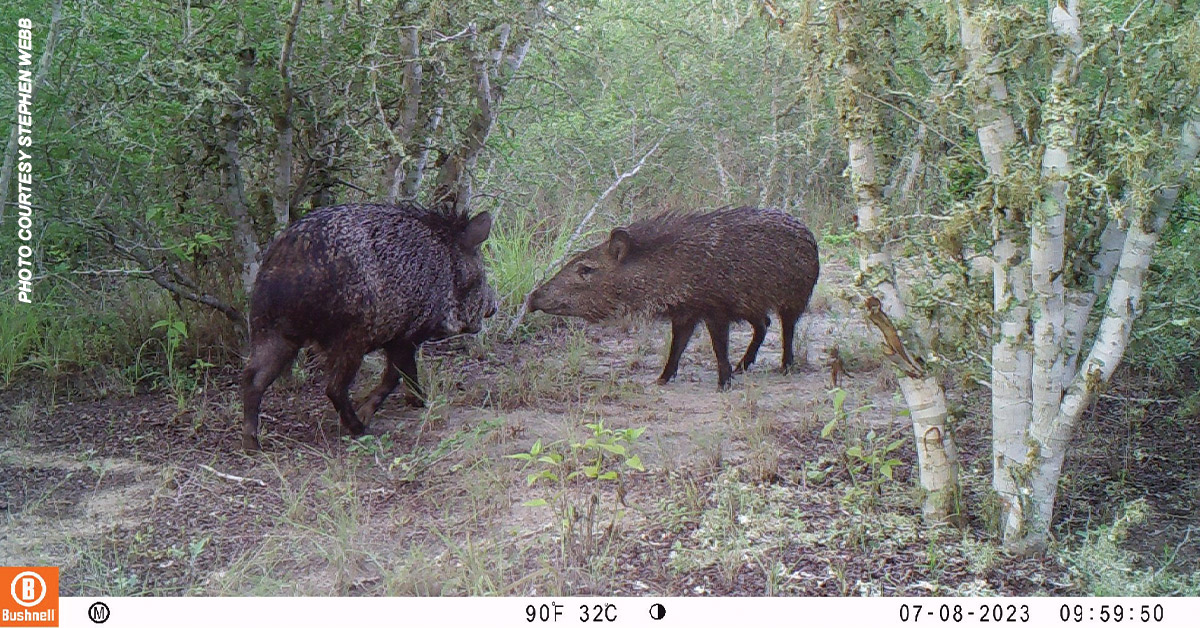
Stephen Webb, Ph.D., project lead and Texas A&M Natural Resources Institute research assistant professor in the Texas A&M College of Agriculture and Life Sciences Department of Rangeland, Wildlife and Fisheries Management, notes that researchers intend to glean information about javelina growth rates, movement, health and population dynamics through the aid of technology.
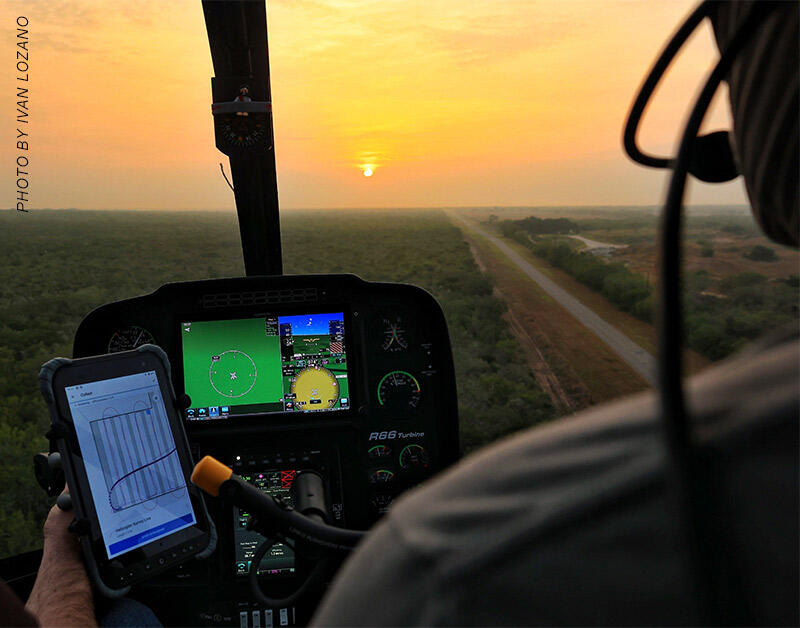
“We will assess how best to count javelina using survey methods like helicopter, camera, and road surveys. Using GPS collars, we will track their movement to learn about social interaction within and among squadrons, home range size, and habitat use. All of this information on space use can be applied to on-the-ground management targeted at creating and maintaining appropriate habitat,” Webb said.
“We also are working to create online resources to enter, manage, and set harvest quotas. Now that javelina are part of the B&C record book, many landowners will need more information for managing this species. I suspect that landowners will see more interest in hunting javelina with their new status of finally being recognized as a big game trophy,” he added.
The javelina research study is taking place on 250,000 acres across southern Texas, including Chaparral, James Daughtrey and Las Palomas wildlife management areas, La Copita Demonstration Ranch and Research Area, East Foundation holdings plus additional ranchland managed through private ownership.
Additional project researchers include Jacob Dykes, Ph.D., assistant professor and extension wildlife specialist in the Department of Wildlife, Fisheries, and Aquaculture at Mississippi State University; Marcus Blum, Ph.D., assistant professor and extension wildlife specialist with Texas A&M AgriLife Extension Service and the Department of Rangeland, Wildlife and Fisheries Management; and Walter Cook, Ph.D., DVM, clinical professor in the Texas A&M College of Veterinary Medicine and Biomedical Sciences.
The study results should prove invaluable to landowners who want to better manage their range for javelina as the species will likely see an uptick in interest, especially from a stewardship and hunting standpoint.
Based upon all of this positive news, it seems that the javelina has already earned a modicum of well deserved respect in the Lone Star State.
Javelina Facts
- Javelina is Spanish for javelin or spear in reference to their sharp tusks.
- While they resemble pigs, javelina belong to the peccary family (Tayassuidae). Javelina and pigs have been separated by nearly 40 million years of evolution.
- A group of javelinas is called a squadron.
- Newborn javelinas are called reds based on their hair color when young.
- A scent gland at the top of their rump helps javelina mark their territory and identify squadron members.
- The light-colored band of hair around their neck gives them a collared look, hence collared peccary.
- While omnivorous, javelina favor prickly pear fruit (tunas) and pads.
- Contrary to popular belief, javelina do not chase down prey or specifically target snakes.
- When startled, javelina may make a clicking sound by rubbing their teeth together.