

Start Them Young: Tips on How to Get Kids Hunting
How do you raise a lifelong hunter? From squirrel woods to duck blinds, learn why low-pressure, high-action hunts are the secret to starting kids hunting.
By Chad Carman, photos courtesy of the author
I still remember the first time I was allowed to go hunting. I was eight years old—just old enough to have passed hunter safety. My dad handed me a break-action 20-gauge we had picked out together. It felt like someone had given me the keys to adulthood. That first morning, we slipped into the woods looking for squirrels, and I can still see the exact moment the first one fell out of the tree. It wasn’t a big buck or a long stalk. Honestly, it wasn’t anything anyone would call impressive today. But to me, it was everything. It was simple, exciting, low-pressure, and completely attainable for a kid who was brand new to the woods.
Kids don’t need a once-in-a-lifetime animal to fall in love with hunting. In fact, it’s the opposite. They need to feel like they’re part of it.
Later that fall (I turned nine by then), my dad did something most probably wouldn’t do. The biggest buck he had ever seen stepped out onto a friend's wheat field one hour into my first big game hunt. He let me shoot it. That deer ended up winning the big buck contest in Woodward, Oklahoma, and the free shoulder mount has hung on my wall ever since. Those early hunts—squirrels with the little 20-gauge, dove hunts in the afternoons, then that once-in-a-lifetime buck—cemented a love of hunting that never faded. They were accessible experiences that made me want to go again and again to this day.
Kids Need Action, No Matter How Small
With my own kids, I wanted to start them on the kinds of hunts that make it easy for them to enjoy themselves. Small game. Doves. Ducks. Low-expectation deer hunting. Anything that offers movement, action, comfort, and the chance for a kid to feel included instead of pressured. Kids don’t need a once-in-a-lifetime animal to fall in love with hunting. In fact, it’s the opposite. They need to feel like they’re part of it.
With my own son Graham, I wasn’t patient enough to wait until he was eight. I didn’t want to repeat the old pattern of “once you’re old enough, then you can come.” I wanted him in the field with me as soon as the conditions allowed. So at two years old, he sat in the duck blind for the first time. He didn’t understand what we were doing, but he understood that he was outside with Dad, and everything about it felt like an adventure. Warm days, calm weather, good snacks—that’s all it takes for a toddler. Yes, it even included a poopy diaper that we changed in the field. Pro tip: Don’t forget about loaded diapers in the boat. They don’t smell better after a few days.
What I love about waterfowl and small game for kids is that there’s no pressure for perfection. We’ve all been skunked duck hunting, so if the kids are too loud, who cares? Squirrels don’t care if a child drops a handful of Goldfish crackers in the leaves. These hunts move. They have pace. We bring plenty of snacks and a friend. Games of “eye spy” or throwing a bumper for the dog give kids short bursts of excitement mixed with plenty of space just to be kids. That’s exactly what Graham responded to.
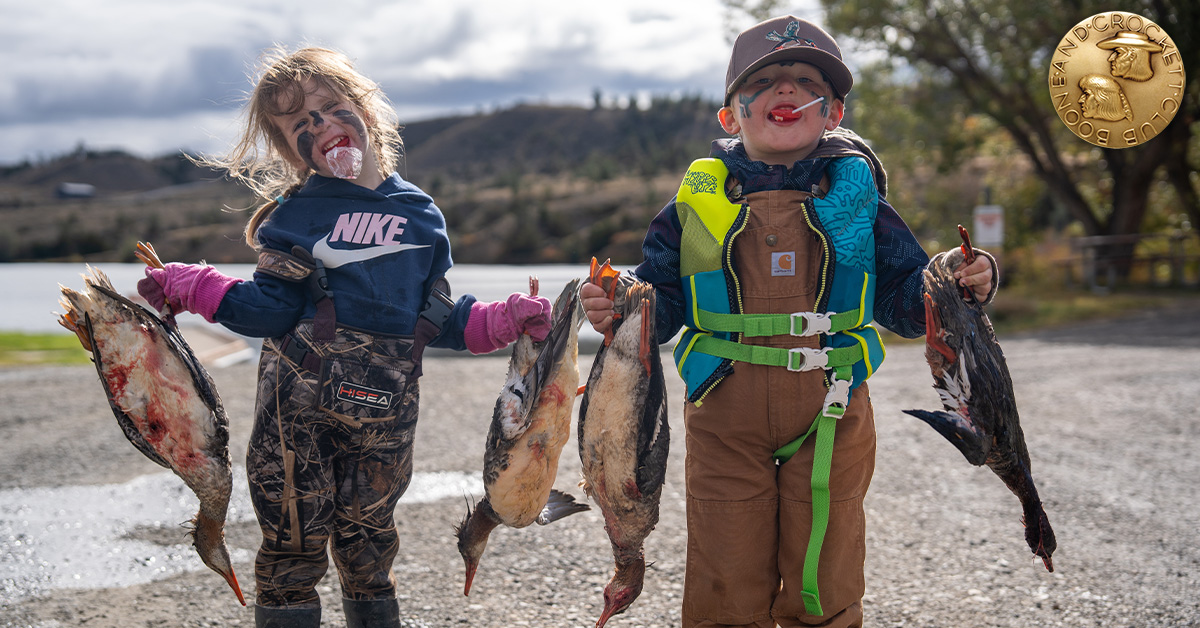
This fall, he and one of his friends held up handfuls of mergansers like they had just won the World Series. To most waterfowl hunters, mergansers aren’t exactly prize birds, but kids don’t care. They see feathers, success, and themselves as part of the hunt. They were proud of those birds, truly proud. That’s what matters. Not the species. Not the trophy quality. Just the joy. Plus, the dogs received some great merganser jerky that night.
For the next week, Graham woke up each morning asking, “Can we go duck hunting again?” A four-year-old begging to get up early and sit in a blind says everything you need to know about starting kids with simple, active hunts. They want to repeat what felt fun. Small game gives them a thousand of those moments each hunt.
Hunting culture sometimes makes it seem like a child’s first hunt should be a rite of passage—the first deer, the first turkey, the first “real” animal. But the truth is, the best foundation is built long before that. It’s built through squirrels in the timber, doves on a warm evening, ducks on calm water, or even just long hikes with kids tucked into a shoulder pack. They get to participate without the weight of expectations. These are the hunts that shape lifelong hunters because those hunts feel like play rather than pressure.
As I look through photos of Graham, covered in face paint from the fair the night before, hauling mergansers that he’s convinced are the greatest birds on earth, I’m reminded of how I started and why it worked. It was simple. It was fun. And it made me want to go again. That’s all a kid needs.
And that’s precisely where a lifetime of hunting starts.
