

Tips on Scoring Sheep
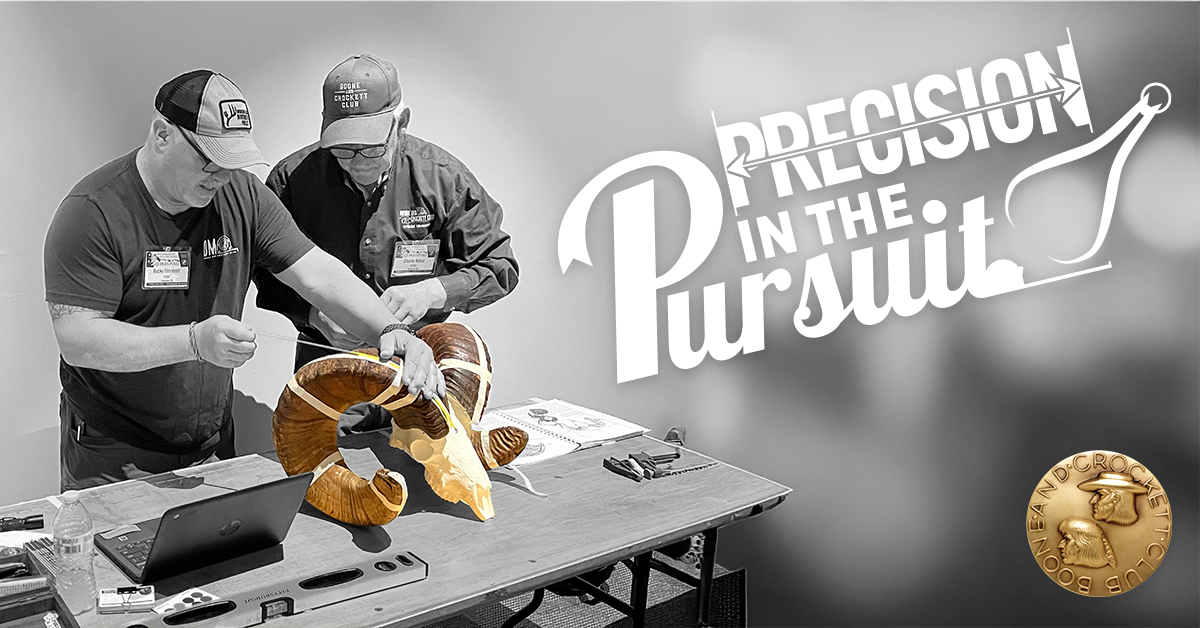
North American sheep are divided into two species: Ovis dalli (thinhorned) and Ovis canadensis (bighorned). These two categories are further broken down into the four categories recognized by the Boone and Crockett Club.
Four Categories of Bighorns
Bighorns
Under the bighorns, we have the bighorn found throughout the Rocky Mountains and the desert bighorn, or Nelson’s bighorn, found in Arizona, California, Colorado, México, Nevada, New Mexico, Texas (western part of the state), and Utah. For all desert sheep being entered from Mexico, please have the hunter provide the name of the ranch on which the desert sheep was harvested. This can be provided on the score chart or the Hunter, Guide, and Hunt Information sheet. Unfortunately, there are some ranches in Mexico where the hunter may not realize the harvest was not taken in Fair Chase.
Thinhorns (Dall's and Stone's)
Under the thinhorns we have the Dall’s and Stone’s sheep. Dall’s sheep range throughout much of Alaska, most of the Yukon Territory, the Mackenzie Mountains of the Northwest Territories, and an isolated region of British Columbia. Stone’s sheep range is primarily in British Columbia. Since the ranges of these two categories overlap in certain areas, there may be some confusion about which category to place the trophy in. It may be necessary to request a field photograph or ask the hunter about the trophy's hide. Basically, if there are any black hairs on the body of the animal, it is classified as a Stone’s sheep. If the sheep is white, then it is a Dall’s. The area that is known for producing these types of intergrades, or Fannin-type sheep, is the Pelly Mountains of southern Yukon Territory. However, if the body is white, but the tail has black hairs, it is still categorized as a Dall’s.
Crucial Scoring Points: Length and Circumference
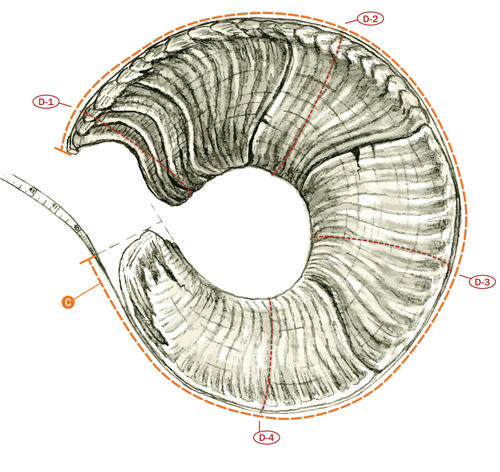
The two areas where we see the greatest difference between scores are where the tape measure is placed along the top of the horn to get the length of the horn measurement, and also in the circumference of the base measurement.
Key Measurement Differences: Length of Horn
The length of the horn measurement starts by finding the lowest front edge of the horn, where the crest of the horn begins. From there, the tape measure follows the high point or ridge that runs the length of the horn. It is helpful to remember that this may or may not be along the outside edge of the top of the horn. It follows this ridge to ensure the length is the longest possible. This is important because the horn's length (longer) dictates where the quarter locations fall.
Key Measurement Differences: Circumference of Base
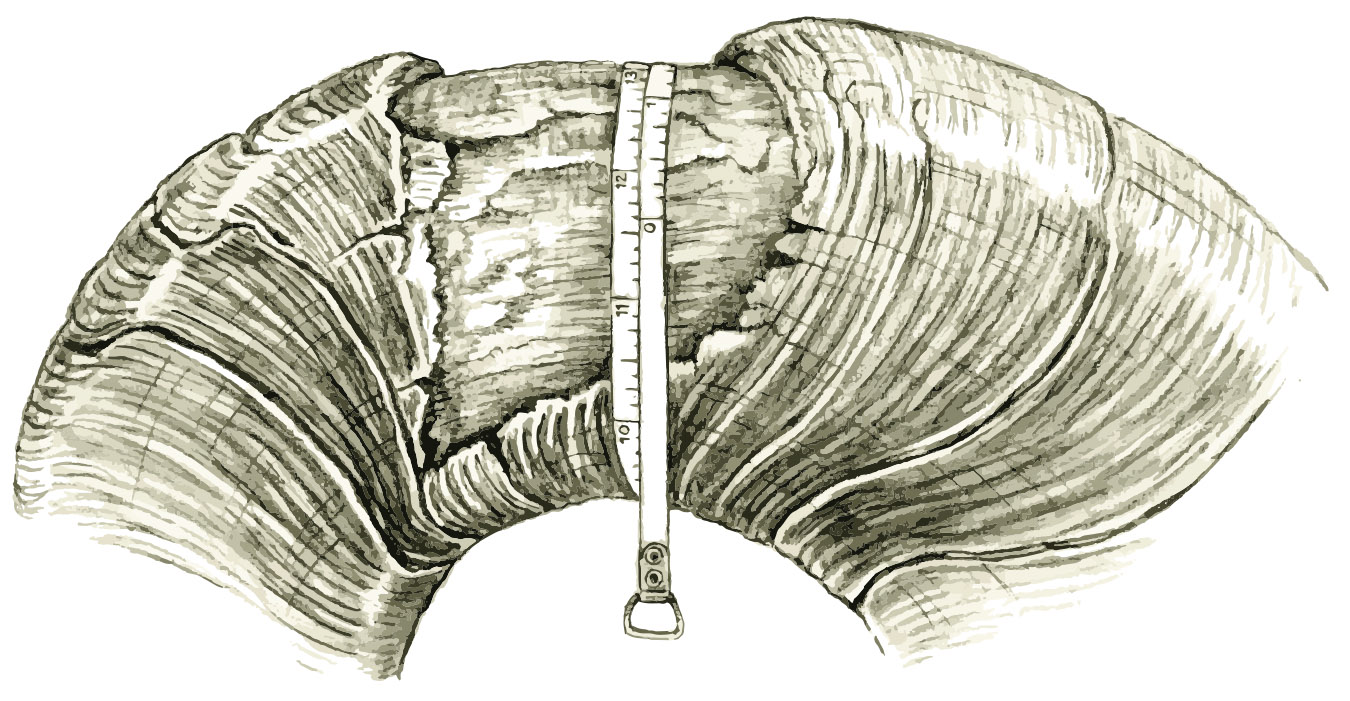
The other area is the circumference of the base measurement. A common mistake is to take this following the lower edge of the horn. The correct location is at the lowest point of the continuous horn at a perpendicular to the axis of the horn. This may appear to be a couple of inches above the bottom edge. It is helpful to have an extra set of hands and eyes for this measurement, as the tape measure likes to move around. The ridges or grooves of the horn tend to want to suck the tape measure and provide an incorrect measurement.
Scoring Challenges: Dealing with Missing Horn Material and Brooming
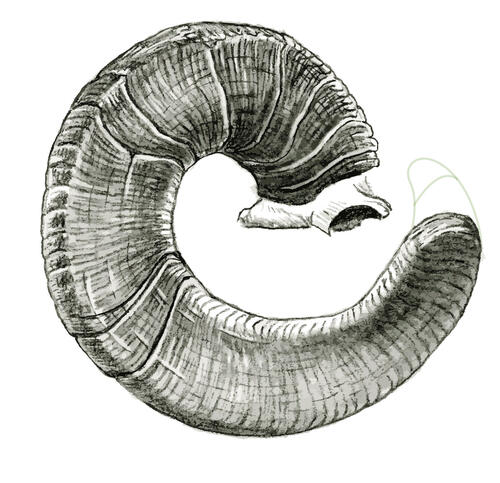
Desert sheep, for whatever reason, will often have chunks missing from their horns, and on occasion, we will get asked what to do if a circumference measurement falls in an area where a piece of horn is missing. Because the quarter locations are set off the longer horn, they are measured where they fall, regardless of the material there. In the rare case where an H-4 measurement falls past the brooming point of a horn, a zero value would have to go there (Fig. 16-D). Sheep tend to broom their horns because, as the horns get bigger, they can block their field of vision. If the horn is broomed, you will need to card the end of the horn (Fig. 16-B).
Other Considerations: Aging the Animal and Scoring Tool Correction
Sheep is one category where it is possible to determine the animal’s age by counting the rings, or annuli, on the horns. Much like you can use tree rings to get the age of a tree, with a little practice, you can get pretty good at aging sheep (Fig. 16-E). Note: the 6-foot flexible cable with “mini hook” slip or alligator clip is not acceptable to use on scoring sheep.
Online Scoring Calculators Official Measurer Locator

When you enter your trophy into the Boone and Crockett system, keep in mind that more information is always better. If you know how old your animal was, note that on the hunt information sheet when you enter it. If you provide weather data, that helps, too. And everyone loves to know the caliber, rifle and bullet used, which allows us to put together databases like the new Method Visualizer. Ever wonder what caliber has killed the most trophy whitetails? The most popular caliber in the West? Find out with the Method Visualizer tool.
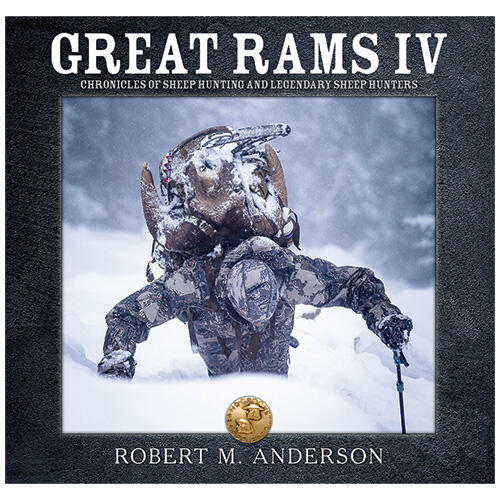
Chronicles of Sheep Hunting and Legendary Sheep Hunters
By Robert M. Anderson
Boone and Crockett is excited to offer the fourth installment of Bob Anderson’s Great Rams series. With nearly 500 images—vintage and contemporary field photos from decades of sheep hunting, plus a special photo essay of rams in the wild—and twelve captivating chapters, Great Rams IV will keep readers enthralled every time they turn the page!
LESS THAN 200 LEFT!
Content is classic Great Rams style with stories of legendary sheep hunters and guides, and features on hunting adventures in Alaska, Colorado, and Yukon, women hunting guides, and a four-part section on translocation efforts, not to mention an in-depth look at yesterday’s—and today’s—sheep hunter in an extensive field photo chapter. Bonus material includes a complete list of official B&C trophies for wild sheep from the beginning of B&C’s record-keeping activities in the early 1900s up through September 30, 2018.
With nearly 100 more pages than the previous edition, this new book will delight both new and old sheep hunters with brilliant full-color printing in a high-quality binding.
Book Details
- 10.75 x 10.25 inches
- 416 pages, full color printing