
Why Research Matters to Hunters
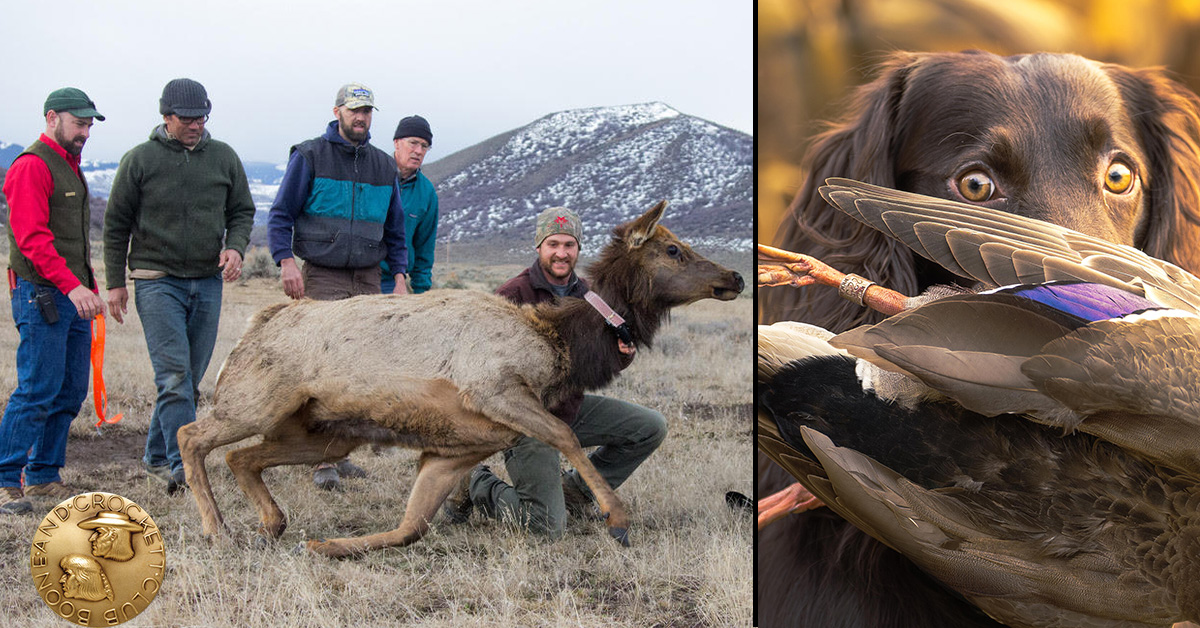
Guesswork or fieldwork? Barstool biology or science? Rhetoric or research? How managers shape hunting seasons and set regulations affects every hunter.
By PJ DelHomme
For nearly a century, hunters have relied on science-backed research to ensure that when they head into the field or woods, there’s actually something there to hunt. At the heart of this research effort is the U.S. Geological Survey’s Cooperative Fish and Wildlife Research Units (CRU) program.
Don’t feel bad if you’ve never heard of this program. Most hunters haven’t. Even though they keep a low profile, CRUs comprise 43 units across 44 universities in 41 states. Because of their geographic diversity, they focus on regional issues that affect local wildlife populations. Chances are, there’s a CRU in your state working to solve problems affecting your state’s wildlife.
Established in 1935 by Boone and Crockett Club member "Ding" Darling, the father of the Duck Stamp, the CRU program bridges the gap between university research and natural resource management by helping solve “real-world” problems. State wildlife agencies use this research to make science-based, informed decisions on everything from setting season dates to prioritizing habitat enhancement projects. Along the way, graduate students get mentored by CRU scientists and state and federal wildlife managers and form the next generation of agency professionals. Here’s how CRUs translate to better days afield for you.
Data-Driven Seasons, Bag Limits, and Habitat
State agencies rely on complex population models to ensure hunting remains sustainable. CRUs provide the technical horsepower to build these models, ensuring that seasons are long enough to provide opportunity but conservative enough to protect the resource.
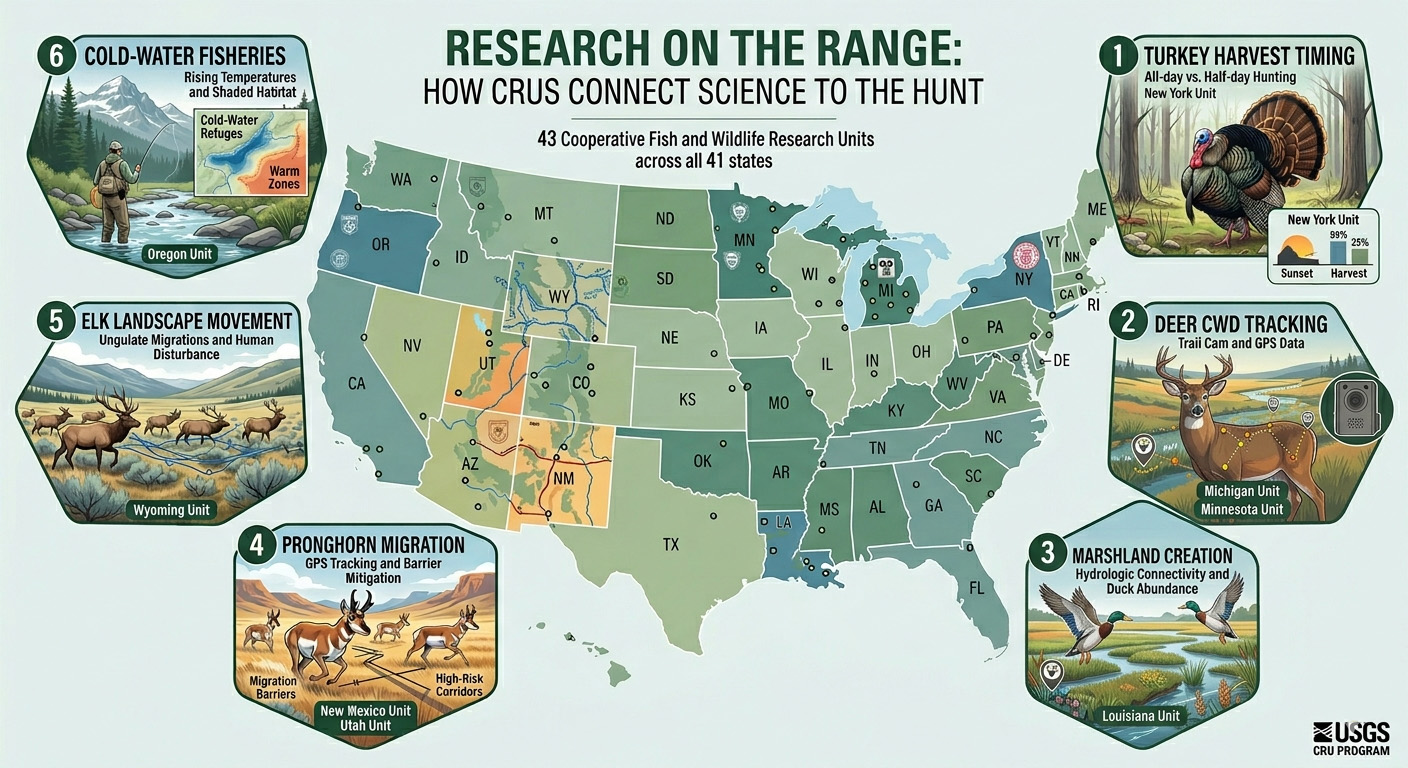
Turkey Harvest in New York: The New York Unit based at Cornell University recently analyzed the impacts of all-day versus half-day spring hunting. Their research analyzed survival and harvest rates across these states to determine if current hunting regulations were sustainable.
Marshland Creation: The Louisiana Unit published research demonstrating that marsh creation projects can support bird abundances comparable to natural marshes, provided they are engineered to prioritize hydrologic connectivity and diverse plant communities.
Hunter Attitudes: The Minnesota Unit is working to enhance our understanding of deer hunter attitudes and perceptions of deer populations, hunter motivations and satisfaction, agency trust, governance, and other policy issues related to deer population management statewide.
Disease Research
The CRU program serves as a frontline defense against wildlife diseases, particularly chronic wasting disease (CWD).
Surveillance and Mapping: In Utah, researchers work with game managers to create tools that help wildlife managers predict where CWD is most likely to appear next. Rather than testing animals randomly across a state, which is expensive and often misses emerging hotspots, they use GPS collar data and landscape variables to map high-risk corridors.
Trail Cam Tracking: Dr. Sonja Christensen is partnering with the Michigan CRU to use trail cameras and drones to track deer behavior and disease spread, namely CWD. This research provides state agencies with the data needed to refine management and surveillance strategies across the landscape.
Landscape Movement: The Wisconsin Unit is investigating how deer movement across specific landscapes affects transmission rates, providing managers with a map to contain the spread.
Habitat Changes
Climate shifts and habitat changes are redrawing the maps of where we hunt and how game animals move. CRU scientists serve as an early warning system, helping managers adapt as the landscape shifts.
Migration Timing: Researchers in New Mexico lead efforts to monitor pronghorn movements in the Chihuahuan Desert grasslands of southwestern New Mexico. The goals of this 3-year project are to monitor space use and movements, identify barriers to movement, and assess habitat use patterns, particularly in relation to vegetation restoration.
Migration Patterns: At the Wyoming CRU, Matt Kauffman and his team seek to better understand how Wyoming's ecosystems function and how those landscapes are altered by human disturbance and habitat loss. Their work on ungulate migrations shapes future policy and development.
Habitat Resilience: Fighting Fire and Invasive Species
Warmer temperatures often lead to larger wildfires and the spread of invasive plants that offer zero nutritional value to game. CRUs are figuring out how to help habitats adapt.
Forage and Cover: Units in New Mexico and Oregon study how species like deer, elk, and bear respond to wildfire and forest restoration. This helps land managers design treatments that reduce fire risk while simultaneously improving forage.
Cold-Water Fisheries: For the hunter who also carries a fly rod, CRUs conduct vulnerability assessments to identify which mountain streams are most at risk from rising temperatures. These data help agencies prioritize where to plant shade trees or remove barriers so fish can reach cooler, higher elevations.
The Bottom Line
If you hunt, fish, or recreate outdoors, Cooperative Research Units enhance your overall enjoyment. CRUs ensure that managers have access to the best available science to help them make decisions about the places we care about. By turning raw data into healthy herds and resilient habitat, they help make sure that hunting and fishing are here for the next generation. Whether it’s a mallard over a mess of decoys or a bull in the timber, the science behind those special moments was likely born in a Cooperative Research Unit.
For an in-depth article on Cooperative Research Units and the uphill battle faced by Ding Darling, read John Organ’s Science Blast article from Fair Chase magazine.