

B&C Fellow - John Nettles
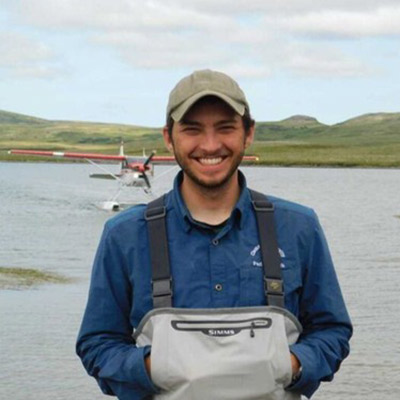
Clemson University - Ph.D. Student in Wildlife and Fisheries Biology - Projected to Graduate 2027
Project Title: Using camera traps to estimate the density of unmarked carnivore populations and the strength of top-down effects
I am a PhD student studying black bear populations in the Blue Ridge Mountains of South Carolina. I grew up in Austin, Texas but earned my B.S. in Wildlife Biology with a minor in statistics from the University of Montana in Missoula. An interest in human-wildlife conflict led me to pursue an M.S. in Parks, Recreation, and Tourism Management in the Park Solutions Lab at Clemson University. While there, I focused on bear viewing in Alaska and effective bear safety education. Since starting at the University of Montana, I have studied giant pandas in China, common loons in Glacier National Park, and most recently worked as the assistant project coordinator for a statewide bobcat population assessment in California. My broad research interests include quantitative methods, carnivore ecology, population dispersal, and human-wildlife conflict.
Using camera traps to estimate the density of unmarked carnivore populations and the strength of top-down effects
My dissertation research is primarily focused on improving quantitative methods to assess mammalian populations and communities, with a focus on black bears. I will be testing several camera-based density estimation methods, including N-mixture models, random encounter, and time-to-event, by comparing results to a genetic-based SCR analysis (hair snares) and then applying the models to a range of other species. My goal with this is to provide a systematic assessment of these methods in terms of their accuracy, precision, and other relevant considerations. This will then provide guidelines to help future researchers determine the most appropriate method for their study system. In addition, I am looking to expand on a multivariate Hakwes process to assess interspecific temporal interactions between a handful of mammalian species. By adapting the modeling framework to allow for variation within a species' background detection intensity, the multivariate Hawkes process could become common practice within community ecology research.