

B&C Fellow - Marco Salvo
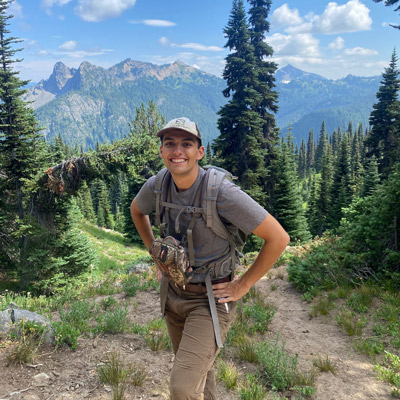
University of Montana - Masters Student in Wildlife Conservation Program - Projected to Graduate December 2025
Project Title: Using Dedicated Bird Radar Systems to Classify Avian Targets and Identify Meteorological and Temporal Drivers of Bird Risk to Aircraft
I’m currently a Master’s candidate in wildlife biology advised by Dr. Joshua Millspaugh at the University of Montana. Despite growing up in New York City, I learned to love the outdoors and became interested in wildlife conservation through camping trips with my Boy Scout troop and many visits to zoos and museums. I moved to Missoula, Montana to pursue my undergraduate degree in wildlife biology, where I embraced being an outdoorsman and learned to hunt and fish. Professionally, I gained field experience through working as a technician on projects studying elk habitat and bighorn sheep survival before graduating with my B.S. in wildlife biology. Before starting my M.S. degree, I worked as a research associate with Dr. Millspaugh studying how prescribed fire and mechanical thinning habitat treatments influence habitat for elk.
Using Dedicated Bird Radar Systems to Classify Avian Targets and Identify Meteorological and Temporal Drivers of Bird Risk to Aircraft
I am assessing how dedicated bird radar systems can be used to better inform bird strike risk and habitat management programs at two US Airforce bases. First, I am seeking to determine if tracks recorded by dedicated bird radar systems can be classified to different bird morphological groups. When radar records a bird flying, it cannot tell the identity of that bird, though it does record information on the shape, size, and speed of every track it identifies. By identifying tracks to species and quantity through field observations, I am building machine learning models to predict a track’s bird identity. Secondly, I’m examining how weather, time of day, and season influence the number of birds flying at a given time to help the Airforce try to better plan their training flights around times of low bird flight activity.