
The Ethics of Shed Hunting — and Why It Matters This Fall
How new regulations and a commitment to Fair Chase in every season are helping hunters protect the herds they’ll pursue in the fall.
By PJ DelHomme
In much of the West, March is a month of tight margins for elk and mule deer, when most of their remaining energy comes from body fat, not forage. If they are bumped off winter range and forced to move, they burn through reserves they can’t easily replace before spring green-up.
As the snow recedes, shed hunters move in looking for antlers left behind. Just a couple of decades ago, finding an antler was simply a chance encounter, proof that no one had been in that neck of the woods in quite some time. Now, it’s a full-blown industry, complete with regulations meant to protect the very animals dropping that bone.
The Biology of Energy Conservation
Wintering ungulates survive by entering a state of metabolic depression, lowering their activity to save energy. When a human or a vehicle enters their winter sanctuary and triggers a flight response, that conservation ends.
Research from the Monteith Shop at the University of Wyoming shows that late‑winter body fat in mule deer does is a strong predictor of whether they carry pregnancies to term and how well fawns survive. When shed hunters push deer off preferred winter forage, they aren’t just moving animals on a hillside; they’re adding small energy costs late in the game, when does have little margin to recover before they give birth.
The Growing Regulatory Framework (2026)
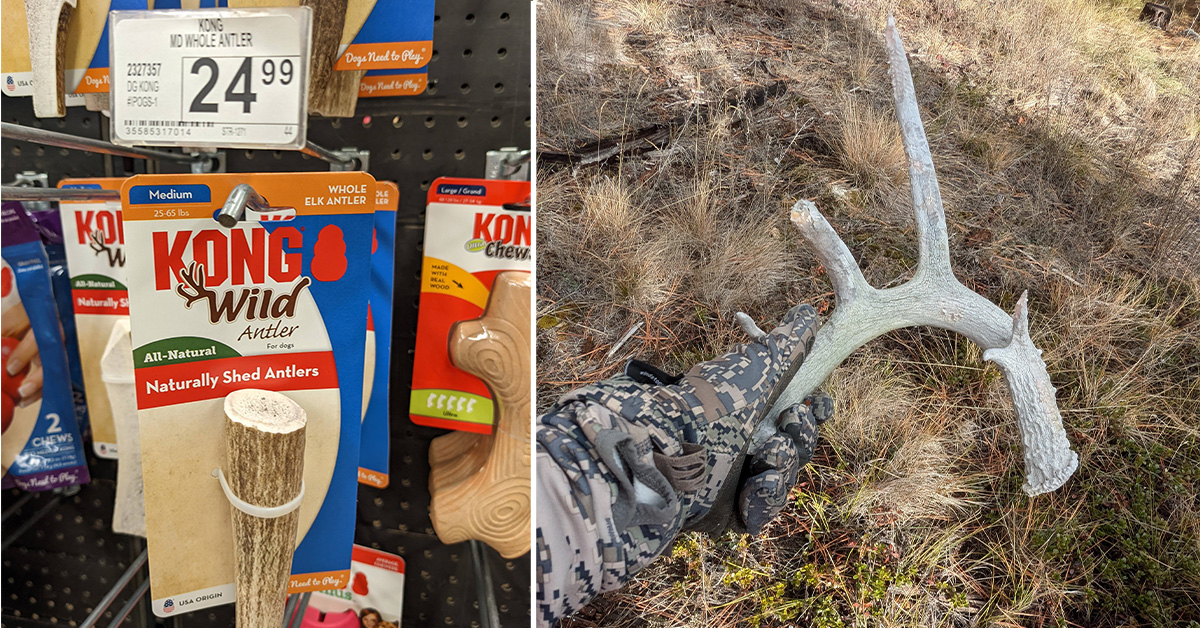
A 2021 briefing paper to the Western Association of Fish and Wildlife Agencies describes how shed hunting has exploded alongside the dog‑chew and antler market, drawing legions of brown gold miners who travel state to state to chase opening days. In Montana, I have seen them camped in the ditches along the highway, waiting for the game range gates to open. Colorado, Wyoming, and Utah report enough pressure that they’ve adopted closures, stepped‑up enforcement, and even used decoy antlers and radio‑equipped sheds to catch poachers working winter range before the season opens.
State agencies are responding to these pressures with a more structured approach to spring access. What were once informal guidelines have become mandatory regulations in several key states.
- Utah: Anyone collecting shed antlers between January 1 and May 31 must complete the free, mandatory Antler Gathering Ethics Course each year. Previously, the requirement applied only from February 1 to April 15, but the Utah Wildlife Board extended the dates to better protect wildlife in late winter and early spring.
- Wyoming: Since 2009, Wyoming has closed public lands west of the Continental Divide (excluding the Great Divide Basin) to shed antler and horn collection from January 1 through April 30 each year. More recently, the Game and Fish Commission has added additional closure areas, set specific opening dates and times, and staggered access so residents can begin collecting earlier than nonresidents, helping manage pressure from commercial and out‑of‑state shed hunters.
- Montana: A 2025 law created a $50 nonresident shed antler license for Wildlife Management Areas and bars nonresidents from picking up antlers on WMAs with seasonal closures for the first seven days after they open in spring. Most WMAs remain closed to all public entry until mid‑May—many open at noon on May 15—to protect wintering wildlife before crowds show up on the opener.
- Colorado: On public lands west of I‑25, shed antler and horn collection is closed from January 1 through April 30 each year. In the Gunnison Basin and several nearby units, Colorado Parks and Wildlife also bars collection before 10 a.m. from May 1–15 to reduce disturbance to Gunnison sage‑grouse during lekking and nesting.
Ethical Considerations for the Spring
The goal isn't to stop shed hunting, but to ensure the pursuit doesn't compromise the fall hunt. After all, the Club does recognize “pick ups” in its records. Ethical behavior in the spring involves a few basic shifts in our conduct afield.
- Prioritize the Green-Up: Wait to enter the hills until the grass is growing and the animals have naturally moved toward higher elevations. If the herds are still visible on their winter grounds, it is too early to be there.
- Manage Your Impact: Many experts recommend leaving dogs at home in the early spring. Even a well-trained dog can trigger a much larger flight distance in elk and deer than a human on foot.
- Use Your Glass: Scout from a distance. If you see animals in the area you intended to hike, move to a different drainage.
B&C Policy on Found or Picked-Up Trophies
The Boone and Crockett Club sets the rules for entering a trophy into its record books, which are based primarily on principles of wildlife conservation and Fair Chase. The fact that the Records Program accepts entries that have not been harvested by a hunter but instead are "found" by people (whether on a hunt or not) may be surprising to some, but there are sound reasons for doing so.
Found trophies include animals that die of natural causes, such as advanced age, environmental factors, and predation. Found trophies also include animals that die of unnatural causes, such as vehicle collisions. Found entries, along with the locations where found, are listed as "picked up" in the B&C record books to distinguish them from hunter-taken entries, which are subject to different eligibility requirements, including the principles of fair chase.
The Boone and Crockett Club's big game records are a set of wildlife and hunting data the Club began collecting over a century ago to track the recovery of big game populations from decades of unregulated overharvesting. The focus today is on monitoring the quality and distribution of specimens that natural conditions and sound wildlife management can produce.
Having sportsmen participate in this data collection system by voluntarily submitting their trophies is vital. Having people submit trophies they find is equally important. Mature males that have lived long enough in the wild under favorable conditions to grow large antlers, horns, or skulls to qualify for the B&C record book are indicators of healthy ecosystems, balanced age structures within a given population, acceptable mortality (natural and human-caused), and sustainable recruitment. The Boone and Crockett Club maintains that all trophies, both harvested by hunters and found, contribute to the data set that helps game managers adopt successful policies to benefit big-game populations in North America. The Records Program was never intended to be a numeric ranking of a hunter's skills.