
How the World’s Greatest Ram Nearly Ended Up in the Landfill
PJ DelHomme
Published in Summer 2026 Fair Chase
In a forgotten, dilapidated building at the Bronx Zoo, the world’s greatest ram sat behind a pile of garbage. It was January 20, 1977, and Lowell Baier was in New York, working to save specimens of the greatest North American heads and horns.
Baier, a Washington D.C. attorney and future president of the Boone and Crockett Club, wasn’t yet a Club member when he went to save what was left of the Club’s National Collection of Heads and Horns, which included hundreds of astounding pieces of taxidermy established in 1906 to honor what was then considered the “vanishing game of the world.”
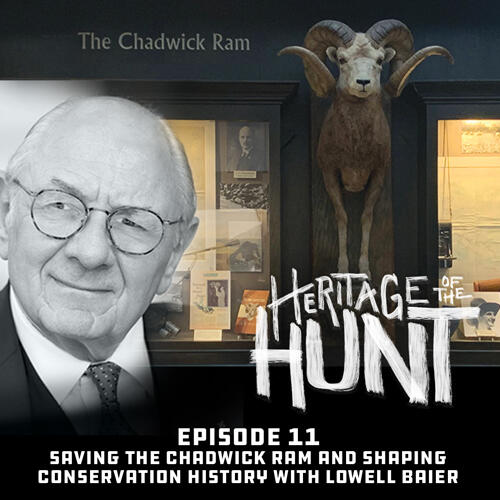
“When I went into the building, it was dusty, dirty cobwebs everywhere,” Baier recalled during a recent episode of the Heritage of the Hunt podcast. “They had just locked it up and forgotten about it. I was just amazed at the condition of the building.”
Some guards had already begun “lifting some of the better trophies for their own use.” When Baier confronted the head of the museum, he was met with a shrug. The plan was to let the American Museum of Natural History cherry-pick a few pieces and toss the rest. Baier wasn’t having it.
Invoking a long-forgotten trust agreement between the Boone and Crockett Club and the New York Zoological Society (which Club members created in 1895), Baier threatened a lawsuit that “stopped them dead,” he recalled. The result? Baier was told he could have what was left of the collection, but with a catch: hundreds of world-class trophies had to be out of the building by Labor Day.
Baier returned in the summer with a crew and a fleet of trucks. Working in the July heat, they moved a century’s worth of taxidermy. Toward the end, Baier made one last sweep.
“As I was about to leave, I looked over my shoulder, and there was something lying in the back corner,” Baier said. “I walked back there, and there was a... maybe a wastebasket or a big piece of cardboard or something. I pulled it aside and my god, right behind it was the Chadwick Ram”.
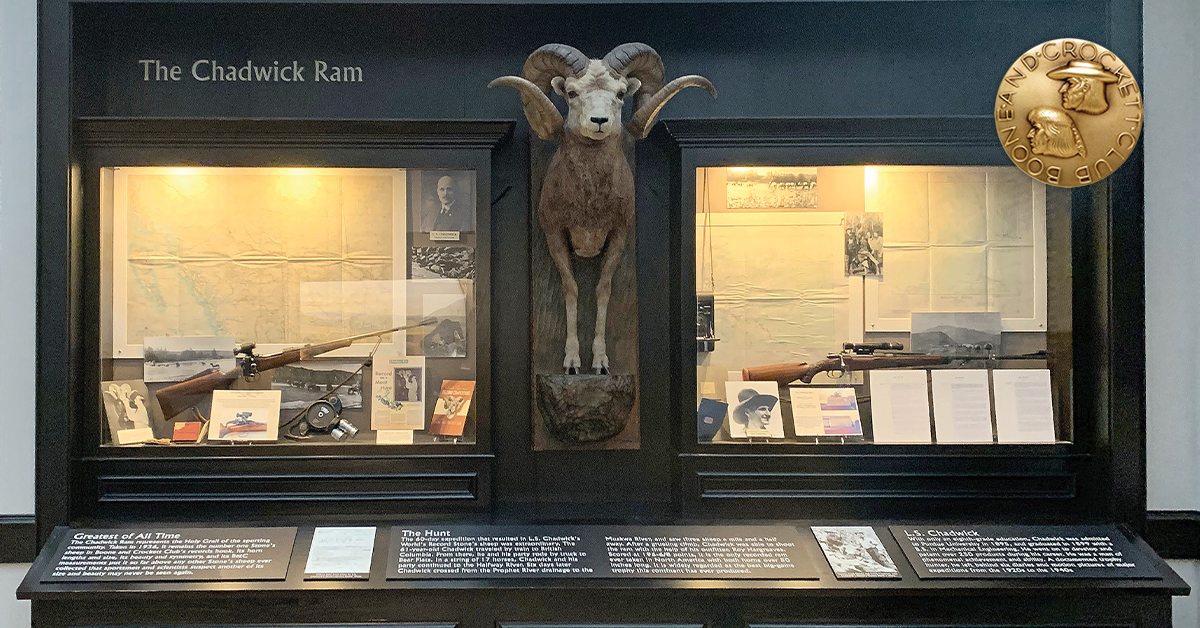
Long before it was a forgotten relic, the Chadwick Ram was the centerpiece of a 1936 expedition into British Columbia’s backcountry. Lee Sherman Chadwick, who was over 60 years old, trekked into the upper Muskwa River country—a region so remote it predated the Alcan Highway.
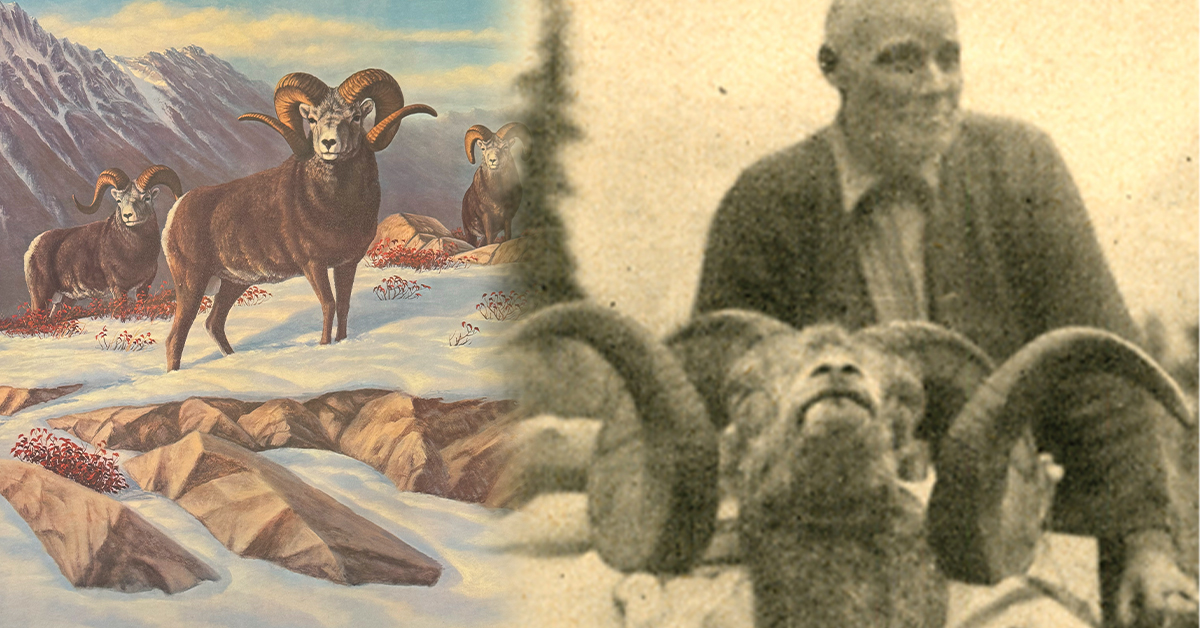
Accompanied by outfitter Roy Hargreaves and guides Curly Cochrane and Frank Golata, Chadwick’s pursuit was classic mountain sheep hunting. “When we arrived at the top, the sheep were gone, as we expected,” Chadwick said. “But we sighted them down in the Muskwa Valley, two thousand feet or more below. Then down over the rock slide—with sore feet and trembling knees—we went, until we got to within about 200 yards of them.” Chadwick took aim at the largest of the trio.
It was the most magnificent ram he had ever seen. Scoring a record 196-6/8 points, the ram remains the only North American sheep ever recorded with horns over 50 inches long. It is widely considered the greatest North American big-game trophy ever taken, holding the top spot in its category for over 80 years.
Four decades later, in the sweltering New York summer, the rescue of the Chadwick Ram was an equally heroic pursuit, though many specimens were missing from the original museum collection. A pair of massive elephant tusks slated for the move “mysteriously disappeared” the morning the trucks arrived. Today, thanks to Baier’s persistence, the Chadwick Ram resides in the Wonders of Wildlife Museum in Springfield, Missouri. It stands as a record of a remarkable hunt, and of the difference one person can make when they won’t take no for an answer.
Learn More About the Chadwick Ram
Image
| Image
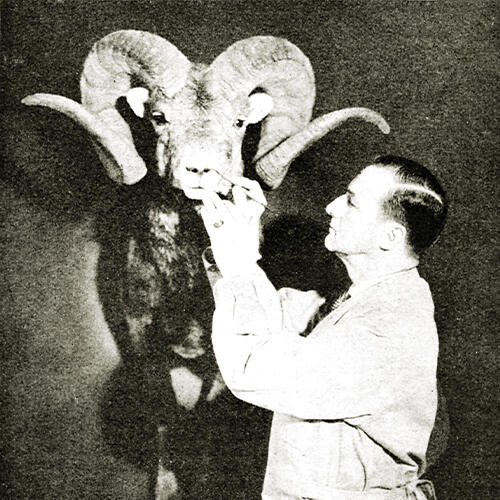
Read more about B&C Member James L. Clark, the lead taxidermist on the L.S. Chadwick's Stone's sheep |