
Hunting Adventures in the Arctic
Published in Fair Chase magazine, Winter 2025
By Jim Zumbo, B&C Professional Member, photos courtesy of author
I knew he’d spotted something worth investigating when George Angohiatok looked at the herd of caribou half a mile away and gave a thumbs up. He turned to me and said there was a unique bull in the group, not trophy class, but it had a triple shovel. “I don’t remember seeing one before,” he said. George looked at the bull again through his binoculars. “Are you interested, or shall we keep on looking?”
Easy question. “I’m definitely interested,” I responded as I glassed the bull with my binoculars. What really piqued my interest was George’s comment that he couldn’t recall seeing a triple shovel before. He was born and raised in the Arctic and hunted all his life. In fact, he was the native leader among the locals of the small village of Cambridge Bay, which is well above the Arctic Circle.
The herd was feeding and slowly making their way into a draw. “Perfect,” George said. “Soon they’ll be out of sight, and we can make our move. The wind is good.”
There were several Inuit in our party. Besides George, the others were here with their families, who were netting and spearing Arctic char and hunting caribou for their meat supply. They had taken a break from their hunt and tagged along with us.
I noted how the men moved effortlessly across the rugged tundra while I struggled to navigate the Arctic floor. I was in reasonably good shape and stumbled along, managing to keep up. Much of the tundra is muskeg, lichens, and soft ground composed of dwarf shrubs, sedges, and moss, some of it like a sponge. If you aren’t used to it, leg muscles get a workout.
George led us to the draw where we’d last seen the caribou and peeked around the corner. He turned to us with a big smile. “They’re close,” he whispered. “Less than 200 yards.” I crawled commando-style to a spot where I had a good view. Resting my rifle on my backpack, I positioned the scope bead directly behind the bull’s shoulder. He dropped instantly at the shot and lay still.
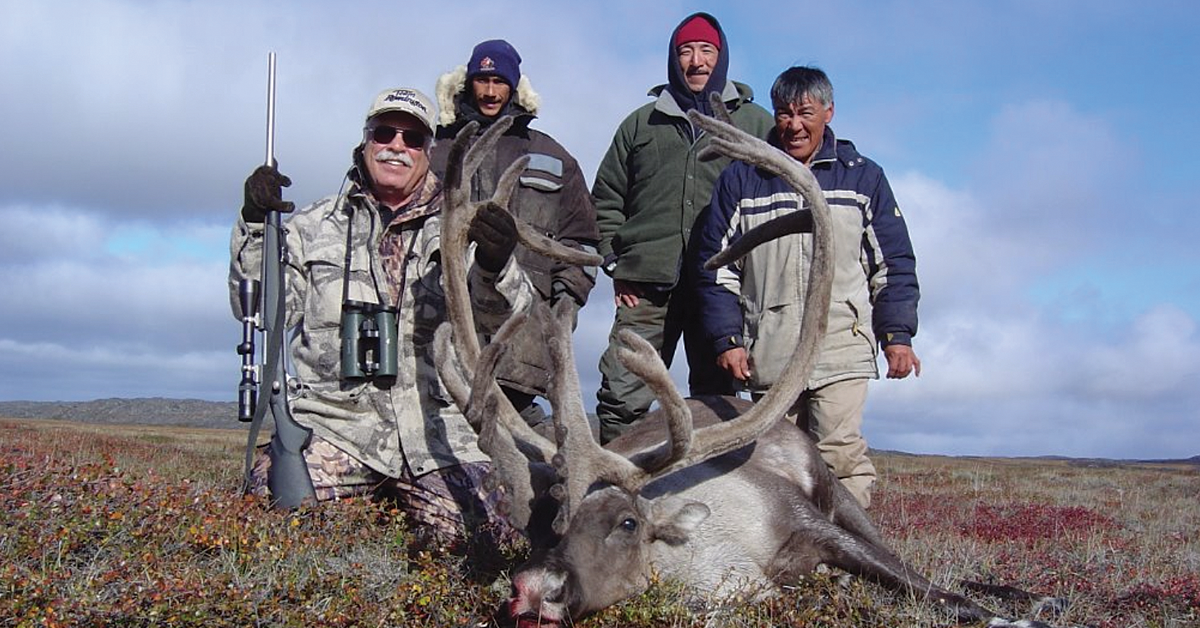
There was no backslapping or high-fives. The men grinned widely, and we all shook hands. It was a simple celebration. George was impressed at the sight of the triple shovel. I wondered if he really hadn’t seen one before and was making me feel good. Maybe he’d never seen one taken by one of his hunters. Either way, I was happy, not only because I’d taken a unique animal, but because the meat would be excellent. My wife and I absolutely love caribou meat when the antlers are in velvet. I was hunting in late August, a perfect time for caribou venison.
When I pulled my knife out to help field-dress it, George grinned and said they’d do it. I wasn’t about to argue because I knew I’d only be in the way. I’d field-dressed countless animals, but I figured I was an amateur when compared to George and his crew. I watched in amazement as they dressed, skinned and quartered the carcass. I wondered how many hundreds they’d processed in perilous weather and travel conditions.
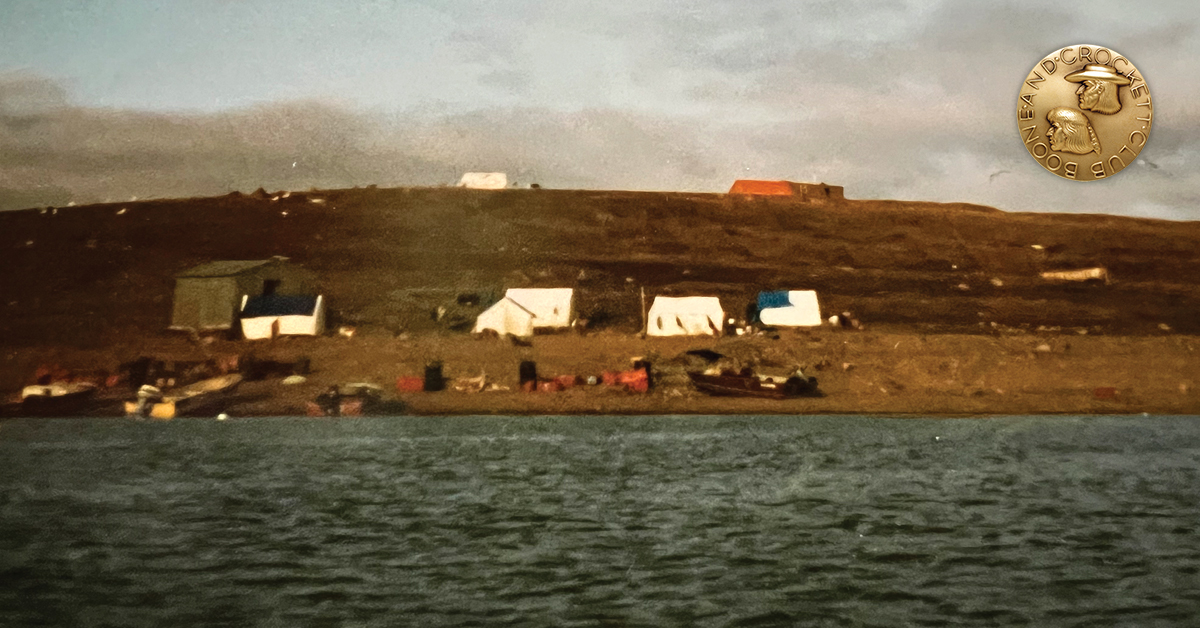
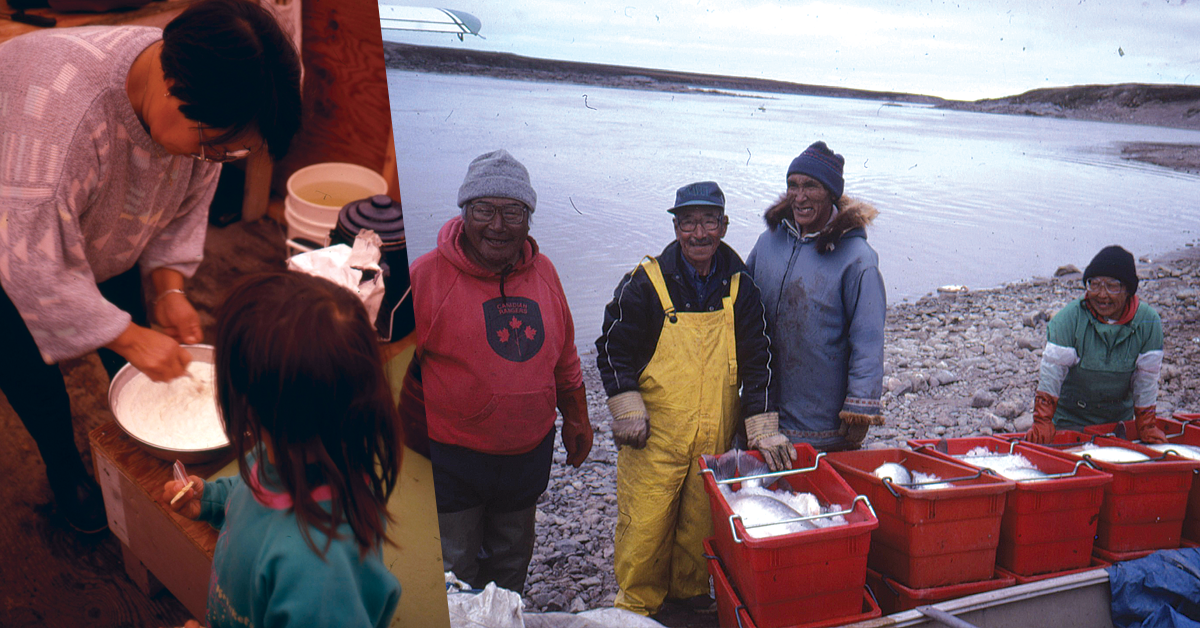
The meat was bagged and carried into camp, which was along the Ellice River. As I washed the blood off my hands in the river (they did let me cut out the backstraps), I saw many women and children working their nets. I watched with interest as they skillfully filleted Arctic char with traditional ulu knives. Each fish was hung on a rope to dry until the rope could hold no more.
There were about a dozen families in all. They sheltered in tents while we hunters occupied a plywood shack. It was comfortable, complete with cots and a kerosene-fueled stove for nighttime heat and to dry clothes. Meals for the hunters were served in a dining tent. The Inuit families took turns providing meals for their group. I watched with interest when they boiled large chunks of meat in a big pot, sharing it.
I learned that George’s wife, Mabel, was a terrific cook. Among other dishes, she was well-known for her bannock. It’s also called fry bread and is cooked in a skillet. Mabel mixed in some berries, which gave it a unique flavor. I was so impressed watching her make it, I couldn’t wait to experiment at home.
On to Musk Ox
With my caribou quarters hanging, I was ready to hunt musk ox. The weather turned nasty, but no one complained. Bad weather in the Arctic is routine. There was no big hurry to hunt. The musk ox weren’t going anywhere since this was their rut season, and they were scattered on the tundra.
The traditional and most popular musk ox hunt occurs in March or April when the weather is profoundly brutal. Temperatures of 30-35°F below zero are typical. Apparel is obviously of the utmost importance. During that period, musk ox have an interesting defense strategy where they form a circle, heads out. The approaching hunter looking for a trophy-class bull must select the target quarry and make a killing shot.
The hunt is typically conducted via snowmobile driven by a guide who tows a sled carrying the hunter, though there are variations. Speeding around in sub-zero cold adds the element of wind chill. It is so bitterly cold–the kind of cold you’d experience if you were out in a small boat or atop a horse where you have no protection from the weather and no way to move body parts to keep warm.
In my case, the late summer hunt occurred when caribou were spread over the tundra. The animals were in the rut and in small groups or alone. The strategy was to hunt via a quad, spot the quarry and make a stalk. Without the quad, we might walk for days in the soft ground and never see a musk ox in this vast landscape. Since George had an idea where we should find them, we at least had a plan.
The rain continued as we rode across the seemingly barren tundra. George suddenly stopped and pointed to something in the distance. I saw a black dot; George saw a musk ox.
Both musk ox sexes have horns and, to a novice, might be difficult to identify. George was no novice. He raised his binoculars and shook his head. “Big cow, but I see a herd way off in the distance. Gotta be a bull or two there,” he said.
We made a big circle in the quad and parked a half mile from the herd. George confirmed the presence of bulls with his binoculars. The rain continued steadily as we stalked. I was wearing wool from my nose to my toes. George grinned and said, “Jim, you look like a big sponge!” I laughed. He was right—I felt like a big sponge. I loved George’s sense of humor. I don’t know what he was wearing, but it was working. Wool is supposed to wick away water, but not that day. I remembered my years growing up in the East. Almost all of us wore the traditional black and red wool apparel. Then Gore-Tex appeared on the scene and revolutionized outdoor clothing for nasty weather.
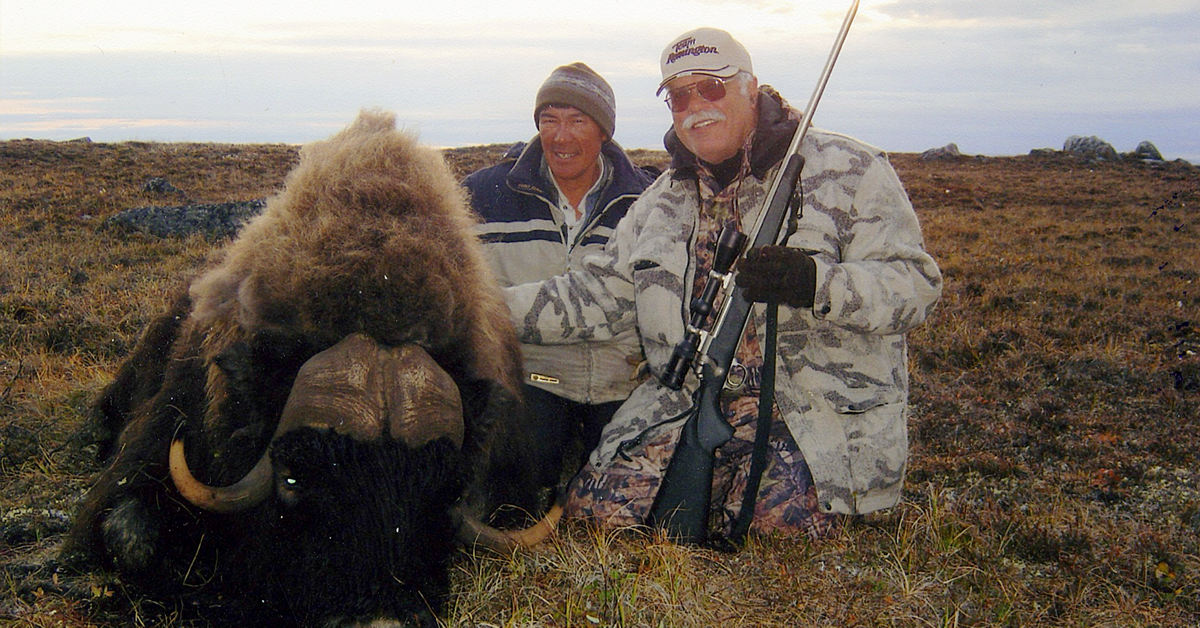
The musk ox didn’t seem to be concerned with our presence. When I was close enough for a shot, George pointed out a good bull. I looked at it closely through my scope and saw that the bull appeared to be covered with a huge, long-haired rug draped over its body. I looked at George and whispered, “Where the heck is the shoulder? All I see is a ton of fur.”
George grinned. “Wait until he takes a couple steps. You should see his front leg and figure out where the shoulder is.”
I did, and I fired, feeling good about the shot. The bull rushed forward 50 yards, stopped, and slowly rocked back and forth. Moments later, he fell to the tundra. I was delighted to see that my bullet had taken him behind a not very obvious shoulder. George pointed out the patches of qiviut on the fur. He explained that it’s the dense undercoat that lies next to the skin. When woven, it can be turned into lovely, extremely warm garments. It’s commonly said that qiviut hats, gloves, scarves, and other items have no equal in retaining heat during extremely cold weather. After the bull was back in camp, George asked if I wanted to take any of the meat home.
I explained that I was interested in taking some. I mentioned that we were told we should leave most of the meat for the Inuit. In fact, I’d driven to Yellowknife to eliminate extra flights and risk losing the meat or having it spoil. I love to cook wild game, and I’m always excited about cooking something new.
George laughed. “You can take all you want. We have plenty, and we don’t shoot those tough old critters like you guys do.” I laughed too and understood completely. I took about 50 pounds of meat home and found it to be delicious, though some parts required a bit of assistance from a crockpot. The caribou was superb, as usual.
Memories of Brian
The next day I learned most of the families would travel upriver in their boats to spear Arctic char at a rapid. When George invited me to join them, I couldn’t say yes fast enough. A few of the women would remain in camp to tend to the nets.
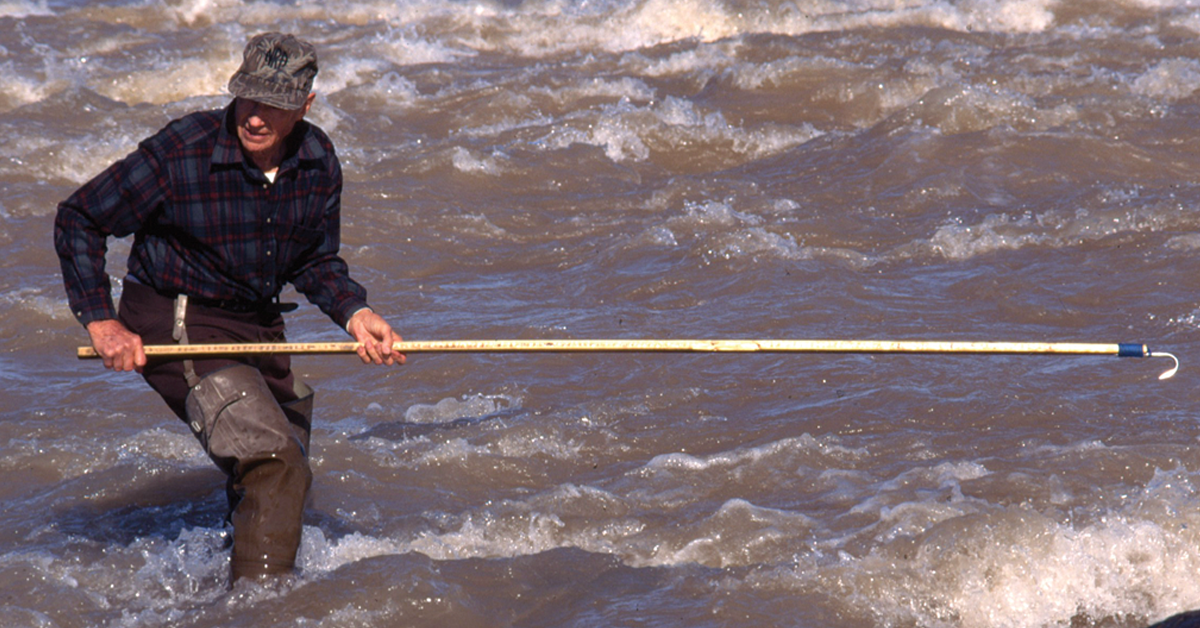
I watched in awe as the men easily hopped from rock to rock in the rapids. Somehow, they’d spot fish in the churning froth and foam and strike swiftly with a spear. Most of the time, the spear neatly pierced a fish. Some of the fish were immediately eviscerated, and parts of the innards, as well as the flesh, were eaten raw.
Since I’m a big sushi fan, I had tasted the fish that were drying in camp. Somehow, this raw flesh was not sushi quality, at least not what I was used to. It wasn’t unpleasant, but it just wasn’t my cup of tea. At the rapids, George’s young son Brian left our group and ran off into the tundra. He returned 15 minutes later with an armful of pencil-sized dried twigs. He started a fire in the rocks, and when the twigs were glowing, he produced a small frying pan and placed it over the flames. Then he rummaged around in a box and came up with butter that he dropped into the pan. He picked up a thick, orange char fillet from a fish he’d speared and put it in the sizzling butter. When done, he grabbed a plate and fork from Mabel, his mom, and, with a wide grin, plated the fish and handed it to me. I was almost speechless. That fillet was fantastic and ranks up there with the very best fish I’ve ever had. It is one of the most precious acts of friendship from a youngster that I’ve ever known.
Brian and I had already established a relationship. George and Mabel invited me to join them and the family to pick Arctic cranberries. The berries were tiny and grew close to the ground, where we had to crawl with a bucket. Brian showed me some tips on how to spot and pick them. Mabel put some in her bannock.
The next day, Brian caught a ground squirrel in a foothold trap. He was delighted and proudly held the wiggly rodent high for his buddies to see. “I’m going to ask my grandma to cook it,” he said. I was most interested and eager to watch her clean and cook it. What a great part of their culture, I thought. But alas, that was wishful thinking. In a loud voice, Grandma said, “Brian, you let that poor thing go. You’re hurting it.” Brian was obviously disappointed. He lowered the lucky squirrel to the ground, carefully opened the trap jaws, and set the squirrel free. It scurried right off.
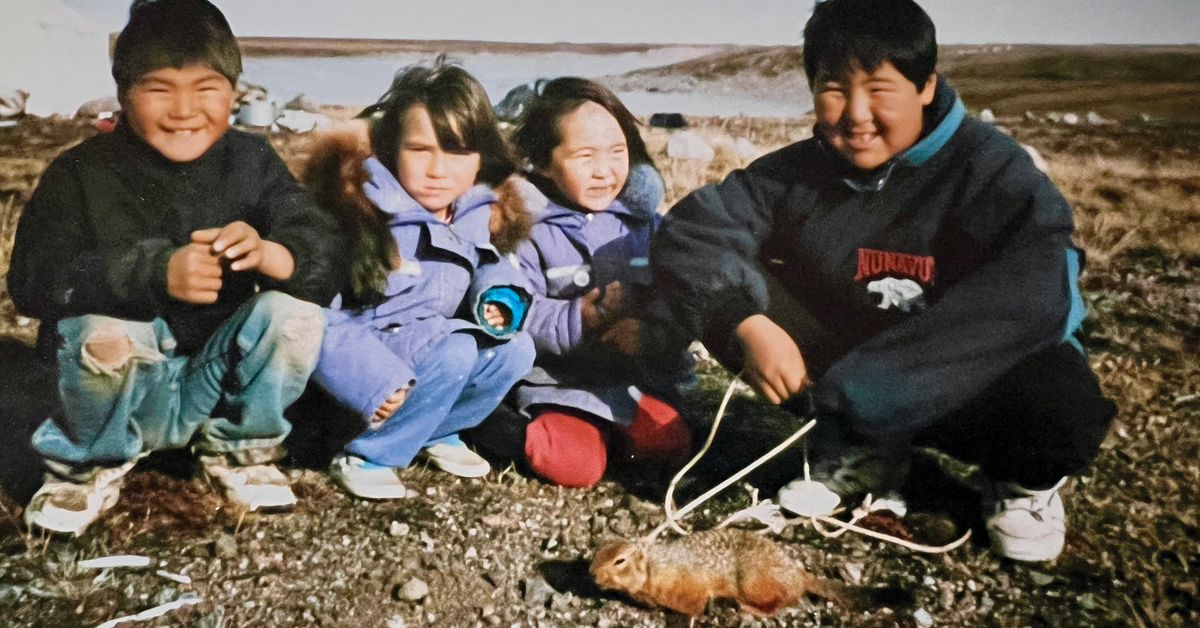
I really hated it when the hunt came to an end. I’ve always loved the Inuit way of life and their incredible survival skills. This hunt was so special because, for a few short days, I was allowed to be included in their family activities.
As I was boarding the plane, saying my goodbyes, it started to snow lightly. Mabel laughed. “Here comes winter already,” she said. I was going home to August heat, and they were preparing for the long winter. I looked out the window of the plane and waved to the family. The snow swirled around, and they were happy. Brian was waving vigorously. I believe I had a tear in my eye as the plane taxied, and I lost sight of them.
I returned to the Ellice River two years later, this time with a group of outdoor journalists. We’d be hunting musk ox and caribou. I can’t remember being more excited about a hunt. I was returning to an area I loved, and I’d see the family that I’d thought about so many times.
When we deplaned, I immediately spotted George, Mabel, and the kids, but Brian was missing. I walked over to greet them, and after exchanging pleasantries, I asked about Brian. No one spoke. No one was smiling. George had tears in his eyes. I knew. No one had to tell me.
“Brian was killed in a snowmobile accident,” Mabel said. I was devastated. Suddenly, the hunt wasn’t important. I wasn’t sure I wanted to stay.
George sensed my grief and lightly punched me in the arm. “Wait ‘til you see where we’re going to hunt musk ox,” he said. “It’ll be quite an adventure.” I didn’t want my gloomy mood to be a negative distraction, so I faked perking up and helped unload gear from the plane.
Camp was in the same place as my previous hunt. Again, the families would spear and net char and shoot young caribou. The only thing missing was Brian. I was going to have to cope, not mope. It wouldn’t be easy.
The first order of the hunt was to get our caribou. They were scattered and relatively close to camp. In two days, all of us had our bulls.
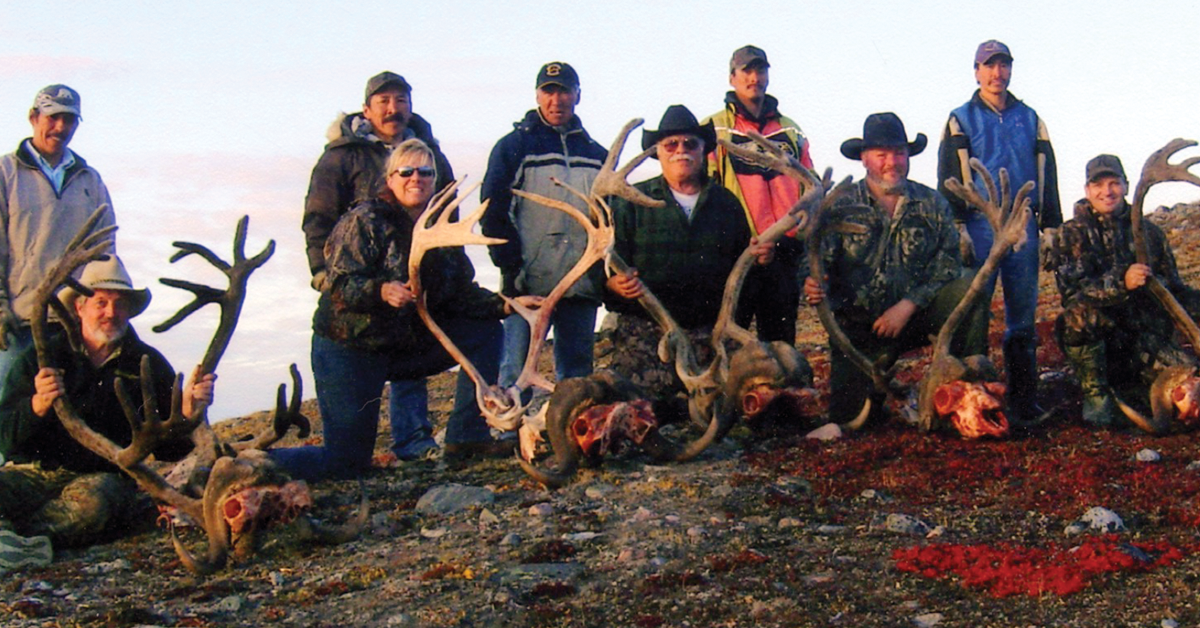
One afternoon, I decided to make ceviche because I’d found limes in the Cambridge Bay store. I was surprised to see them. I also purchased other main ingredients—red onion, cucumber, tomatoes, and celery. Other items weren’t available, but that was okay, as limes are the primary ingredient. The citric acid “cooks” the raw fish after a few hours in the marinade. While I was preparing the ceviche, a little Inuit girl came by and asked me what the lime tasted like.
“Want to try it?” She nodded her head vigorously. I cut off a wedge and handed it to her. She gently put it in her mouth, and her reaction was predictable. She made an unpleasant face. Then she chewed on it a bit more. “That’s good!” She smiled. I gave her more wedges to take to her little buddies so they could try it too.
That evening, George told us we were headed out on our adventure in the morning. We’d load our gear in boats, including the quads, and motor to a large island a couple of dozen miles away. This should be interesting. How would they transport the quads in small boats? I wasn’t skeptical, just curious. Knowing the improvising nature of the Inuit people, I was certain they had a system. They did it by turning the boat parallel to shore and leaning a pair of 2x8 planks across the beam. They drove the vehicle up the planks, and when all was level, they lashed the quad down. We loaded the rest of the gear and took off, five boats and quads in all.
As the ocean motion hit us, the bows on the small boats slapped down hard when they topped a wave. We were traveling slowly since the boats had small motors and the sea was not nice. As the boats rocked and rolled, the slack in the ropes holding the quads allowed the vehicles to roll back and forth on the planks. I shuddered to think what might happen if a rope broke. The quad would end up in Davy Jones’ locker.
The sea wasn’t calming down, but George never showed a sign of concern. He laughed and joked, perhaps to put the rest of us at ease. I’d wager if he were alone, he’d still be laughing and joking.
As we neared the island, our little fleet headed for calm waters on the leeward side. It was a relief to be out of the rough ocean. “Musk ox!” George said as he pointed to the island. Sure enough. We saw two herds, one of them containing about 20 animals, the other about a dozen.
We eased the boats onto a gravelly part of the shore and grabbed our guns. We didn’t bother with the quads and would stalk the musk ox from our landing spot. Each of us separated with our guides, and half an hour passed before I heard three shots. We later learned that two members of our party had scored.
My turn came an hour later. George and I stalked a herd and were able to approach within 75 yards. George pointed out the best bull, but all I could see was his back. I crept higher up a knoll where I had a better view and sent a bullet into his lungs.
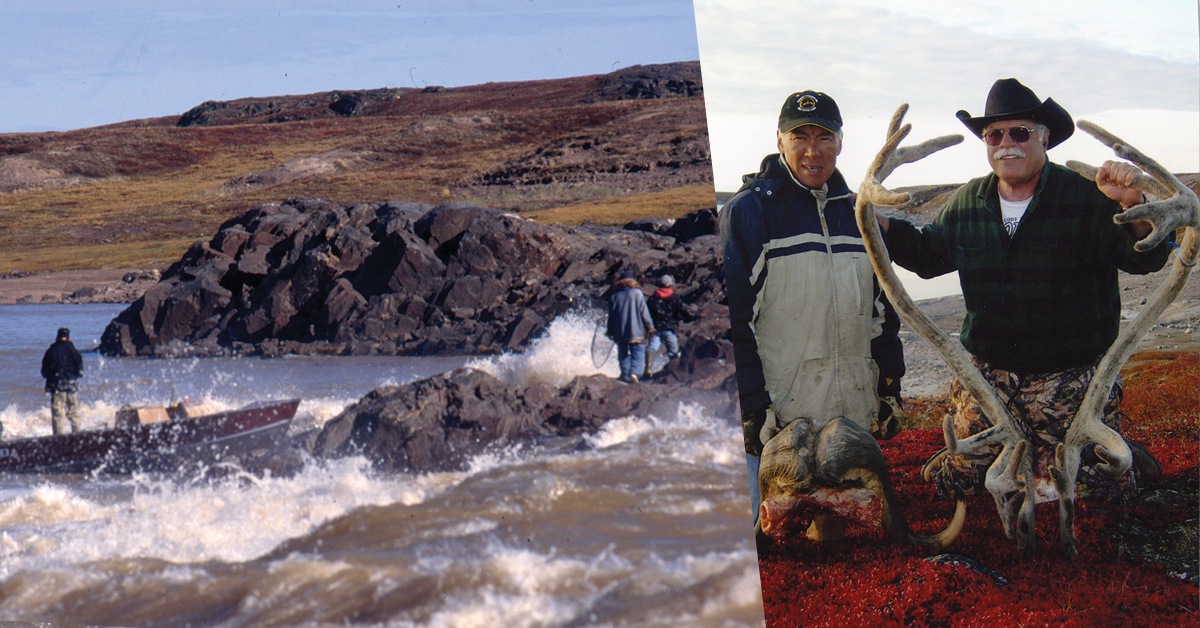
The other hunters had scored, and we transported all the meat, hides, and heads to the boats with the help of the quads. George had hoped to avoid staying overnight, but the crossing was so rough that we lost too much time. Tents were set up, and we spent an evening around a campfire telling tales and eating fresh musk ox tenderloins. It was a wonderful adventure.
I stay in contact with George, Mabel, and family through Facebook and marvel at their culture. I’m continually amazed at their hunting and fishing expeditions, mostly over sea ice. They hunt polar bears, grizzlies, caribou, seals, ptarmigan, geese, and other critters, and utilize all the meat and fur. Technology has made its inroads, but they seem happy with their lifestyle.
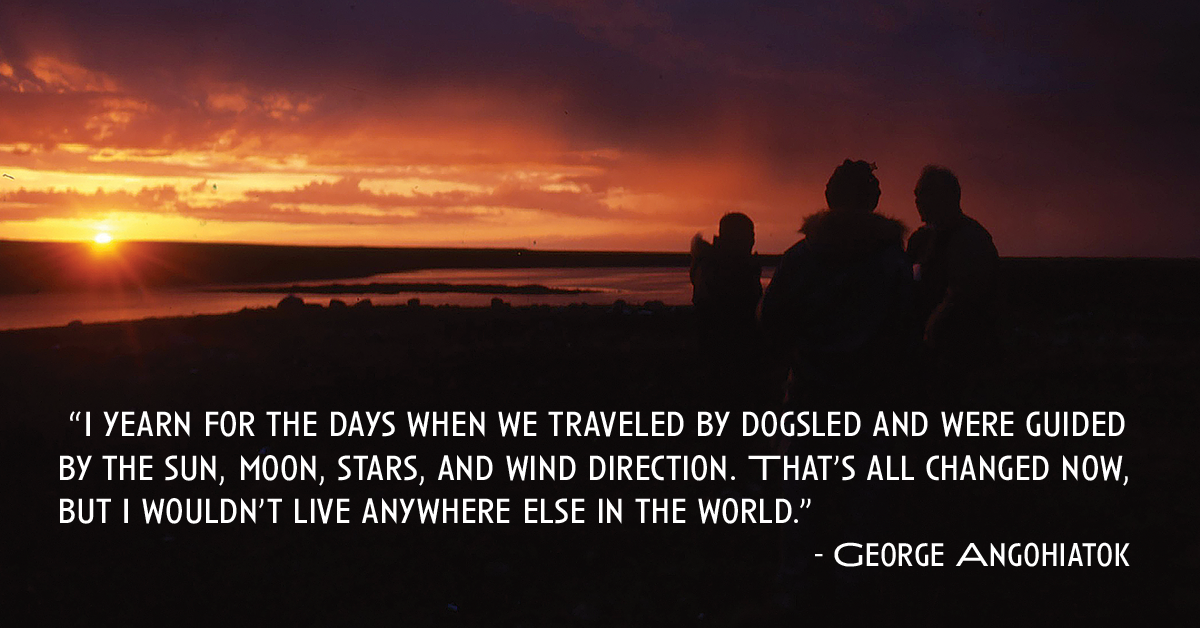
George once told me, “I yearn for the days when we traveled by dogsled and were guided by the sun, moon, stars, and wind direction. That’s all changed now, but I wouldn’t live anywhere else in the world.” I completely understand, George.