

Innovations In Adventure
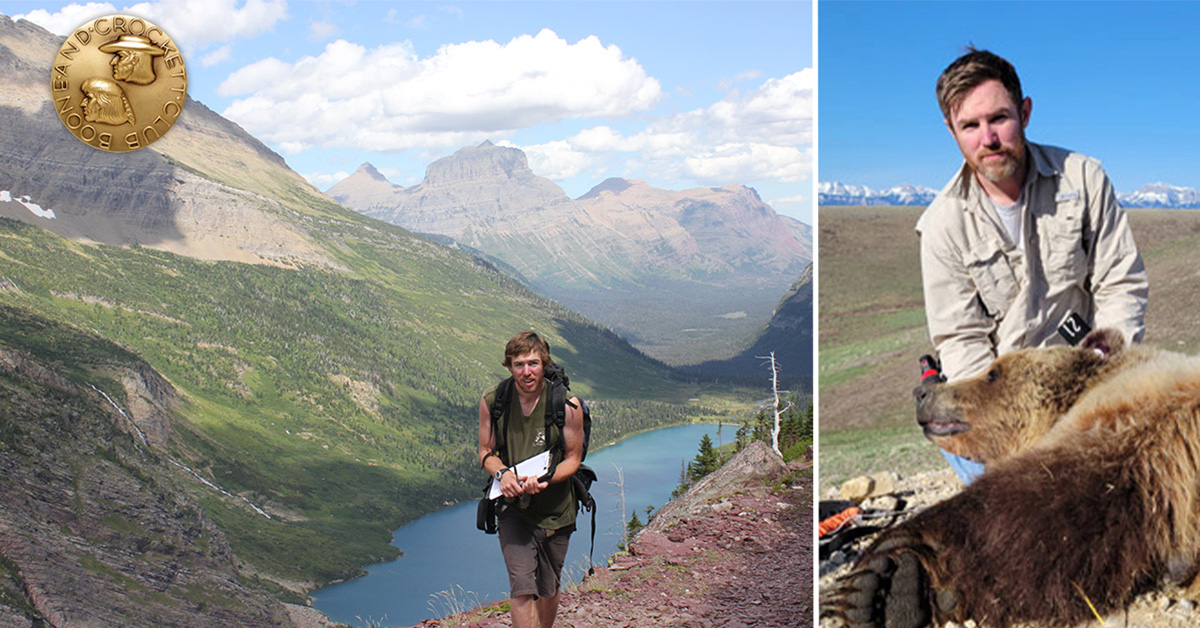
Boone and Crockett Club Fellow Wesley Sarmento has spent two decades sleeping on the ground—from Montana’s backcountry to the Gobi Desert and back again. Today, he’s working with the Blackfeet Tribe on the edge of Glacier National Park to study bison reintroduction on their ancestral lands.
By PJ DelHomme
Wesley Sarmento isn’t afraid to get his hands dirty. After all, it’s hard to keep them clean when you’ve spent the better part of your adult life outside. There was the summer spent clearing backcountry trails in Montana’s Bitterroot-Selway Wilderness. And that year spent sleeping in an old yurt in Mongolia to study Argali sheep. Can’t forget four seasons of researching mountain goats in Glacier National Park. Today, Sarmento is slightly more domesticated. He’s a Boone and Crockett Fellow and a National Science Foundation Fellow at the University of Montana, where he is a Ph.D. student working with the Blackfeet Tribe on buffalo restoration.
From Greenhouse to Global Research
Sarmento’s entry into wildlife biology began with manual labor. While earning state residency to attend the University of Montana, he worked on a trail crew with the Montana Conservation Corps (MCC). With his crew, he would spend nine days in the wilderness, working 10-hour days and sleeping on the ground. “I loved it,” he says. “I loved every second of it.” Using the AmeriCorps education stipend money he received from his time with MCC, he enrolled in the wildlife biology program at the University of Montana.
As an undergrad, he washed planting pots in a research greenhouse. “I just needed extra money, and a professor needed help washing pots in their research greenhouse,” he says. That professor noted that washing pots wasn’t exactly wildlife biology work. She introduced him to disease ecologist Vanessa Ezenwa, who hired him to count lungworms from bighorn sheep scat.
"It was microscope work, days and days of microscope work," Sarmento recalls. "It was miserable, but I stuck with it." His persistence resulted in undergraduate research grants and a summer spent in Kenya studying disease ecology in African antelope. This spark of research overseas lit a fire in Sarmento.
Driven by the prospect of seeing vast, unfenced landscapes and traditional nomadic societies, Sarmento applied for a National Geographic grant to work in Mongolia. He secured the funding and moved to the Gobi Desert shortly after graduating with a degree in wildlife biology in 2011.
Survival in the Gobi
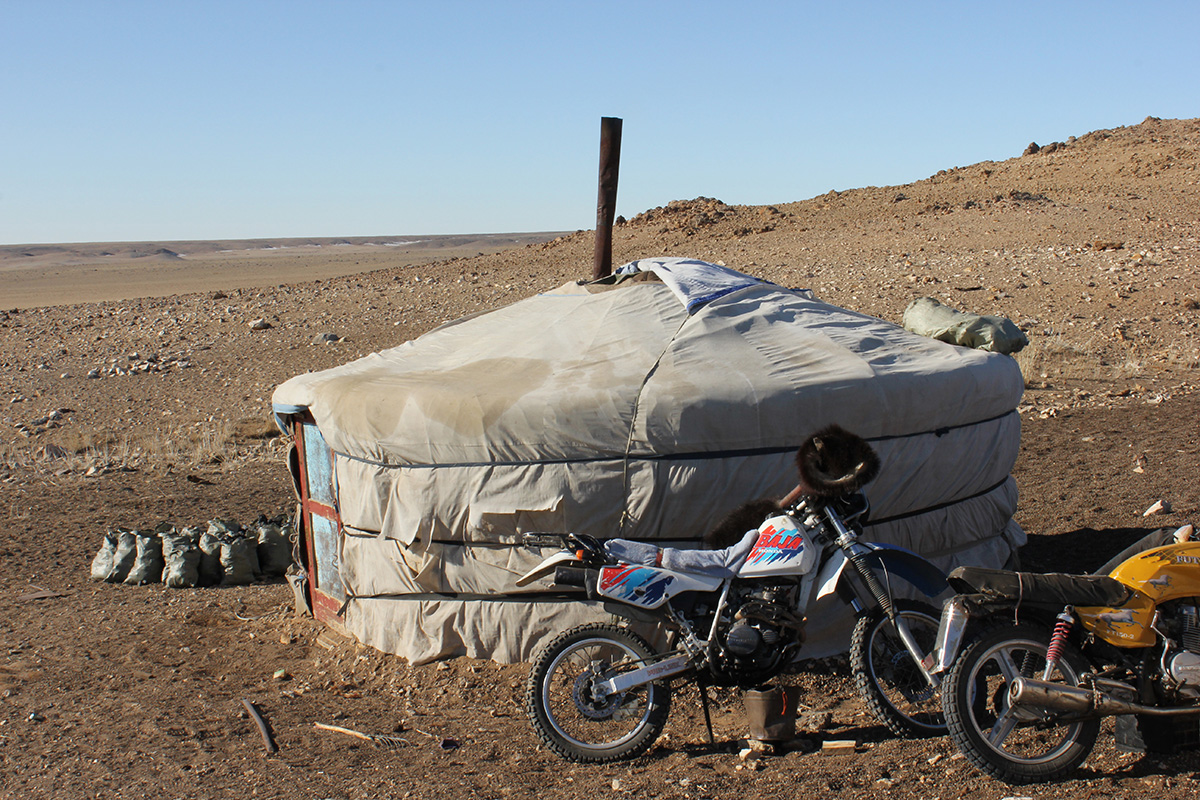
In Mongolia, Sarmento, then 23, lived Theodore Roosevelt’s strenuous life in a remote outpost in the Ikh Nart Nature Reserve. Home was a dilapidated yurt next to a herder family. Sarmento’s yurt was originally used to keep newborn livestock alive as temperatures regularly dropped to -40 degrees. He gathered water from a well using a five-gallon bucket strapped on the back of his dirtbike. There was a research base 70 km away with a crew from the Denver Zoo who might check in on him from time to time. “They definitely thought I was crazy,” he laughs. “Even the Mongolians were like, ‘That's crazy, man. You're going down there? Why would you do that?’”
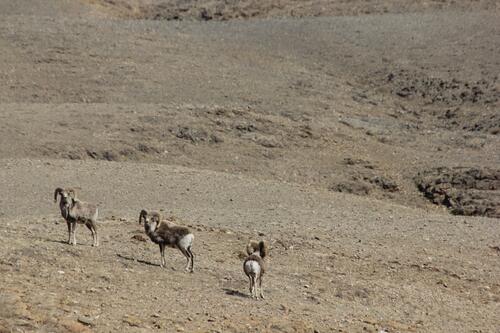
In the winter, his daily routine involved starting a fire under his dirt bike every morning to warm the oil enough to turn the engine. He rode through the winter with goat skins wrapped around his knees and the handlebars. His primary task was surveying Argali—the world’s largest wild sheep—and tracking their interactions with livestock. “The summers were nice,” he adds.
The physical toll was constant. Without pasteurized milk or reliable sanitation, Sarmento was rarely without stomach issues. The milk was typcially a mix of goat and sheep. “There was quite of a bit of fermented horse milk, too, which was very good,” Sarmento says.
But, he says, the countryside was generally safer than the capital, where roving bands of gangsters, nationalists, and pickpockets took note (and advantage) of any outsider. Misery? Maybe a little, but Sarmento says, “I thought of it as a big adventure." He later published his journals from the period: Asia Untamed and Mongolia Mystic.
Lessons from Glacier and the Front
Sarmento returned to the United States in 2012, but his job prospects were dismal. While waiting for a research opportunity, he worked on a chili pepper farm in Montana’s Bitterroot Valley, shoveling manure and doing handyman work. He learned that University of Montana Professor Joel Berger had some grant money to study mountain goats in Glacier National Park. After numerous visits to Berger’s office, “He finally caved in and was like, ‘Fine, you can use this grant for a summer job.’ And then that ended up leading to a master's degree.”
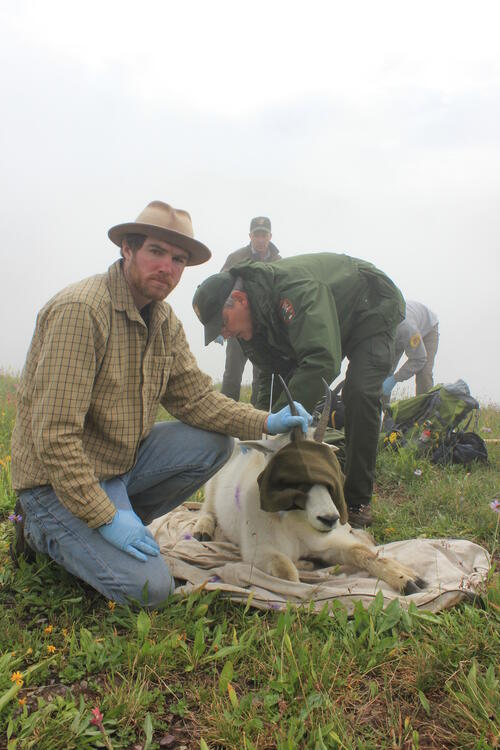
Sarmento spent four seasons studying the impacts of heavy tourism on bighorn sheep and mountain goats. His research focused on why goats were frequenting the Going-to-the-Sun Road corridor. He found that a "human shield" of tourists actually benefited the goats by deterring predators and providing a source of salt through human urine and antifreeze. “They’re just doing weird things because they don’t have the same predation risk that they would have otherwise,” Sarmento says.
Innovation in Conflict Prevention
Sarmento is a descendant of the Blackfeet, whose reservation abuts Glacier National Park’s east side. Once his field work on goats finished, he got a job with Blackfeet Fish and Wildlife as a bear management technician. “I worked under this guy, Dan Carney, who had been there for like 30 years,” Sarmento says. “He trained me up on all things bears.”
The next year, Sarmento took a job with Montana Fish, Wildlife, and Parks as a bear management specialist. “Grizzly bears were spilling out onto the prairie because they've been protected for 50 years,” he explains. “And people were just completely irate and upset, and they wanted more responsiveness.” Based in Valier, Sarmento responded to complaints across thousands of square miles where bears were entering farmyards and getting into grain.
Hazing the protected bears typically means using trucks and shotguns with non-lethal rounds to get bears to do what you want. That can mean everything from getting bears out of honey-filled beehive boxes to chasing them out of someone’s bushes. But Sarmento found that fences, canals, and crops frequently blocked his bruin pursuits, requiring him to leave the safety of his vehicle. One rainy morning, Sarmento was forced to approach a grizzly on foot because his truck would have bogged down in the mud. The 600-pound boar charged.
“That day was like an epiphany for me,” he says. “I realized I was going to get myself hurt or killed by going in on foot... the truck's not working.”
Sarmento began researching alternative tools, like dogs. He tested Turkish livestock guardian breeds—Anatolian Shepherds, Boz, and Kangals—to protect farmyards. He found an 80% reduction in bear use at farms where the dogs were deployed.
He also pioneered the use of drones for hazing. In a comparison of tools, Sarmento found that drones allowed him to precisely maneuver bears away from conflict sites—while he remained safely in a truck. He assumes the bears may associate the drone's sound with a swarm of birds. And if the bears ever get wise to the drones? “I think it'd be awesome to be able to attach bear spray to the drone itself,” he smiles. “And then you could deploy the bear spray from the drone.”
The Blackfeet Buffalo Restoration
After seven years as a bear manager, Sarmento returned to academia to pursue a PhD at the University of Montana. "In my job, I was limited in how much I could do," he explains. "The PhD seemed like a good place to find independence and an outlet for my innovation.”
His current research centers on the Blackfeet Tribe’s buffalo restoration project around Chief Mountain. Sarmento is gathering "before" data to establish a baseline for the ecosystem. Once buffalo are released, he will monitor how birds, insects, amphibians, and plants respond. “I'm working with my tribe, the Blackfeet, on their buffalo restoration project, and it’s a huge deal. Groundbreaking.”
He is also applying his knack for technological solutions to the project once buffalo are on the ground. To study how they will react to predators, Sarmento is using a remote-controlled unit equipped with taxidermy mounts. "We’ll drive it out to the buffalo and see how they respond to the actual presence of a fake bear or a fake wolf," he says.
Supporting this work is Sarmento's status as a National Science Foundation (NSF) Fellow and a Boone and Crockett Fellow. In addition, the National Park Service has provided significant funding to the University of Montana Boone and Crockett program in support of this collaborative research. While the NSF provides the primary stipend and tuition, the Boone and Crockett fellowship provides critical gap funding and a professional network. Last year, when Sarmento hit a deer near Chief Mountain, the fellowship covered the damages to his rental truck—an expense his other grants couldn't touch. Beyond the financial safety net, the program connects him to a broader circle of professional members and other university programs.
“Wesley is the epitome of a Boone and Crockett Fellow—an outstanding student, researcher, and colleague dedicated to advancing conservation science and policy,” says one of his advisors, Josh Millspaugh, Professor of Wildlife Biology and director of the Boone and Crockett Wildlife Conservation Program at the University of Montana. “His diverse experience and commitment are not only impressive but also add great value and rigor to our program at Montana. Students like Wesley ‘fill the bench’ and help ensure we have a qualified, capable group of scientists to advance the important work of conservation and the Boone and Crockett Club.”
With three and a half years left in his program, Sarmento aims to continue this research through a postdoc and eventually become a professor. His goal remains the same: to find innovative ways to manage wildlife-human conflict through observation and new technology. “I think it'd be awesome to become a professor and continue that independence, creativity, and innovation that you can get in academia.”
Boone and Crockett Fellows Program
Through its Fellows Program, the Boone and Crockett Wildlife Conservation Program supports graduate students in wildlife conservation and related fields. A Boone and Crockett Fellow is an undergraduate, graduate, or postdoctoral student supported by Boone and Crockett funding and/or advised by a Boone and Crockett professor or professional member. In addition to displaying academic excellence, Boone and Crockett Fellows are committed to scholarship that:
- Promotes effective conservation policy through dedication to research, education, outreach, and service.
- Exhibits leadership in wildlife conservation.
- Helps others understand the mission of the Boone and Crockett Club and the evolution of conservation in the United States.
- Recognizes and appreciates the values of hunting and fishing and the principles of Fair Chase.
For more information about Boone and Crockett Club Fellows or its University Programs, please contact Luke Coccoli, Director of Conservation Research and Education, at [email protected].