

Making Conservation More Efficient and Effective

By James L. Cummins
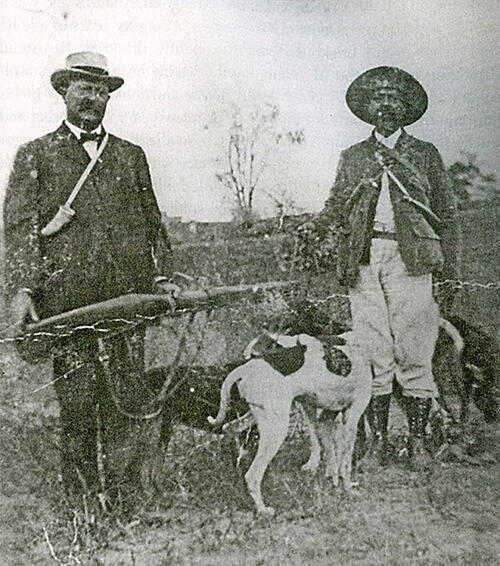
America's hunters, anglers, and outdoor enthusiasts have long been the backbone of this nation's conservation system, and they have the receipts to prove it. From the landmark legislation of the 1930s, such as the Pittman-Robertson Wildlife Restoration Act, to the Great American Outdoors Act of 2020, signed into law by President Donald J. Trump, sportsmen and women have partnered with Congress, industry, and private landowners to build one of the most successful wildlife management models in the world. Today, that system faces mounting pressures: funding constraints, population growth, litigation overreach, and inefficient government delivery. Meeting these challenges requires not the abandonment of what works, but a sharper, smarter approach to conservation–one that rewards results, reduces waste, and expands the financial base that sustains it.

The story of American conservation funding is, at its core, a story of sportsmen stepping up. In 1934, the Migratory Bird Hunting and Conservation Stamp Act (the Duck Stamp) created a dedicated revenue stream that has since generated more than $1 billion and protected six million acres of wetlands. That same year, industry giants like Remington Arms and DuPont joined forces with conservation leaders to establish the Cooperative Wildlife Research Unit Program, embedding science into wildlife management from the outset. Three years later, the Pittman-Robertson Wildlife Restoration Act of 1937 enshrined excise taxes on sporting arms and ammunition as a permanent conservation funding mechanism for state wildlife agencies, a model so effective it remains a cornerstone of wildlife finance nearly 90 years later.
More recently, the 2020 Great American Outdoors Act committed up to $9.5 billion over five years to address the maintenance backlog in national parks and federal lands, while guaranteeing $900 million annually for the Land and Water Conservation Fund. The bipartisan Recovering America's Wildlife Act, introduced in 2021 following the recommendations of the Blue-Ribbon Panel on Sustaining Diverse Fish and Wildlife Resources, aims to further enhance conservation funding while reducing the regulatory burden of the Endangered Species Act on businesses and landowners. These legislative milestones reflect a consistent truth: when sportsmen, industry, and legislators work together, conservation advances.
Yet the financial foundation is eroding. Under the Reagan administration in 1982, nearly 4 percent of the federal budget was dedicated to conservation and natural resource programs. As of the end of 2024, that figure had fallen to less than 1 percent, just $44.7 billion, with only 0.7 percent directed toward programs that directly serve hunters, anglers, and outdoor recreation. Meanwhile, the need has never been greater. The U.S. population is projected to reach 438 million by 2050, bringing increased urbanization, shifting demographics, and growing pressure on natural resources. Invasive species, wildlife diseases, and fragmented habitats compound the challenge. Funding has not kept pace, and no major advancement in wildlife conservation finance has emerged in 40 years. If the trend continues unchecked, the very programs that have produced thriving deer herds, rebounding waterfowl populations, and recovered species like the Louisiana black bear will lose the necessary financial resources they need to function.
This is not a call for unlimited government spending. It is a call for strategic, efficient, and innovative investment. Programs like the Wetland Reserve Easement and the Conservation Reserve Program demonstrate that well-designed conservation spending saves money in the long run, reducing federal commodity subsidies, crop insurance costs, and disaster assistance expenditures. In Mississippi alone, avoided costs from these programs exceeded restoration expenses by $870 per acre. Nationally, these conservation-driven savings are projected to reach $8.4 billion over the next decade. Every dollar spent protecting drinking water sources saves an estimated $27 in downstream treatment costs, according to the Environmental Protection Agency. Every dollar invested in walking and biking trails saves approximately $3 in medical expenses, according to the American Heart Association. Conservation, when structured properly, is not a cost, but rather a return on investment.
The economic case for conservation extends well beyond federal balance sheets. Hunting, fishing, and wildlife watching contribute an estimated $394 billion annually to the U.S. economy and support more than one million jobs. If the 54.4 million Americans who hunt, fish, and watch wildlife were a single corporation, their collective spending in 2022 would have placed them seventh on the Fortune 500, just ahead of Apple. The U.S. seafood industry generated $183.4 billion in sales and supported 1.6 million jobs in 2022. Outdoor recreation tourism fills hotel rooms, fuels local restaurants, and sustains the rural communities that much of this activity depends upon. Well-managed public and private lands increase surrounding property values and attract the businesses and workers that rural America needs to reverse its long-running brain drain. Beyond economics, these lands and waters provide something harder to quantify but no less real: a connection to the natural world that defines the American character and binds communities together across generations.
Achieving conservation results in a tighter fiscal environment requires wringing more efficiency from existing programs. At the U.S. Department of Agriculture, both the Farm Service Agency and the Natural Resources Conservation Service have made meaningful progress in delivering services online through platforms like Farmers.gov, but cultural resistance to automation remains a drag on efficiency. The priority should not be just about staffing cuts (most agencies are already stretched thin, and sudden reductions would hurt the farmers and rural landowners these agencies serve) but rather a deliberate shift toward technology-enabled delivery that reduces administrative overhead over time. Artificial intelligence and GPS-based tools are already transforming precision agriculture; these same technologies can streamline on-farm conservation planning and reduce the staff time spent on administrative tasks rather than field-level technical assistance.
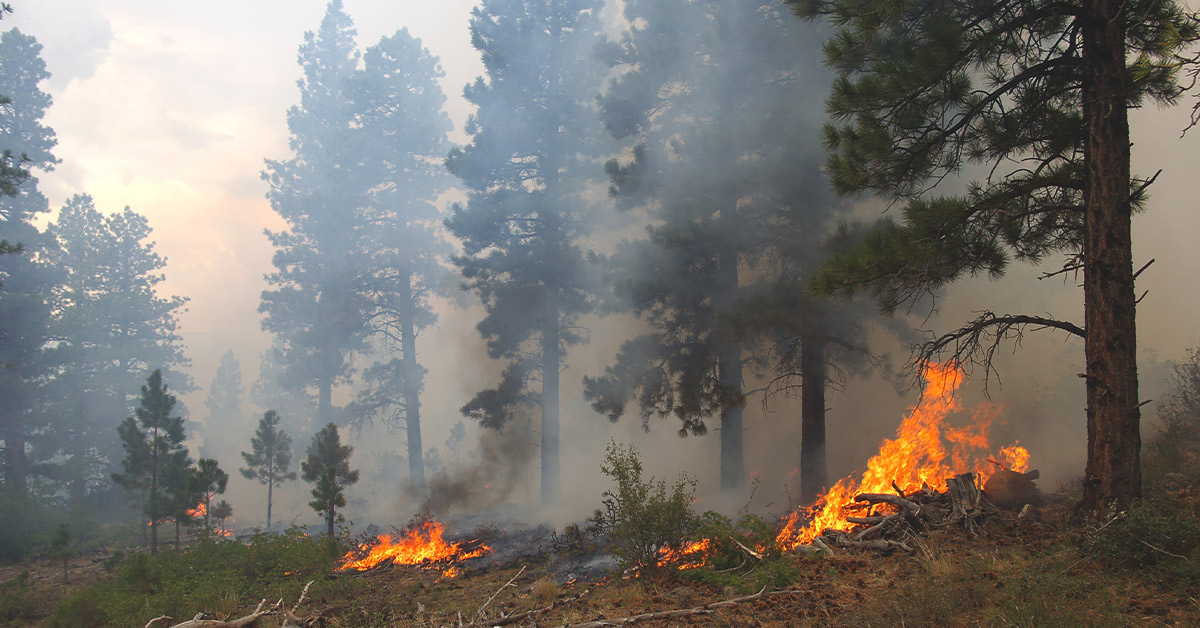
The Forest Service presents its own set of challenges. Over the past decade, a push toward centralization has produced duplication of effort, inflated overhead costs at the Washington and regional office levels, and weakened the on-the-ground capacity that forest and district leadership need to do their jobs. Decentralization, combined with aggressive adoption of tools like LiDAR for timber stand inventory and cultural resource assessment, can reduce costs substantially. Outdated data management systems that cannot communicate with one another need modernization. Federal timber contracts should be aligned with private-sector norms to attract more local bidders and reduce the cost of active forest management. The agency also needs to accelerate its use of prescribed fire as a land management tool; reducing wildfire risk, improving habitat, and lowering the catastrophic suppression costs that now consume an ever-growing share of the Forest Service budget. Research Stations should be continued in ways that address the most pressing forest needs.
The Endangered Species Act is another arena where pragmatism should replace entrenchment. The ESA has genuine successes to its name—the Louisiana black bear, delisted after decades of habitat restoration work funded largely through voluntary conservation programs, is one example. But the law's current structure too often leaves species in regulatory limbo rather than advancing their recovery. U.S. Senator Mike Crapo's Endangered Species Recovery Act of 2006 pointed toward a better approach: shifting from a purely regulatory model to one built on incentives that reward private landowners for participating in species recovery. Since more than 80 percent of endangered species depend on private land, engaging landowners as conservation partners rather than treating them as obstacles is not optional; it is essential. Tradable tax credits for conservation easements and other voluntary tools have already proven their worth; expanding and updating this framework deserves serious legislative attention.
Environmental litigation, meanwhile, continues to divert resources from the conservation work it purports to protect. The Equal Access to Justice Act (EAJA), originally designed to shield small businesses and individuals from government overreach, has been exploited by large, well-funded advocacy organizations to extract attorney's fees from federal agencies while blocking active land management. The U.S. Fish and Wildlife Service and the Forest Service are frequent targets, with many cases focused on procedural technicalities rather than genuine ecological harm. The practical effect is to redirect agency time and money from on-the-ground conservation into courtroom defense. Reform of EAJA to close the loopholes that enable this cycle is not anti-environment; it is pro-conservation.
Federal land management, too, is hampered by outdated rules that prevent agencies from doing what they were created to do. The Forest Service and Bureau of Land Management hold thousands of parcels (isolated tracts, urban inholdings, lands encroached upon by development) that no longer serve a conservation purpose but cannot be sold or exchanged without navigating a bureaucratic maze. A legislative fix modeled on the principles of the Southern Nevada Public Lands Management Act, expanded to cover all federal land agencies, could free up billions in proceeds for targeted conservation acquisitions. The governing principle should be straightforward: no net loss of acres, and all sale proceeds reinvested in conservation within acquisition boundaries or in the management of existing federal lands.
Taken together, these reforms (smarter agency delivery, technology adoption, incentive-based ESA implementation, litigation reform, and flexible land exchange authority) represent a conservation agenda built on results rather than ideology. They reflect the same common sense that my former boss, U.S. Senator Thad Cochran, once distilled in a line worth repeating—conservation and conservative share the same Latin roots for a reason. Protecting what we have, investing wisely, and building durable partnerships that outlast any single administration is precisely how America's wildlife and natural resources will be handed intact to the next generation. The sportsmen and women who built this system, and who continue to fund and defend it, deserve nothing less.
James L. Cummins is a past president of the Boone and Crockett Club and serves as co-chair of the Conservation Policy Committee.
Want to see the Club in action on Capitol Hill? Your gift directly funds Boone and Crockett's federal and state policy work, advancing science-based wildlife management, defending public and private lands, and engaging policymakers on the issues that shape the future of big game and habitat. Supporting the Conservation Policy program includes direct engagement with lawmakers, AWCP coordination, and on-the-ground state partnerships. Stand with the Club where the decisions get made. Donate today to fuel the policy work driving North America's system of conservation forward.