
B&C Member Spotlight—Jack Ward Thomas
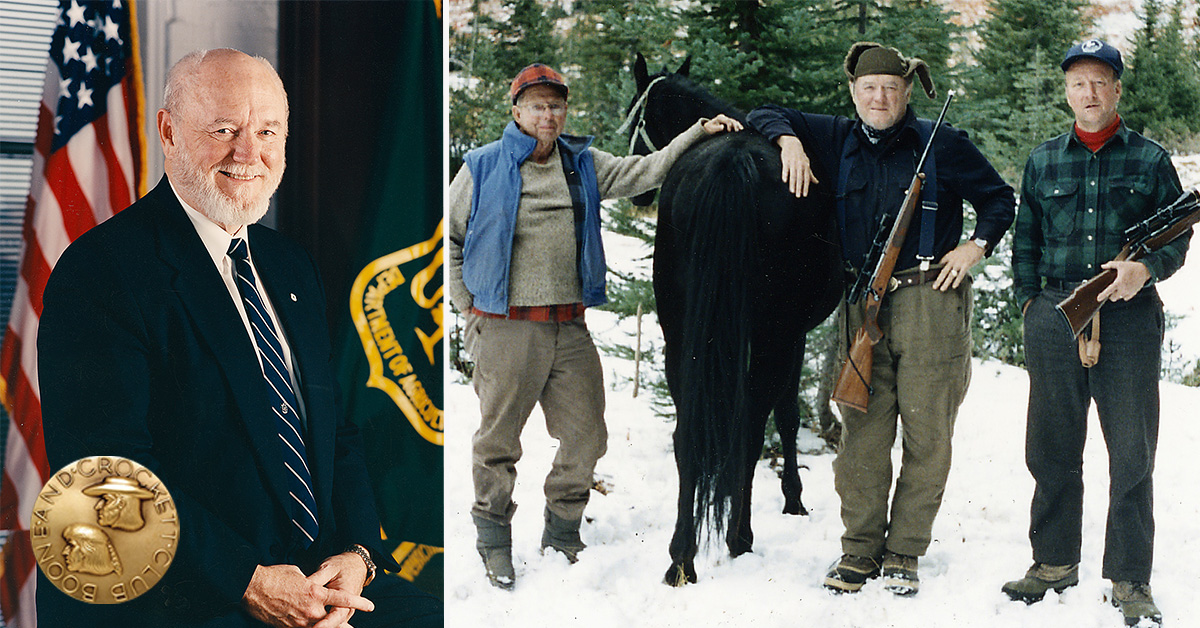
Right Photo: Jack Ward Thomas, (center) hunting the Eagle Cap Wilderness in 1994, with Bill Brown (left) and Jim Applegate.
Jack Ward Thomas never backed down from a storm. As the first wildlife biologist to lead the U.S. Forest Service, he proved that managing America's wildlands wasn't just about trees and owls. It was about navigating politics, policy, and human nature.
Jack Ward Thomas never quite outran the dust of Handley, Texas. Born in 1934 during the height of the Depression, he carried a lifelong memory of sitting under a kitchen table draped with a damp cloth just so he and his cousins could breathe clean air during dust storms that lasted hours. It was a stark introduction to overworked landscapes that stayed with him even as he served as the 13th Chief of the U.S. Forest Service and as a Boone and Crockett Professor of Wildlife Conservation at the University of Montana.
Appointed by Bill Clinton in 1993, Thomas was the first biologist to lead an agency that had been the domain of foresters and engineers for nearly a century. For this reason alone, he was bound to shake things up. But a combination of politics, policy, and research served up a heap of controversy during his tenure.
Center of the Storm
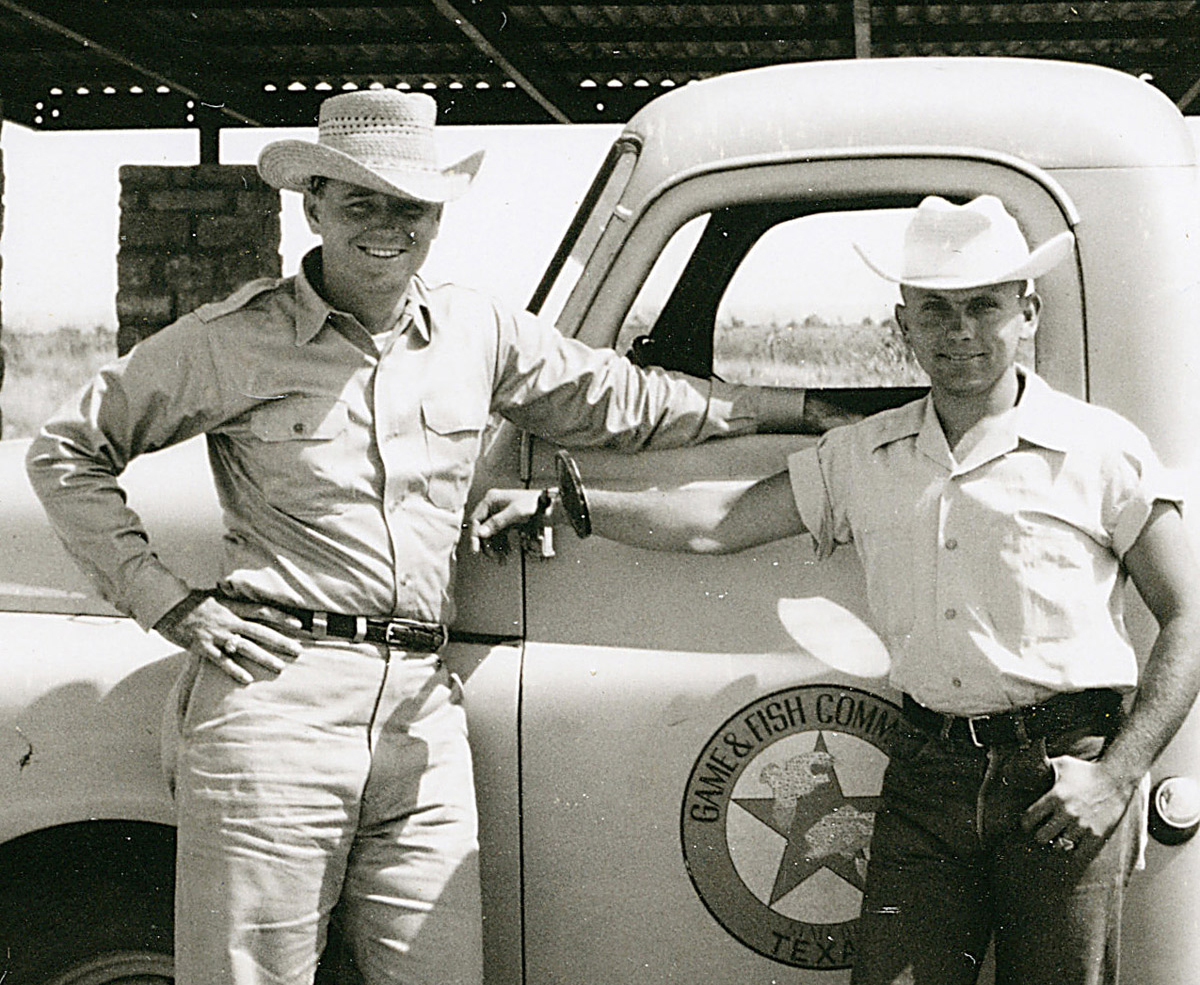
After 20 years of research in Oregon, Thomas dove headfirst into a firestorm caused by a crow-sized bird called the northern spotted owl. The “spotted owl wars” of the late 1980s and 1990s in the Pacific Northwest put federal wildlife conservation against the timber industry. When the northern spotted owl was listed as threatened under the Endangered Species Act, courts ordered logging to be banned on millions of acres of old-growth forest to protect the bird's habitat, which profoundly impacted local logging communities and timber industry jobs. When President Bill Clinton needed a scientist to lead a team to find a way out of the gridlock, he tapped Thomas.
Thomas relied on science and research when making decisions that were unpopular with loggers and environmentalists alike. He once remarked that wildlife management was 90 percent about people and 10 percent about animals. He understood that the data on owl nesting sites was useless if you couldn't navigate the human element. He rarely, if ever, pleased D.C. politicians with his straightforward and blunt answers.
In a wonderfully candid interview before his death, Thomas pulled no punches in his reflections on that tumultuous time. “The spotted owl—well, it certainly changed public land management. Totally….Somehow, as a nation, we made a decision we were going to measure ecosystem health through the Endangered Species Act. Which I think is flawed. But that’s it. Once you’ve got a threatened species on your hands, you’ve got to deal with it,” Thomas recalled. “When you’ve got thousands of people out of jobs, and counties are not getting revenue—counties counting on that money coming in every year—and trade unions, contributions to politicians, industry, and lobbyists. Money talks and bullshit walks.”
Cristina Eisenberg, a Ph.D. student and Boone and Crockett Fellow he later mentored, noted that Thomas was a hybrid of Teddy Roosevelt, John Wayne, and Ed Abbey. “He was a fearless visionary with outside-of-the-box ideas,” she said. “Jack’s legacy is profound. We can be inspired by his views on forests, wildlife, and ecosystems.
Former Boone and Crockett Club president George Bettas was a close colleague and friend. He knew Thomas from his days as a research scientist in Oregon. “If Jack didn't agree with you, he would tell you, and he would tell you why,” Bettas said. “Jack always took a middle and informed road. I’ve always had the greatest respect for him, as a teacher, friend, and a scientist.”
The Boone and Crockett Years
After retiring from the Forest Service in 1996, Thomas served as the Boone and Crockett Professor of Wildlife Conservation at the University of Montana (UM). The position, endowed by the Club, seemed a good fit for a man who believed that the future of conservation depended on quality leadership.
To his students, Thomas was an iconic leader who opened his home and his life to them. He and his wife, Kathy, regularly hosted students. Thomas advised former Boone and Crockett Fellow Alex Sienkiewicz at UM. The two spoke often, and more than a few times “debated topics intensely and not quietly” over policy and public land issues, Sienkiewicz recalls with a laugh. Even so, Thomas was always willing to hear all sides of an argument, which made for a sincere connection. "Most people never get a friendship with a mentor, and I consider myself immensely fortunate to have had that with Jack. I loved him like an uncle," Sienkiewicz said. “He wasn’t afraid to speak truth to power.”
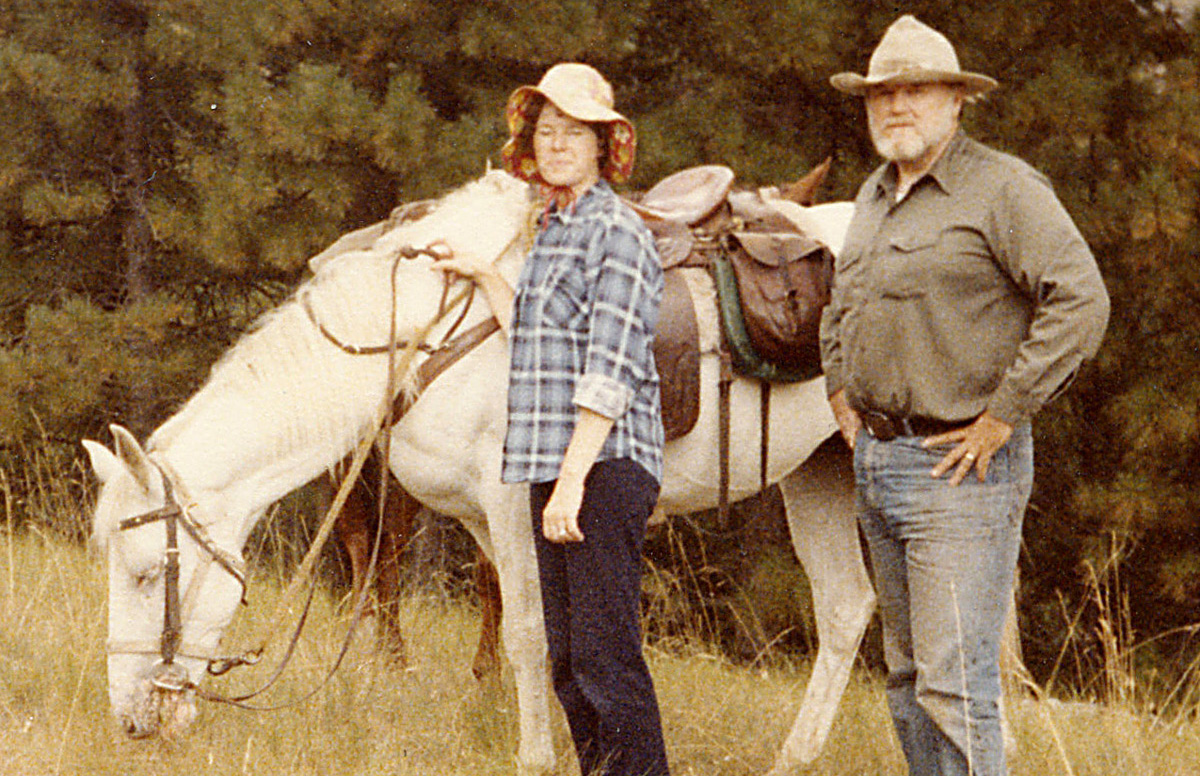
Jack’s relationship with the Boone and Crockett Club was a cornerstone of his later years. As an Honorary Life Member, he found a community that shared his commitment to the North American Model of Wildlife Conservation. He was a prolific contributor to Fair Chase magazine and pushed the organization to look toward the future.
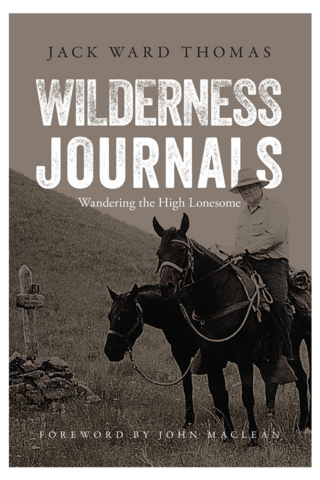
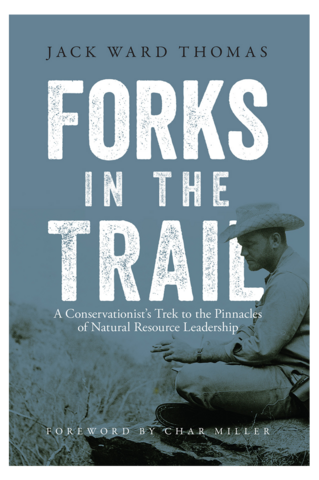
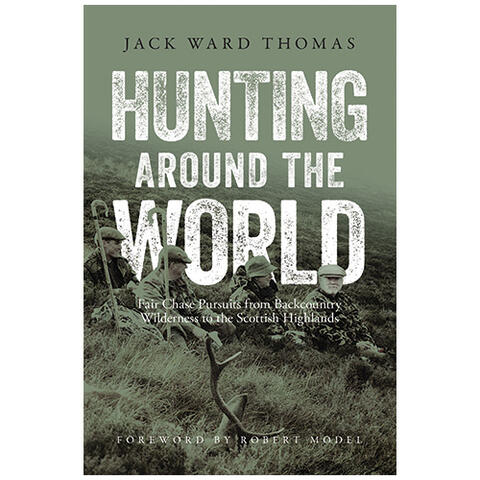
In 2015, the Club published a trilogy of his journals. These memoirs offer an in-depth look at a turbulent time in the U.S. Forest Service and have as much adventure as they do policy. Readers go horsepacking and hunting in the wilderness, and they come to understand why Thomas believed that people living with wildlife were the ultimate caretakers.
For Thomas, the big picture was always ecosystem management. He famously defined it in simple terms. “Ecosystem management means not killing the goose that lays the golden eggs.” He pushed his colleagues and the Club to move beyond managing individual species and toward stewardship of entire landscapes. "We need to be prepared to move into the 21st century," he would tell anyone who would listen, “or we'll be left in the dust.”
His work with the Club was a natural extension of his professional life. He saw the Boone and Crockett Program at the University of Montana as a way to bridge the gap between scientific research and on-the-ground management.
A Life of Honest Integrity
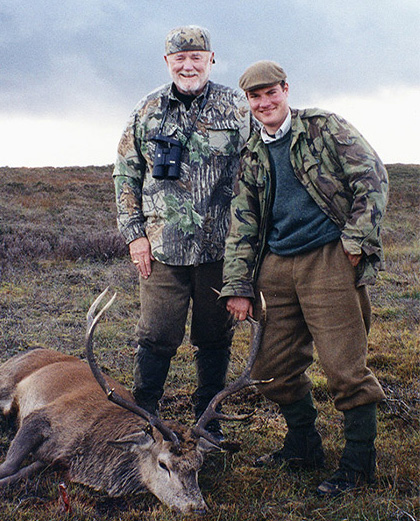
Jack Ward Thomas passed away on May 26, 2016, after a long battle with cancer. He spent his final days at his home south of Florence, Montana. He left behind a body of work that includes hundreds of published papers, several books, and a legacy of mentorship that continues to influence the Forest Service and wildlife professionals.
In that candid interview mentioned above, he reflected on the nature of success and the pursuit of knowledge. His response left little room for doubt. “Do your best. Don’t flinch. Be honest. Make sure you know what you’re doing, and do your homework. If you don’t know, find someone who does.”
Member Spotlights
Boone and Crockett Club members have come from a cross-section of famous accomplished people whose lives and careers have written and recorded the history of this country since the late 19th Century. They have been naturalists, scientists, explorers and sportsmen, writers and academicians, artists, statesmen and politicians, generals, bankers, financiers, philanthropists, and industrialists. Their diversity of ideas and activities during their careers have made the Boone and Crockett Club rich in its fellowship and achievements. To read more member spotlights, just click here.