
B&C Position Statement - Endangered Species Act

Effective Date: Sep 27, 2011 Revision Date: April 2, 2026
Situational Overview
The Endangered Species Act of 1973, as amended (ESA) is considered one of the most ambitious wildlife laws ever enacted. The ESA was intended to prevent species extinction, promote species recovery, protect their critical habitats and ecosystems by regulating activities that cause harm. Congress gave the U.S. Fish and Wildlife Service and the National Marine Fisheries Service the authority to determine which species are threatened or endangered with extinction.
While the ESA’s original goals remain useful, the Act was designed primarily to reduce harms to species arising from otherwise lawful activities. It has directed meaningful efforts to recover species in only a few cases. Scientific standards for wildlife management have advanced considerably since 1973, but the ESA has not been fully updated to reflect such advancement. Likewise, the technologies available for wildlife conservation are underutilized in the conservation and recovery of threatened and endangered species. Much of this is due to the litigation surrounding ESA listings and enforcement, as well as the disincentives provided by both the direct and indirect threat of legal enforcement on both private and public lands.
The procedures required by the ESA exposes federal agencies to excessive litigation,1 much of which is filed by activist groups seeking to carry out agendas having nothing to do with promoting species recovery. Even lawsuits that are settled out of court – an increasingly common practice – allow plaintiffs to recoup their legal fees due to legal loopholes in the Equal Access to Justice Act.2 The fee awards, which total millions of dollars annually, are paid by the federal government. These fee awards do not support conservation; instead, they are often used to fund more ESA litigation. Costs, however, must be measured beyond just awards paid. Legal bills and federal staff time addressing litigation divert money needed for species recovery. This vulnerability is so great that an Inspector General of the Department of the Interior concluded that ”lawsuits are driving nearly everything FW does in the ESA arena.”3
Position
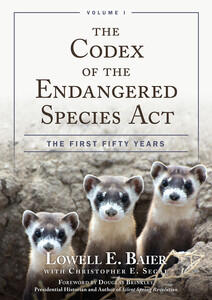
The Boone and Crockett Club, the oldest wildlife conservation organization in North America, will continue advocating for improvements to ESA that direct more active species recovery efforts and less extraneous process and costs. This will build upon on our commitment to species recovery such as Club member Lee Merriam Talbot’s primary authorship of the Endangered Species Act, and Club member Lowell Baier’s authoritative voice today on the Endangered Species Act and the Equal Access to Justice Act. The Club will continue to work to ensure the ESA, as well as the other laws and policies concerning conservation and management of wildlife, are effective, science-based, and beneficial to both wildlife and people.
The Boone and Crockett Club supports the fundamental concept and intent of the ESA to conserve endangered and threatened species and the ecosystems on which they depend. The Club believes the ESA, now over 50 years old, should continue to be modernized to clear a path for effective wildlife conservation and species recovery to take place. The Club, as well as many other progressive thinkers, want the Act to be a success. The low percentage of recovery achieved under the current implementation of the Act is strong indication that improvements are needed in both the statute itself and in its implementation.
Legislators should begin by eliminating the legal technicalities that obstruct listing and delisting decisions and the legal loopholes enabling excessive litigation (including reform of the Equal Access to Justice Act).
The Club maintains a modern voluntary, incentive-based habitat restoration approach presents an opportunity to solve many problems associated with the extinction of species in a manner that will maintain a strong economy and respect private property rights. As long as the status quo of not increasing habitat and therefore not increasing populations is maintained, the full recovery of populations of many species will not occur. Three-quarters of the currently listed species now inhabit private lands, and as has been proven with other wildlife laws, private landowners can achieve strong on-the ground results for wildlife if they are given a voice and the incentives to do so.
The water quality and wetland-related provisions of the Farm Bill demonstrate that widespread wildlife population declines are reversible by habitat conservation. The voluntary, incentive-based mechanisms of the Farm Bill have provided regulatory assurances to agricultural producers in regard to the Clean Water Act. The ESA, on the other hand, does not have a similar habitat mechanism. But if it did contain new incentives and protections4 private sector investment in habitat and species population improvement will be accelerated. Further, the Club suggests that the U.S. Fish and Wildlife Service should complete an ongoing, innovative rulemaking effort to facilitate species-specific mitigation banking backed by private capital.
The Congress should also update and clarify the ESA’s outdated and ambiguous provisions to foster realistic and achievable outcomes for at-risk threatened and endangered species. Scientists today know that threatened and endangered species fall across a spectrum of challenges that require a diverse array of solutions. Some species respond well and recover if we simply set aside habitat or reduce the use of harmful chemicals. Other species require more intensive, long-term management strategies and others continue to struggle no matter what restrictions and conservation measures are implemented.
Scientists who understand the true size of the problem, in terms of numbers of species involved and their geographical needs, have concluded it is impossible to conserve every species of native plants or animals in all the places they historically existed due to the expansion of human population, industrialization, or other land-use changes, and other factors. ESA modernization efforts should therefore focus on more efficiently addressing the actual extinction threats species face today, more clearly defining criteria for listing and de-listing species and providing newer criteria for success and failure of programs.
The ESA should remain as a powerful backstop against irresponsible practices that place undue pressure on natural resources and ecosystems. This can be done without attempting to stop all human growth or development or inhibit future conservation strategies that could benefit imperiled wildlife. It is long past time to apply our capacity for innovation to achieve better outcomes for the ESA that will benefit wildlife and people, and the ecosystems on which they both depend.
Read More B&C Position Statements
The Boone and Crockett Club publishes position statements to inform and educate people about conservation and hunting issues. Thus, there is no charge for personal and non-commercial use of its position statements, but reprinting or re-use of any portions of a position statement shall credit the Boone and Crockett Club as the source. Any such use shall remain subject to all rights of the Boone and Crockett Club.
1 - ESA litigation takes several forms: lawsuits that are used to obstruct development rather than protect species; lawsuits that are based on missed deadlines or procedural errors in listing decisions disrupt agency processes; lawsuits that seek to reverse an agency’s recovery decision such that routine wildlife management decisions are shifted from expert agencies to courts; lawsuits that are used to divert an agency’s financial resources away from conservation efforts to benefit plaintiffs (typically activist organizations).
2 - The Equal Access to Justice Act permits the recovery of attorney’s fees in lawsuit against the federal government. It was enacted in 1980 to protect ordinary citizens from governmental overreach and wrongdoing, but it has been severely exploited by activist groups to recoup fees in lawsuits they bring against wildlife agencies for alleged violations of the ESA.
3 - Investigative Report: The Endangered Species Act and the Conflict Between Science and Policy. 2008. United States Department of the Interior, Office of Inspector General.
4 - The Club suggests adding tradeable tax credits and further eliminating regulatory disincentives for landowners who voluntarily enhance habitat. Provisions could include immunity from new regulatory restrictions if species populations increase on private land, immunity from additional land use limitations and additional development and constraints that might otherwise apply under ESA protections.