

Beyond the Bird Feeder: The Surprising Science of Black Bear Predation
As black bear populations rebound across North America, the line between wild carnivore and human-bear conflict continues to blur. Science shows that while they are formidable predators, black bears’ preference for "easy" calories is what truly defines their complex role in our modern landscape.
By John Nettles, Boone and Crockett Club Fellow, Clemson University
Black bear hunting plays an important role in the local history and culture of much of North America. However, by the early 1900s, overhunting and habitat degradation had dramatically reduced black bear populations. Thanks to successful conservation efforts by agencies and harvest managers, populations have since rebounded. In fact, the American black bear is now the world’s most abundant large carnivore and one of the very few carnivores with an increasing population. This recovery has allowed many states to expand current seasons or reestablish hunting seasons for black bear.
The story of black bear conservation doesn’t stop there, though. Increasing numbers of both people and bears have led to greater overlap between the two populations and to a new conservation challenge: human-bear conflict (HBC). Many states employ designated HBC experts to help citizens and landowners with anything from garden damage to livestock depredation, direct encounters, and attacks.
Unfortunately, Florida recorded its first-ever deadly bear attack in May 2025, and in September, Arkansas recorded its first bear attack in over 25 years. While attacks on humans are very rare, the animal kingdom needs no reminder of black bears' predatory skills.
Previous scientific studies have suggested that black bears can act as predators in three different ways:
- By preying on juvenile ungulates (hooved mammals such as deer, elk, moose, and caribou).
- By limiting populations of smaller carnivores, like coyotes, through displacement (forcing subordinate species to use shared resources at different times or shift to lower-quality resources).
- By altering the behavior of other large carnivores, like mountain lions, through kleptoparasitism (stealing food from another animal).
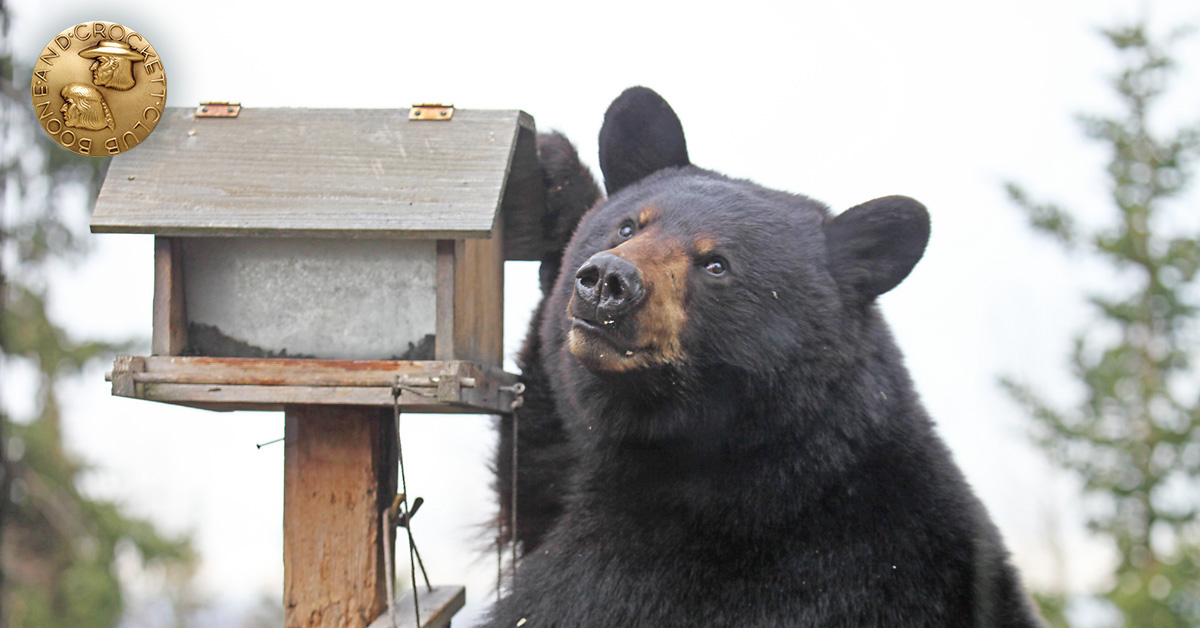
However, news stories and social media posts from across the United States more often depict black bears as adorable backyard pests rather than large predators. Their oversized ears, round bodies, and human-like behavior make it hard to take them seriously. Popular photos of them eating from bird feeders, enjoying piles of apples, peering from dumpsters, or sitting at picnic tables certainly don't help their case.
Some more-troublesome (and rotund) bears make national headlines and even earn nicknames, like Lake Tahoe’s 500-pound behemoth named "Hank the Tank" (whom authorities later identified as a female), or more recently, an "ice cream bandit" named Fuzzy. Stories like these highlight our favorite aspects of bear behavior, but they also demonstrate the potential for extensive property damage.
So, Are They Predators?
This duality in black bear behavior—and how we view them—makes managing the species an immensely complex task. To better understand the American black bear and its abilities as a predator, colleagues and I at Clemson University reviewed all published scientific literature on the topic. After analyzing over 200 papers, here is what we found.
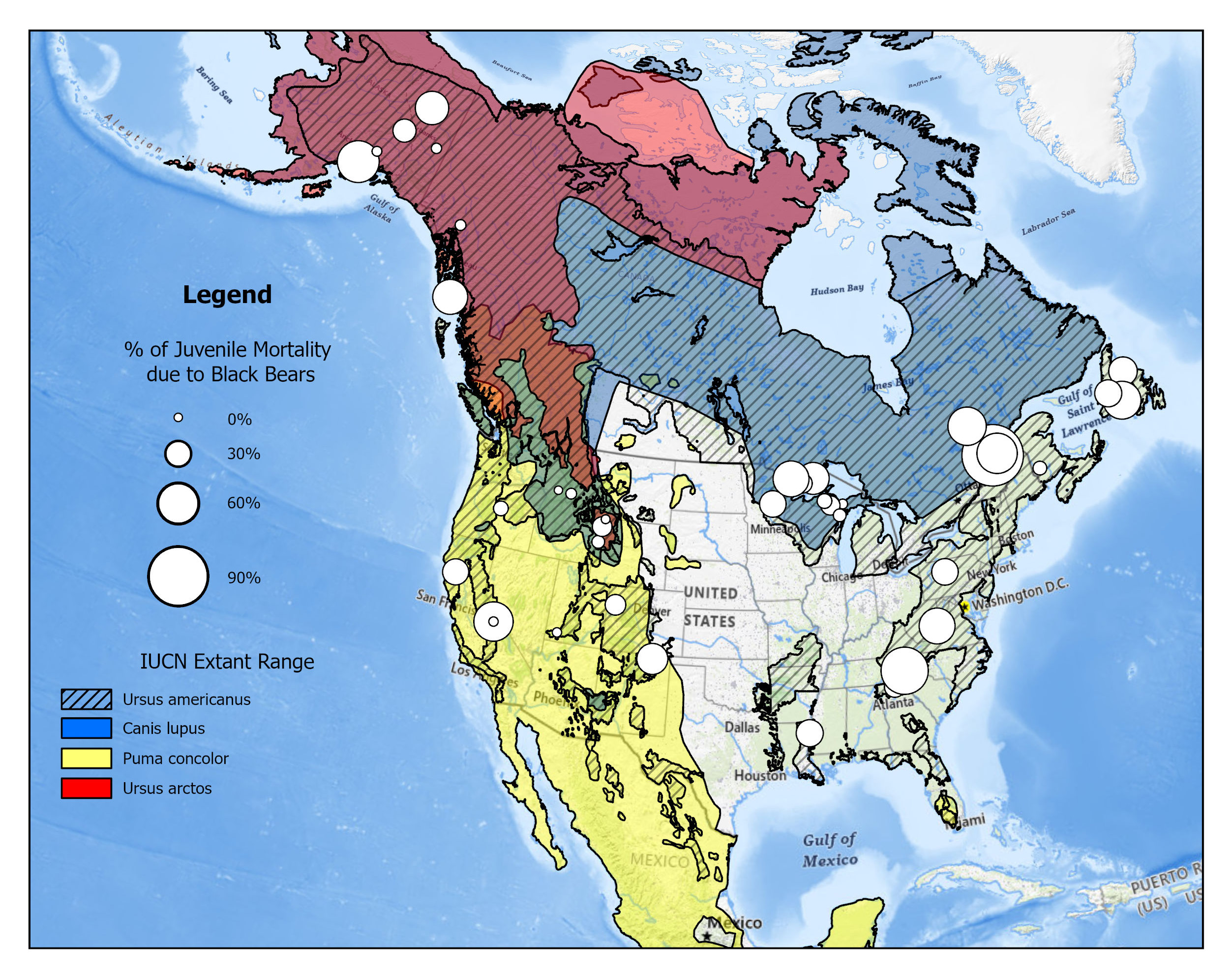
We identified 10 previous studies that directly measured the survival rates of prey species, such as deer and caribou, before and after the removal of black bears from an area. In nine of those studies, juvenile ungulate survival increased after bears were removed. Additionally, we found that in regions without other large carnivores (such as the southeastern United States), black bears accounted for nearly 30% of juvenile ungulate deaths.
However, in regions that also support wolves and mountain lions (such as the Northwest), that number decreased to only 3%. The presence of mountain lions, specifically, decreased the number of deaths caused by black bears by nearly two-thirds.
Why is this the case? Are mountain lions out-competing black bears for food? Are black bears choosing other foods to avoid mountain lions? We believe the answer may have more to do with how black bears affect mountain lions than the other way around.
Or are they pests?
In our review, we found that the most common effect black bears have on other carnivores is through kleptoparasitism. In fact, this occurs frequently enough between black bears and mountain lions to alter how often—and which species—mountain lions hunt. It seems black bears simply prefer their food to be caught for them.
This phenomenon isn’t limited to mountain lions or even to wildlife. Humans are perhaps the most common victims of black bears’ thievery. Human food sources are often unguarded and high in calories, making them an enticing alternative to natural forage. Although we’ll never know how mountain lions feel about this behavior, it has led people in many states to classify black bears as a nuisance species.
Which Is It?
We may not always view black bears in the same light as wolves, mountain lions, or grizzly bears, but they are dominant predators when they need to be. They can limit prey populations, scare mountain lions off carcasses, and seriously injure humans or kill humans.
However, it seems they would rather steal than go through the trouble of a hunt. If you can easily chase another predator away from its kill (or a cooler left outside), why do the hard work yourself? Black bears must consume an immense number of calories—as many as 20,000 a day during the fall—and kleptoparasitism is an efficient way to reach that goal, especially when humans are nearby. One hamburger or a single cup of birdseed contains the same number of calories as roughly 1,350 berries.
Unfortunately, when bears gain access to human food, they often end up harming people or damaging property in search of more. Quietly enjoying strawberry ice cream after hours may seem harmless, but as evidenced by recent attacks across the Southeast, the consequences are not always innocent.
So, predator or pest? Perhaps they are a little of both. By securing all potential attractants (such as bird feeders, pet food, coolers, and trash cans) we can minimize the impact of black bears as backyard pests and restrict their role as predators to the woods. There, predation plays a crucial role in maintaining a balanced ecosystem with healthy, sustainable populations of both predator and prey.